


Embarking on the journey to build a custom home in Middle Tennessee, whether in the rolling hills of Franklin or the distinguished neighborhoods of Brentwood, is a significant investment in your family's future. For those envisioning a residence valued between $700,000 and $2,000,000, the conversation around budget is as crucial as the architectural vision itself. At CJMC Build, we believe that fiscal responsibility and luxury design are not mutually exclusive. True craftsmanship lies in achieving architectural excellence while strategically managing resources.
This guide explores intelligent ways to save money building a house, ensuring your investment enhances both your lifestyle and your portfolio. As a premier luxury design-build firm in Nashville, we integrate cost-conscious strategies from the earliest design phases, transforming visionary concepts into tangible, high-value realities. Our integrated approach as both designer and builder demonstrates that a meticulously planned budget is the foundation upon which extraordinary homes are built.
Here, we will detail actionable strategies that deliver savings without sacrificing the hallmarks of a CJMC Build home—from soaring 12-foot ceilings and site-finished hardwoods to bespoke cabinetry and premium quartz countertops. We will explore how thoughtful planning in design, materials, and process management can yield substantial savings, protecting your investment for years to come. This article provides the blueprint for financial prudence, allowing you to focus on what truly matters: creating a home that reflects your aspirations.
1. Value Engineering: The Architect's Approach to Cost Efficiency
True luxury is not defined by extravagance; it's the result of intelligent, purposeful design. Value engineering is a disciplined, creative process we employ at CJMC Build to analyze every facet of your home's design and material specifications. This systematic approach is one of the most effective ways to save money building a house without compromising the architectural integrity, long-term performance, or aesthetic beauty of your future home in Franklin or Brentwood.
What is Value Engineering?
Value engineering is not about cutting corners or cheapening your home. It’s a collaborative review where we, as your design-build partner, meticulously analyze structural systems, material selections, and construction methods to identify opportunities for efficiency. The goal is to optimize value, ensuring every dollar is purposefully invested to achieve your vision.
For example, we might simplify a complex foundation footprint to reduce concrete and labor costs, or specify engineered lumber for long spans instead of more expensive solid-sawn timber beams. These smart adjustments free up budget that can be reallocated to high-impact features that define a luxury home, such as expansive Marvin windows, a professional-grade kitchen appliance package, or the custom cabinetry that elevates your owner's suite.
Key Insight: The greatest savings are often found in the home's "bones"—the structural and non-visible components. Optimizing these areas allows for greater investment in the high-touch finishes and architectural details you experience daily.
Actionable Tips for Implementation
To make this strategy work for your project, it’s crucial to:
- Engage Early: Involve your design-build firm from the very beginning. Value engineering is most effective during the initial architectural design phase, before plans are finalized.
- Prioritize Wisely: Focus cost-saving efforts on structural and hidden elements, never on safety systems or the premium materials that define your home's character, like site-finished hardwoods or quartz counters.
- Consider Lifecycle Costs: Compare the long-term maintenance and performance costs of materials, not just their initial purchase price. A higher upfront investment in a durable, low-maintenance material often saves money over the life of your home.
- Document Everything: Ensure all value engineering decisions and material substitutions are documented and approved in writing to maintain clear communication and accountability.
2. Simplified and Open Floor Plans
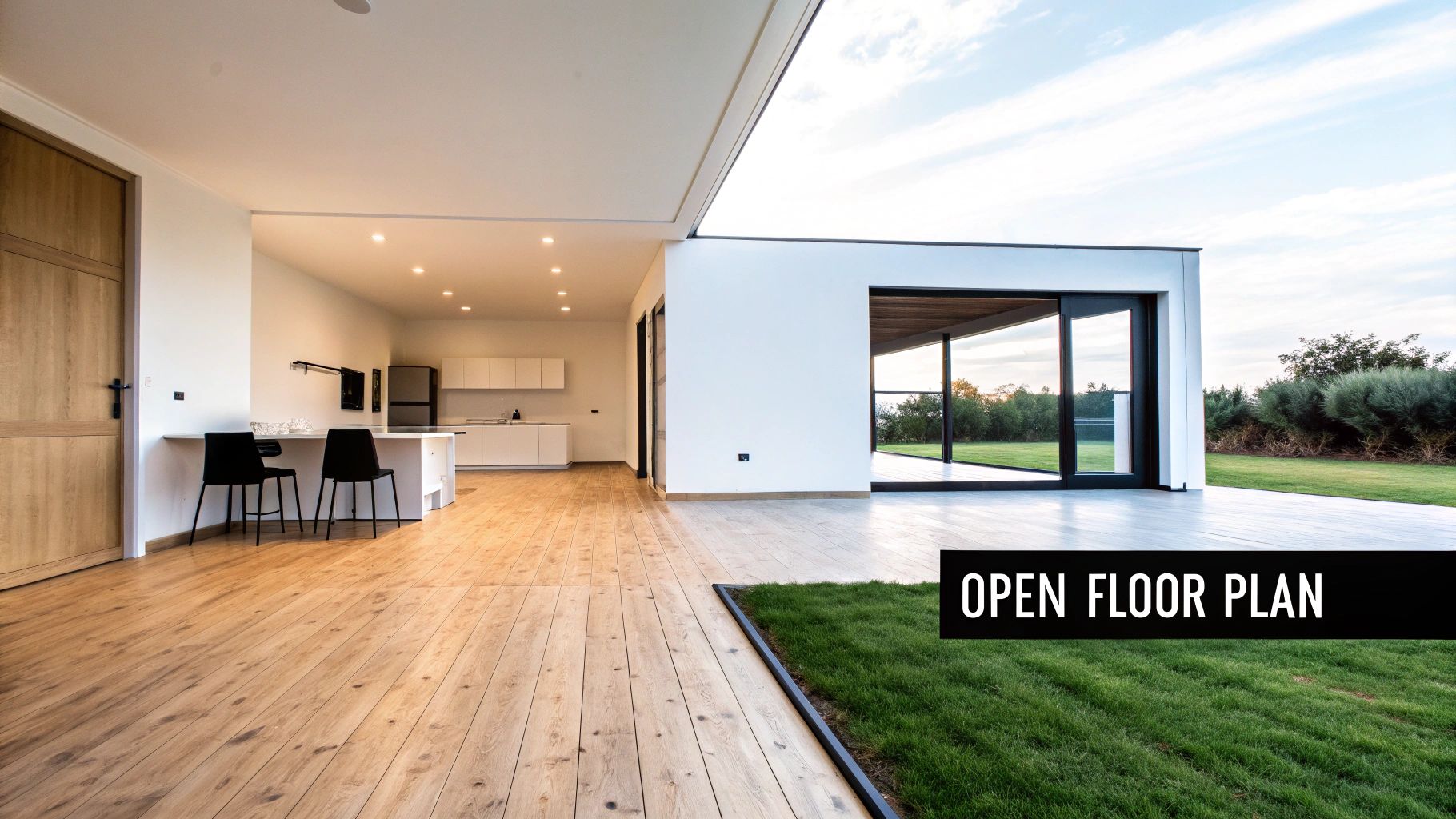
Embracing a simplified and open floor plan is a sophisticated design choice that enhances both the livability and financial efficiency of your custom home. This architectural strategy, popular in luxury builds from Franklin to Murfreesboro, minimizes interior walls, doorways, and complex framing. The result is a more inviting, light-filled space and one of the smartest ways to save money building a house by reducing material, labor, and finishing costs.
What are Simplified and Open Floor Plans?
This approach focuses on creating expansive, multifunctional living areas where the kitchen, dining, and living rooms flow seamlessly into one another. Instead of compartmentalized rooms, the design uses strategic furniture placement, ceiling details, and flooring transitions to define zones. As your design-build partner, we engineer these open spans with carefully integrated load-bearing beams and structural elements that feel intentional, not obstructive.
This concept is a hallmark of many popular modern farmhouse floor plans, where a great room serves as the home's heart. By eliminating redundant hallways and partitions, the budget saved on framing, drywall, and paint can be reinvested into signature elements like a waterfall quartz island, a custom fireplace surround, or a premium appliance suite.
Key Insight: An open floor plan doesn't just save money on construction; it creates a more connected and spacious living experience. The perceived value and square footage of the home increase dramatically, enhancing both daily enjoyment and future resale potential.
Actionable Tips for Implementation
To successfully integrate an open concept design into your luxury build, we recommend the following:
- Plan for Structure First: Collaborate with your design-build team to strategically place engineered beams and structural supports. This ensures the open-concept feel is maintained without compromising integrity.
- Define Zones with Design: Use area rugs, oversized light fixtures, and ceiling treatments like coffered or tray ceilings to delineate different functional areas within the larger space.
- Integrate Smart Storage: Without interior walls for closets, incorporate custom built-in cabinetry and clever storage solutions within your kitchen and living areas to maintain an uncluttered aesthetic.
- Manage Acoustics and Airflow: Consider using materials that absorb sound and plan for a high-performance ventilation system, especially in the kitchen, to ensure comfort throughout the open area.
3. Strategic Material Selection and Bulk Purchasing
Thoughtful material procurement is a cornerstone of a well-managed luxury home build. Strategic material selection and bulk purchasing is a methodical process where we leverage our supplier relationships and project volume to acquire high-quality materials more cost-effectively. This is one of the most practical ways to save money building a house, allowing us to secure premium components while protecting your overall investment in your Williamson County home.
What are Strategic Sourcing and Bulk Purchasing?
This strategy isn't about choosing inferior materials; it's about intelligent acquisition. As your design-build partner, we analyze the entire project's material needs—from framing lumber to drywall and tile—and consolidate orders to achieve volume discounts. This process also involves precise planning to ensure materials are on-site exactly when needed, minimizing storage costs and potential damage.
For instance, by ordering all the framing lumber, sheathing, and subflooring for your entire Franklin home at once, we can negotiate a better price than if purchased incrementally. This disciplined approach is also key to reducing construction waste, further enhancing project efficiency.
Key Insight: The power of this strategy lies in timing and volume. By planning all material needs upfront, we can lock in pricing and negotiate from a position of strength, converting logistical efficiency into direct savings for you.
Actionable Tips for Implementation
To effectively leverage this strategy for your custom home build, it is essential to:
- Finalize Selections Early: Lock in material choices like flooring, tile, and fixtures during the design phase. This allows for accurate, comprehensive quotes and bulk ordering.
- Leverage Supplier Relationships: Work with a builder who has established, long-term relationships with local Nashville and Middle Tennessee suppliers, which often translates to preferential pricing and service.
- Coordinate Delivery Schedules: Plan just-in-time deliveries with your project manager to reduce the risk of on-site material theft, damage, or degradation from weather exposure.
- Compare Unit Costs: Analyze the cost-per-unit for different quantities. Sometimes, purchasing slightly more material than needed in a bulk package is cheaper than buying the exact amount in smaller quantities.
4. Phased or Staged Construction
Building a custom home is a significant investment, and managing cash flow is a critical component of a successful project. Phased or staged construction is a strategic approach that offers financial flexibility, allowing you to build your dream home on a timeline that aligns with your budget. This method is one of the most practical ways to save money building a house by spreading costs over time rather than incurring them all at once.
What is Phased Construction?
Phased construction divides the total project into distinct, manageable stages. Instead of building the entire home from foundation to final finishes in one continuous push, we complete a defined portion of the home to a livable standard. This allows you to move in sooner and defer the cost of secondary or non-essential spaces until a later date when your budget allows.
For instance, a Nashville-area family might prioritize building the main two-story residence, allowing them to enjoy their primary living spaces, kitchen, and owner's suite. Later, in a second phase, we could add a detached garage with an in-law suite above it or finish out a full walk-out basement. This strategic delay reduces the initial loan amount and immediate financial pressure without sacrificing the ultimate vision for your property.
Key Insight: Phasing allows you to secure your ideal lot and build the core of your dream home now, locking in today's land prices while giving you the flexibility to expand as your financial situation or family needs evolve.
Actionable Tips for Implementation
To successfully execute a phased build, meticulous planning is essential:
- Design the Full Vision: Always start with a complete master plan. We will design the entire project from the outset to ensure future additions integrate seamlessly with the original structure, avoiding costly retrofitting of plumbing, electrical, and HVAC systems.
- Protect Finished Spaces: Establish clear protocols to protect the occupied areas of your home from dust, debris, and damage during subsequent construction phases. This is a standard part of our process at CJMC Build.
- Plan for Utilities and Access: Ensure the initial phase includes sufficient utility capacity (e.g., septic size, electrical panel) and planned access points for workers and materials needed for future phases.
- Structure Contracts Clearly: Each phase should have a clearly defined scope of work and contract. This ensures transparency and sets clear expectations for costs and timelines for both the current and future stages of your project.
5. Prefabrication and Modular Construction
Building a luxury home in Williamson County with precision and efficiency requires forward-thinking methods. Prefabrication and modular construction represent a sophisticated approach, where key components of your home are built in a controlled, factory environment before being transported and assembled on-site. This is one of the more innovative ways to save money building a house, not by cutting corners, but by optimizing the construction process for superior quality and speed.
What is Prefabrication and Modular Construction?
This method is not about cookie-cutter designs; it’s about intelligent manufacturing applied to custom architecture. Instead of building everything from raw materials on your Franklin or Brentwood property, elements like wall panels, roof trusses, or even entire room modules are fabricated off-site. This controlled setting eliminates weather delays, reduces material waste, and ensures every component is built to exacting tolerances, resulting in a tighter, more energy-efficient home.
For a custom build, this could mean using Structural Insulated Panels (SIPs) for the exterior walls and roof, providing exceptional insulation and strength. It could also involve factory-built custom cabinetry that arrive ready for installation, accelerating the interior finishing schedule and ensuring a flawless fit and finish.
Key Insight: Prefabrication moves a significant portion of labor from the unpredictable job site to a predictable factory floor. This shift dramatically reduces on-site construction timelines and minimizes costly weather-related delays and labor inefficiencies.
Actionable Tips for Implementation
To successfully integrate this strategy into your custom home project, it’s vital to:
- Integrate into Design Early: Prefabricated components must be incorporated into the home's architectural plans from the outset. This requires seamless collaboration between the architect, builder, and fabricator.
- Plan Site Logistics: Your property must accommodate the delivery and placement of large components. We ensure proper site access, crane placement, and logistical coordination are planned well in advance.
- Verify Fabricator Quality: Partner with a design-build firm that has vetted and established relationships with high-quality fabricators. The precision of the final assembly depends entirely on the quality of the off-site manufacturing.
- Focus on the Assembly Team: Ensure the on-site crew has specific experience with the chosen prefabricated system. The assembly process is a critical phase that demands specialized skills for a perfect execution.
6. Contractor and Subcontractor Competitive Bidding
True project value is secured not just through design, but through diligent, professional execution. A competitive bidding process is a cornerstone strategy we use at CJMC Build to ensure our clients receive exceptional craftsmanship at a fair, market-driven price. This is one of the most direct ways to save money building a house while assembling a team of top-tier artisans for your Franklin or Brentwood home.
What is Competitive Bidding?
Competitive bidding is not about finding the cheapest labor; it's about creating a transparent environment where qualified tradespeople provide detailed quotes based on an identical scope of work. As your design-build partner, we manage this intricate process, soliciting bids from our vetted network of trusted electricians, plumbers, foundation specialists, and other craftsmen. This creates healthy competition that naturally moderates costs without sacrificing the quality required for a luxury build.
For instance, we provide three separate, highly-regarded HVAC contractors with the exact same mechanical plans and specifications. By comparing their itemized proposals, we can analyze not just the final number, but the value offered in equipment brands, installation techniques, and warranty terms. This disciplined approach ensures every dollar contributes directly to your home's long-term comfort and performance.
Key Insight: A well-managed bidding process leverages market dynamics to your advantage. It replaces guesswork with data, allowing you to make informed decisions and secure the best possible value from proven, high-quality subcontractors.
Actionable Tips for Implementation
To effectively implement this strategy for your custom home, it's essential to:
- Provide an Identical Scope: Ensure every bidder receives the exact same detailed plans, specifications, and project requirements. Apples-to-apples comparisons are impossible otherwise.
- Demand Itemized Quotes: Request that all bids break down costs for labor, materials, and equipment. This transparency is crucial for accurate comparison and negotiation.
- Look Beyond the Lowest Price: The cheapest bid is often not the best value. We help you analyze a contractor's reputation, experience with luxury projects, and the quality of their proposed materials. Learn more about how to choose a contractor to understand this critical process.
- Verify Credentials: Always confirm that any potential subcontractor carries the proper licensing, bonding, and insurance required for work in Williamson or Davidson County.
7. DIY Labor and Owner Involvement
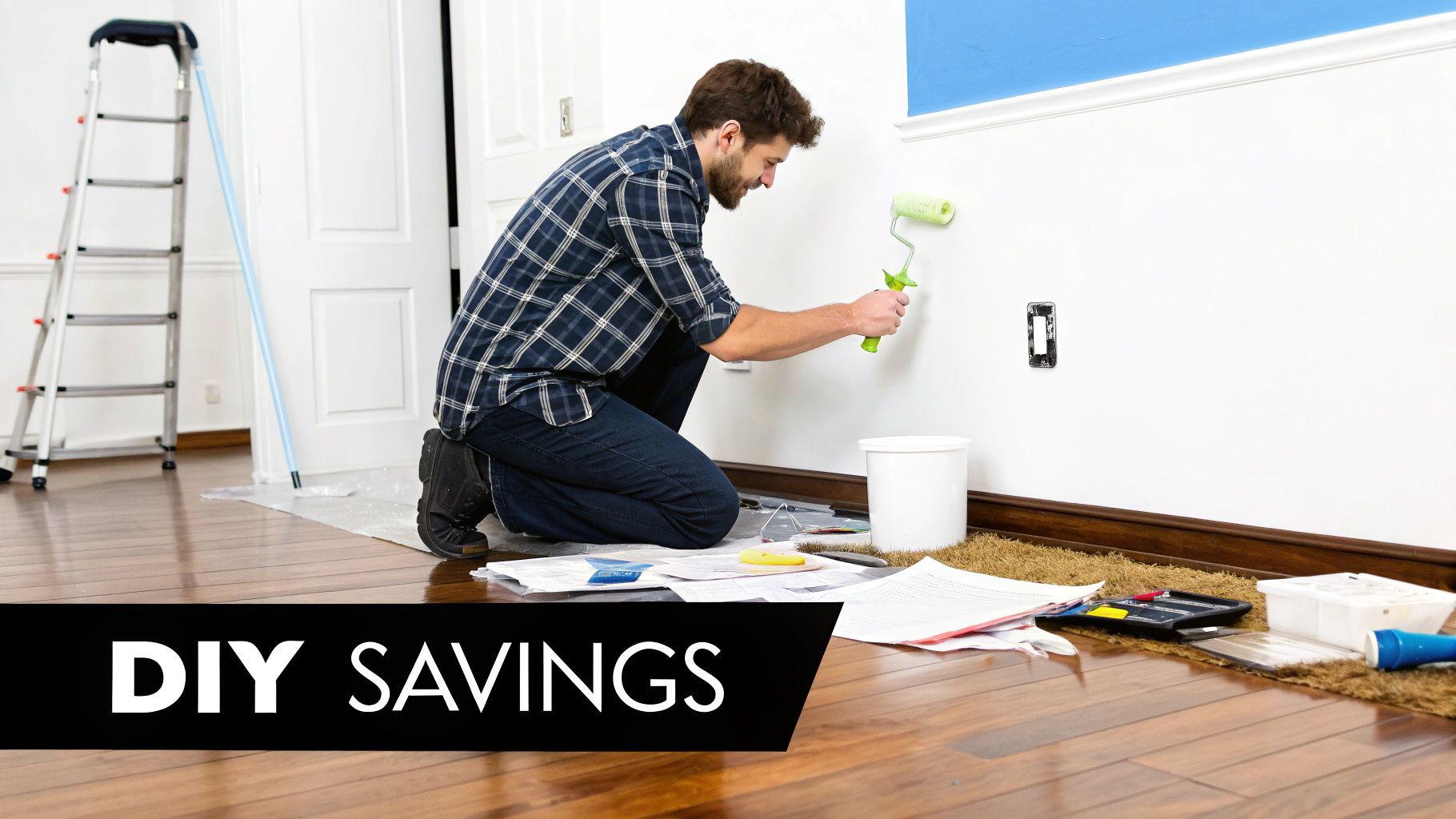
For homeowners with the right skills and a willingness to invest "sweat equity," taking on certain tasks can be a rewarding way to manage costs. This approach involves you, the owner, performing specific non-skilled or finishing tasks that would otherwise be part of the labor budget. It is one of the more hands-on ways to save money building a house, allowing you to be directly involved in creating your custom home.
What is Strategic Owner Involvement?
Owner involvement isn't about taking the place of licensed tradespeople like electricians or plumbers. Instead, it’s a strategic decision to handle manageable projects that have a low risk of impacting the critical path of construction. This could mean painting interior rooms, performing the initial site cleanup, or installing landscaping after the primary construction is complete.
For example, a client in Murfreesboro might choose to personally install a reclaimed wood accent wall in their study or assemble pre-fabricated closet organization systems. These tasks, while requiring attention to detail, don't interfere with structural, mechanical, or electrical work, ensuring the project schedule managed by your builder remains on track while you achieve direct savings.
Key Insight: The best DIY tasks are those performed at the beginning or end of the construction timeline. This minimizes interference with professional trade schedules and prevents costly delays.
Actionable Tips for Implementation
To successfully incorporate your own labor without compromising quality or safety, it’s essential to:
- Communicate Clearly: Discuss your intentions with your design-build team early on. We can help identify appropriate tasks and schedule them to align with the overall project timeline.
- Focus on Finishing Touches: Stick to non-structural, non-licensed work. Interior painting, basic trim work, landscaping, and final cleanup are excellent opportunities for owner involvement.
- Respect the Schedule: Professionals work on a tight schedule. Ensure your tasks are completed on time to avoid holding up the next trade, which could negate any cost savings.
- Verify Warranties: Confirm with your builder and material suppliers that your DIY work will not void any warranties on materials or professional installations.
8. Energy-Efficient Choices That Reduce Long-Term Costs
Building a luxury home is an investment not only in exquisite design but also in long-term comfort and operational efficiency. Choosing energy-efficient systems and materials is one of the smartest ways to save money building a house over its entire lifecycle. While some high-performance upgrades carry a higher initial cost, they deliver substantial returns through significantly lower monthly utility bills and reduced maintenance demands.
What is a Long-Term Cost Approach?
This strategy involves prioritizing your home's performance and operational expenses over a 10, 20, or even 30-year horizon. Instead of focusing solely on the upfront construction budget, we analyze how specific choices will impact your carrying costs. It’s a forward-thinking approach that ensures the luxury and comfort of your Franklin or Brentwood home are sustainable and cost-effective.
For example, investing in a complete spray foam insulation and air sealing package significantly reduces the workload on your HVAC system. This not only lowers your heating and cooling bills but also extends the life of the equipment. Similarly, specifying high-performance windows with advanced coatings minimizes heat gain in the summer and heat loss in the winter, creating a more stable and comfortable interior environment year-round.
Key Insight: The most significant long-term savings come from a "whole-house" systems approach. An airtight building envelope, high-efficiency HVAC, and ENERGY STAR appliances work together to create a high-performance home that costs less to operate every single month.
Actionable Tips for Implementation
To integrate this strategy into your luxury build, it’s essential to:
- Model Energy Performance: During the architectural design phase, we can model the energy performance of different window, insulation, and HVAC combinations to calculate the potential return on investment.
- Prioritize the Building Envelope: Invest generously in air sealing and a superior insulation package. This is the foundation of energy efficiency and is difficult and expensive to upgrade later.
- Leverage Rebates and Incentives: Research available federal, state, and local incentives for installing ENERGY STAR certified products, which can help offset the initial investment.
- Consider Lifecycle Costs: A more expensive, but highly efficient, heat pump water heater or geothermal HVAC system may have a payback period of just a few years and provide decades of savings.
9. Timing of Construction and Seasonal Advantages
Strategic planning extends beyond architectural blueprints; it encompasses the calendar itself. Aligning your construction timeline with seasonal fluctuations in labor demand and material costs is an intelligent and often overlooked way to save money building a house. At CJMC Build, we guide our clients in Franklin and Williamson County through a process that leverages these cycles, turning the calendar into a powerful tool for optimizing your investment.
What are Seasonal Advantages?
Seasonal advantages involve strategically scheduling key phases of your build during off-peak times. The construction industry in Middle Tennessee has its own rhythm. Demand for top-tier subcontractors surges in the warmer, drier months from late spring to early fall, leading to premium pricing and tighter schedules. By initiating your project during the slower months, typically from November to March, you can often secure more competitive bids and benefit from greater scheduling flexibility.
For example, we might plan to break ground and pour your foundation in late fall, allowing the site to be ready for framing crews when their winter schedules are more open. Similarly, material prices, such as lumber, can experience seasonal dips. Proactively timing your purchasing around these cycles can yield significant savings that can be reallocated toward premium finishes like custom millwork or a state-of-the-art home automation system.
Key Insight: The "off-season" in construction often translates to peak availability for the most sought-after craftsmen. Strategic timing not only saves money but can also secure you a more dedicated and focused team for your project.
Actionable Tips for Implementation
To harness the power of seasonal timing for your custom home build, we recommend you:
- Plan Ahead: Begin the architectural design process with your timeline in mind. An early start allows you to deliberately target off-peak windows for major construction phases, rather than being forced into peak season by delays.
- Discuss Timing Explicitly: Have a frank conversation with your builder about seasonal pricing. We can help you understand the local labor market and build a schedule that capitalizes on periods of lower demand.
- Build in Weather Contingencies: While building in the cooler months offers savings, it also requires planning for potential weather delays. A well-structured project plan will include contingencies for rain, snow, or freezing temperatures.
- Monitor Material Markets: Work with your builder to watch key commodity markets. Locking in pricing for materials like framing lumber or roofing when seasonal demand is lower can protect your budget from future volatility.
10. Site and Project Management Efficiency
A meticulously designed plan is only as valuable as its execution. On a luxury home build, operational excellence on-site is a powerful yet often overlooked way to control costs. Efficient project management is the disciplined orchestration of people, materials, and timelines, ensuring your investment is protected from the waste, delays, and miscommunication that can erode a budget. This is one of the most critical ways to save money building a house while simultaneously elevating the quality of the final product.
What is Site and Project Management Efficiency?
This strategy is about proactive, rigorous control over every aspect of the construction process. It transforms the build from a series of disconnected tasks into a seamless, coordinated flow. It’s not about rushing trades; it's about eliminating downtime, preventing rework, and ensuring every resource is used to its fullest potential.
For instance, employing a just-in-time delivery schedule for sensitive materials like custom cabinetry or high-end appliances prevents them from being damaged or lost on a busy site in Brentwood. It also means coordinating subcontractors so that the drywall team isn't waiting on the electrician, preventing costly delays that cascade through the entire schedule. This level of precision is fundamental to our process as a luxury home builder in Franklin, TN, safeguarding both your timeline and your budget.
Key Insight: The true cost of inefficiency isn't just wasted time; it's the compounding effect of schedule delays, material waste, and the potential for compromised craftsmanship that arises from a disorganized and reactive job site.
Actionable Tips for Implementation
To ensure your project benefits from superior management, insist on a builder who:
- Develops Detailed Schedules: A comprehensive project timeline, outlining every critical milestone from foundation pour to final walkthrough, is non-negotiable.
- Establishes Clear Communication: Regular, documented site meetings with all trades and stakeholders are essential to keep everyone aligned and address potential issues before they become problems.
- Implements Material Tracking: A system for tracking every order, from Marvin windows to quartz countertops, prevents loss, theft, and delays caused by missing components.
- Monitors the Budget Continuously: Your builder should provide transparent, ongoing budget reviews that compare actual costs against your allowances, preventing surprises and allowing for informed decisions.
Begin Your Design-Build Journey with CJMC Build
Building a custom home in Middle Tennessee is one of life’s most significant and rewarding endeavors. It's an investment not just in real estate, but in your family's future, your lifestyle, and your legacy. At CJMC Build, we believe that intelligent, informed decisions enhance value without compromising the architectural integrity and fine craftsmanship you deserve.
From optimizing your design with value engineering to selecting materials that balance aesthetic appeal with long-term performance, each choice is a critical component of a financially sound project. We discussed how a simplified footprint can unlock funds for premium finishes, like the site-finished hardwoods and custom cabinetry that define a luxury Nashville home. We also highlighted how strategic contractor bidding and efficient project management are the bedrock of a smooth, on-budget construction process. Mastering these concepts transforms the home-building experience from a source of stress into a journey of creation and stewardship.
From Blueprint to Breathtaking Reality
The ultimate takeaway is that true value in custom home construction is achieved through foresight, expertise, and a holistic approach. It’s about understanding the intricate dance between design, materials, and labor. By embracing an integrated design-build process, you eliminate the friction between architect and builder, ensuring every decision is made with both creative vision and practical cost implications in mind. This synergy is where excellence is born.
Imagine a home where 12-foot ceilings create an airy, expansive atmosphere, where natural light pours in through perfectly placed windows, and where every detail, from the quartz countertops to the millwork, reflects your personal style. This is the promise of a well-executed custom build. The strategies we've outlined are the tools that make this dream attainable and sustainable. You are not just building a structure; you are curating an environment for your life's most cherished moments.
Your Partner in Crafting Middle Tennessee's Finest Homes
As you move forward, the most crucial step is choosing the right partner. A premier luxury home builder in Franklin, TN, does more than just coordinate subcontractors; they serve as your advocate, your advisor, and the trusted guardian of your investment. They bring the expertise needed to navigate the complexities of Williamson and Rutherford county regulations while ensuring your home is a masterpiece of design and construction.
Your vision for a modern farmhouse in Leiper's Fork or a timeless estate in Brentwood deserves a team that can execute it with precision and passion. The journey begins with a conversation, a sharing of ideas, and the foundation of a collaborative partnership. We invite you to translate your inspiration into a concrete plan, guided by a team dedicated to architectural excellence and client satisfaction. Let us help you build not just a house, but a home that will stand as a testament to thoughtful design and impeccable craftsmanship for generations to come.
Ready to bring your vision to life with a team that masterfully balances luxury and value? As a premier Nashville design-build firm, CJMC Build specializes in translating your dreams into architectural reality, ensuring every dollar is invested wisely. Explore our gallery of custom homes to witness our commitment to craftsmanship, then schedule a design consultation to begin your journey with a trusted partner.

