


Deciding between a tray ceiling and a coffered ceiling is a pivotal moment in the custom home design process. It is a choice that establishes the architectural tone for a room, defining its character from above. The fundamental difference lies in visual weight and complexity. A tray ceiling offers a subtle lift—a single recessed section that introduces clean dimension. A coffered ceiling, conversely, is a definitive architectural statement—an intricate grid of beams that imparts significant depth and a sense of history.
The decision hinges on a simple question: are you seeking understated elegance or a bold, structural masterpiece? As a premier luxury design-build firm in Nashville, we guide our clients through this choice to ensure the result is a seamless extension of their vision.
Defining a Room's Architectural Character
When building a custom home in Middle Tennessee, every selection contributes to the narrative of your space. We refer to the ceiling as the "fifth wall," and for good reason. It is an expansive canvas that can elevate a room from beautiful to truly breathtaking. This is especially true in homes with soaring 12-foot ceilings, where the overhead design anchors everything below—from the site-finished hardwoods to the custom cabinetry and quartz counters.
This decision is not merely decorative; it is a matter of architectural intent. A coffered ceiling, with its strong, geometric grid, brings a sense of traditional craftsmanship and substance to a room. It adds a layer of rich history and permanence. A tray ceiling, however, offers a cleaner, more contemporary feel. It draws the eye upward, making the room feel even taller and more open. As a design-build firm serving Franklin, Brentwood, and all of Williamson County, we meticulously walk our clients through these nuanced yet powerful choices to craft a home that is unequivocally theirs.
Tray vs. Coffered Ceiling at a Glance
| Feature | Tray Ceiling | Coffered Ceiling |
|---|---|---|
| Primary Effect | Creates an illusion of height and openness. | Adds depth, texture, and structural grandeur. |
| Best Suited For | Primary suites, dining rooms, and home offices. | Great rooms, formal living areas, and libraries. |
| Architectural Style | Modern, Transitional, Contemporary. | Traditional, Classical, Craftsman, Farmhouse. |
| Visual Complexity | Minimalist and subtle. | Intricate and commanding. |
Considering the flow of your home is paramount. The impressive grid of a coffered ceiling perfectly complements the expansive volumes found in many of our custom open floor plan designs. In a primary bedroom, however, the quiet elegance of a tray ceiling can create the serene, retreat-like ambiance our clients desire.
At CJMC Build, we integrate these architectural elements into the conversation from the very first design meeting. It is the only way to ensure every detail harmonizes to create a truly cohesive, masterfully built home.
The Timeless Grandeur of Coffered Ceilings
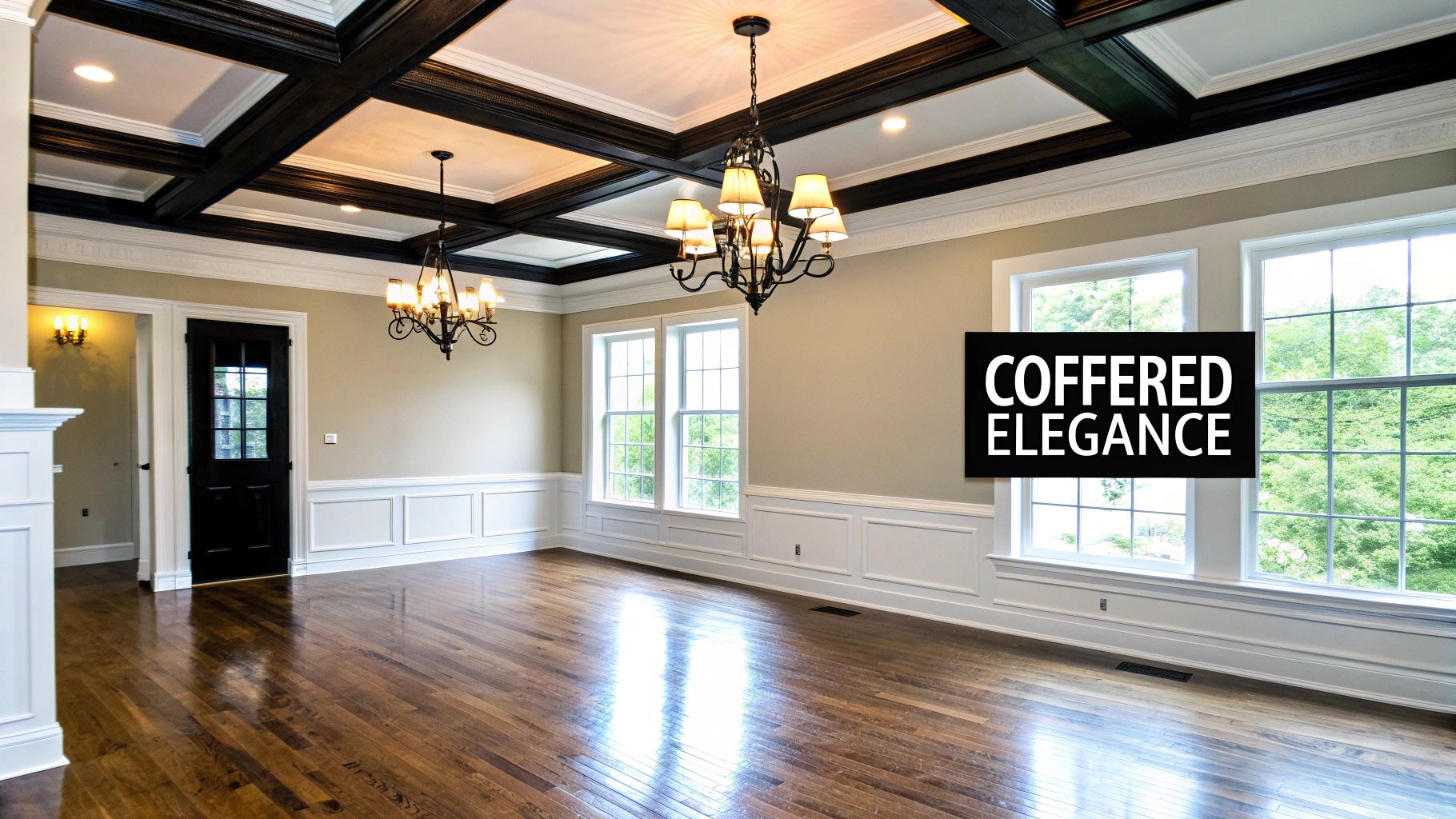
When a client desires a definitive architectural statement, the conversation often turns to coffered ceilings. This is not just an aesthetic flourish; it is structural art. A coffered ceiling, with its signature grid of intersecting beams and recessed panels, introduces a rhythm and depth that completely transforms a room. It adds a sense of history and permanence perfectly suited to a high-end custom home.
Imagine a great room with soaring 12-foot ceilings or a formal dining room designed for unforgettable gatherings. A coffered ceiling doesn't just adorn the space—it commands it. The gridwork even offers a practical benefit by subtly improving a room’s acoustics, a welcome feature in large, open-concept areas. As a premier luxury home builder in Franklin TN, we have seen firsthand how this feature creates a space that feels both grand and incredibly grounded.
The style's esteemed reputation is rooted in history, tracing back to classical antiquity and seeing revivals during the Renaissance. These eras forever linked coffered ceilings with premium materials and sophisticated design, as noted in the ceiling design history on Angi.com.
The Craftsmanship Behind the Grid
Executing a coffered ceiling requires a level of precision that distinguishes true custom craftsmanship. This is not a simple decorative treatment; it demands meticulous planning from the earliest architectural stages and flawless execution by our master carpenters. Each beam and panel must align perfectly to create a seamless grid that appears integral to the home's structure.
The beauty of a coffered design lies in its customizability. We collaborate with our clients to refine every detail, whether that means the rich warmth of stained wood beams against a crisp white panel or a subtle monochromatic scheme that plays with shadow and light.
At CJMC Build, we view a coffered ceiling as a symphony of details. It’s where the precision of our architectural drawings meets the hands-on skill of our master carpenters, resulting in a feature that elevates the entire home.
Architectural Impact and Room Scale
A coffered ceiling requires volume to be fully appreciated. It is best suited to spaces with generous height and scale, allowing its dimensionality to make a powerful impact. In the luxury homes we build throughout Williamson County, we typically reserve this feature for primary living spaces to achieve maximum effect.
- Great Rooms: In an open-concept area, the grid adds structure, helping to define the living space without walls.
- Formal Dining Rooms: It brings an immediate layer of formality and intimacy, turning every meal into an occasion.
- Home Offices or Libraries: Nothing creates a classic, scholarly atmosphere of focus and sophistication quite like a coffered ceiling.
Ultimately, the tray ceiling vs coffered ceiling debate often comes down to the feeling you wish to evoke. A coffered ceiling adds substance, texture, and character—a bold architectural choice that signals a commitment to quality and timeless design. If this level of detail resonates with you, we invite you to browse our gallery of completed projects to see this craftsmanship for yourself.
The Understated Elegance of a Tray Ceiling

Where a coffered ceiling commands attention with its bold geometry, a tray ceiling offers a quieter, more refined architectural detail. Conceived as an inverted tray set into the ceiling, this simple recession has a powerful effect. The design naturally draws the gaze upward, making a room feel taller, more open, and more spacious.
This subtle impact is precisely why many homeowners building in Brentwood and Murfreesboro are drawn to this style. It adds just enough architectural character without overwhelming the space, allowing other premium finishes like custom cabinetry and site-finished hardwoods to shine. It is a look that feels polished, intentional, and thoughtfully designed.
The Artistry of Clean Lines and Subtle Dimension
The elegance of a tray ceiling is entirely in its execution. Its beauty is derived from perfectly crisp lines and flawlessly smooth surfaces—a testament to the meticulous work of our drywall and trim artisans. Every corner must be sharp and every plane perfect.
The design can be tailored to the home’s personality. A single, simple recess feels clean and modern. By adding multiple steps or intricate crown molding, we can create a look that leans more traditional or transitional. This versatility makes a tray ceiling an excellent choice for various rooms within a luxury home.
A tray ceiling is a study in architectural restraint. Its elegance comes not from intricate patterns but from flawless execution, creating a quiet drama that elevates the entire room.
This feature is more than a decorative detail; it is a smart design tool. We use it to define a specific area within an open floor plan or to make a large room feel more intimate and grounded. To see how our integrated design-build approach brings these features to life, explore our gallery of completed custom homes.
Ideal Applications in a Luxury Tennessee Home
When weighing a tray ceiling vs coffered ceiling, the room's function is a primary consideration. Tray ceilings excel in spaces where you want to cultivate an atmosphere of sophisticated calm or focused elegance. Their ability to open up a room makes them a go-to choice for certain areas of the home.
We often recommend tray ceilings for:
- Primary Suites: The perceived height, combined with the potential for soft cove lighting, creates a peaceful, spa-like retreat.
- Formal Dining Rooms: A rectangular tray designed to mirror the dining table below frames the space beautifully, making entertaining feel special.
- Home Offices: It adds a touch of professional polish without the visual weight of a coffered ceiling, helping to create a clear, uncluttered mindset.
As a dedicated luxury home builder in Franklin, TN, these are the details we weave into our design-build process from the very beginning. Understanding how you envision living in a space is the key to recommending architectural features that will truly enhance your lifestyle. For more inspiration on adding character overhead, our guide on designing with exposed ceiling beams offers another excellent perspective.
Craftsmanship, Materials, and Architectural Impact
The choice between a tray and a coffered ceiling extends beyond aesthetics; it is a decision about craftsmanship, premium materials, and the architectural statement your home will make. Each style derives its unique character from the materials used and the skill required for installation. For our clients building a custom home in the Nashville area, aligning these elements is crucial to creating a space that feels truly authentic.
A coffered ceiling makes an immediate, commanding statement. Its powerful grid is constructed from a network of intersecting beams that create classic recessed panels, or "coffers." The material selection here is paramount, setting the tone for the entire room. In contrast, a tray ceiling achieves its quiet elegance through flawless drywall and precision trim work. The artistry lies in the clean, crisp lines that create a subtle step-up, adding dimension without overwhelming the space.
Material Selection and Architectural Presence
Premium materials are where a coffered ceiling truly finds its voice. Solid hardwood beams lend a sense of history and authentic weight, making them a perfect fit for a grand study or a formal great room with 12-foot ceilings. For a more contemporary take, we can use painted MDF to achieve the same geometric pattern with a cleaner, brighter feel.
Tray ceilings are a different discipline, built primarily from drywall and brought to life with high-quality trim. Their impact comes from the layering of these details. A simple, clean-edged tray can feel minimalist and modern. By adding layers of intricate crown molding, we can easily steer the design toward a more traditional or transitional style. It is all about creating sharp, elegant lines that naturally draw the eye upward.
The real difference is how they define luxury. A coffered ceiling tells a story with texture and structure. A tray ceiling tells its story with clean lines and refined dimension. Both demand an incredible level of skill to get just right.
For a quick overview of how these two styles stack up in a custom home project, this table breaks down the key attributes.
Architectural Ceiling Comparison At a Glance
| Attribute | Tray Ceiling | Coffered Ceiling |
|---|---|---|
| Primary Style | Elegant, subtle, versatile | Dramatic, structural, traditional |
| Best For | Bedrooms, dining rooms, hallways | Great rooms, studies, home theaters |
| Visual Impact | Adds height and refined detail | Adds depth, texture, and grandeur |
| Material Focus | Drywall, trim, crown molding | Wood beams, MDF, detailed millwork |
| Complexity | Moderate; requires precision finishing | High; requires expert carpentry |
| Cost | $$ | $$$$ |
| Acoustics | Minimal impact | Good; helps absorb sound and echo |
This comparison highlights that the choice often comes down to the specific goals for a room—whether you're aiming for quiet elegance or a bold architectural feature.
Construction Complexity and Acoustic Performance
The construction methods for these two ceilings are vastly different, each requiring a specialized artisan skillset. A coffered ceiling is a masterclass in planning and carpentry. Every beam must be perfectly spaced, absolutely level, and seamlessly joined. This complexity naturally translates to a longer installation timeline and a higher investment, but the result is a true architectural centerpiece. You can learn more about how materials impact ceiling design on trimteam.ca.
A tray ceiling may appear simpler, but it demands an equal level of precision from our drywall and finish carpentry teams. Achieving perfectly smooth surfaces and razor-sharp corners is an art form. The process is generally faster and more budget-friendly than a full coffered build, yet it still delivers a significant aesthetic return.
Finally, acoustics are an often-overlooked benefit. The structure of a coffered ceiling, with its deep beams and recessed panels, is excellent at breaking up sound waves. It can significantly reduce echo, making it a smart choice for home theaters or large, open-concept great rooms.
Integrating Custom Lighting and Smart Home Systems
In a luxury custom home, a ceiling is far more than a simple surface; it is an opportunity for sophisticated lighting and smart technology integration. Your choice between a tray or coffered design will significantly influence how these systems are woven into the fabric of your space. The goal is a ceiling that is not just beautiful but brilliantly functional, effortlessly housing everything from ambient lighting to smart home controls.
This is where our integrated design-build process proves invaluable. At CJMC Build, we map out every electrical, lighting, and AV consideration from the earliest architectural drawings. This foresight ensures that whether you opt for the clean sweep of a tray ceiling or the classic grid of a coffered one, all technology feels intentional, not like an afterthought.
Tray Ceilings: A Canvas for Ambient Light
The natural channel of a tray ceiling is perfectly suited for modern, indirect lighting. We often specify hidden LED strips to create cove lighting, a soft, ambient glow that washes across the ceiling. This technique fills the room with gentle, even illumination without the harsh glare of a visible bulb.
It is the perfect method for creating a calm, sophisticated atmosphere in a primary suite or adding a touch of elegance to a formal dining room. This clean, minimalist approach provides beautiful, useful light while accentuating the ceiling's depth.
Coffered Ceilings: Structure for Smart Tech
A coffered ceiling provides a structured grid of beams and panels—an ideal framework for layering lighting and other technology. Each coffer acts as its own compartment, opening up opportunities for a clean, organized layout and the seamless concealment of modern systems.
With a coffered ceiling, every fixture has its place. This structured design allows for the perfect concealment of technology, preserving the room's classical elegance while delivering modern performance.
This design masterfully hides technology in plain sight, allowing for the integration of multiple systems without creating visual clutter.
- Recessed Lighting: We often place can lights in the center of each coffer to deliver perfectly spaced, even downlighting across a large great room.
- Statement Fixtures: A central coffer can serve as a grand frame for a stunning chandelier or pendant, creating a natural focal point that anchors the room.
- In-Ceiling Audio: Speakers can be discreetly tucked inside individual coffers, providing immersive sound without interrupting the clean architectural lines.
As a dedicated luxury home builder in Franklin TN, we obsess over perfecting this integration. By bringing our architects, electricians, and AV specialists to the table early, we ensure the ceiling’s complex design works in perfect harmony with the home’s technology. These details are on display in our gallery of custom home projects.
Analyzing Cost and Resale Value in Middle Tennessee
When you build a custom home in a discerning market like Middle Tennessee, every decision is an investment. It’s not just about the cost of a tray or coffered ceiling today, but how that choice contributes to your home's value and appeal tomorrow.
A coffered ceiling represents a more significant financial commitment. The intricate gridwork demands intensive labor from master carpenters and premium materials like solid wood beams, and the price reflects that fine craftsmanship. A tray ceiling, constructed primarily from drywall and trim, is a more approachable yet still elegant luxury.
How Your Investment Translates to Market Perception
In upscale communities like Brentwood and Franklin, discerning buyers look for signals of true custom construction. A beautifully executed coffered ceiling immediately communicates quality and craftsmanship. It is a feature that can genuinely elevate a home's perceived value and make it stand out in the market, as noted by luxury design publications like ElleDecor.com.
Conversely, a tray ceiling delivers a fantastic aesthetic impact for a more modest investment. It creates a sense of height and sophistication that buyers absolutely notice and appreciate, making it a smart way to add architectural interest to a primary bedroom or formal dining room.
For our clients in Williamson County, the conversation often comes down to strategic value. A coffered ceiling is a powerful statement that can help justify a higher asking price. A tray ceiling is an elegant upgrade that boosts appeal without over-inflating the budget.
As your design-build partner, our responsibility is to ensure any architectural element is built to last. This means flawless execution and strict adherence to local building standards—a commitment we detail in our guide to Tennessee residential building codes. This focus on quality ensures your investment is not only stunning but structurally sound.
Choosing the Right Ceiling for Your Nashville Home
So, which will it be: a tray ceiling or a coffered ceiling? The right choice aligns with your personal taste, the function of the room, and the overall narrative of your home. At CJMC Build, our role as both designer and builder is to help you connect those dots, ensuring every detail—from the site-finished hardwoods to the architectural ceiling above—feels perfectly placed.
The decision ultimately balances aesthetics, room scale, and budget. A coffered ceiling is a bold declaration of traditional craftsmanship, a perfect fit for grand, formal spaces designed to impress. A tray ceiling, on the other hand, offers a more subtle, versatile elegance, ideal for creating a sophisticated, airy feeling in more intimate spaces like a primary suite.
Making a Confident Decision
To clarify this process, we have mapped out a typical decision flow. While not a rigid formula, it illustrates how different priorities can lead to different architectural outcomes.
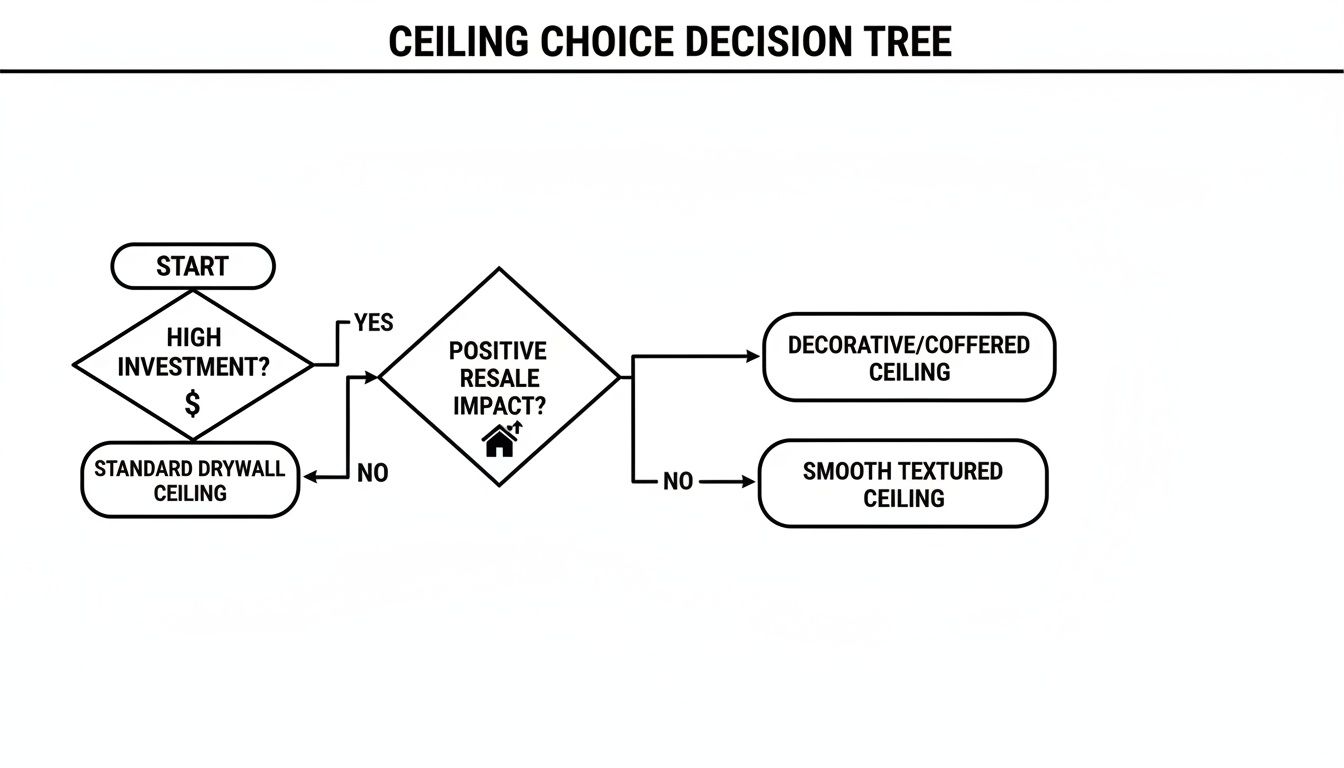
This decision tree helps visualize how factors like investment level and resale impact point you toward the right architectural feature, which is especially important in the competitive Middle Tennessee luxury market.
Room-by-Room Recommendations
While every custom home is unique, we have seen certain design choices work beautifully time and again in the homes we build across Murfreesboro, Franklin, and Brentwood. Here is what our experience often suggests:
- Coffered Ceilings: These truly shine in great rooms, formal studies, libraries, and home theaters. In these spaces, their structural beauty and acoustic dampening qualities can be fully appreciated.
- Tray Ceilings: We love using these in primary suites, formal dining rooms, and welcoming foyers. They’re perfect for adding a sense of height and a touch of refined drama without overwhelming the space.
This thoughtful approach is at the heart of our design-build process. We are always thinking about how you will live in each space. If you're curious about the standards behind this level of detail, our overview of Tennessee residential building codes offers insight into the benchmarks for quality and safety. The right ceiling does more than top off a room; it defines its character and stands as a signature of fine craftsmanship.
Your home should be a direct reflection of your vision, built with unwavering quality. At CJMC Build, we guide you through every choice, ensuring the home you've imagined becomes a timeless reality.
See our craftsmanship for yourself in our gallery of completed custom homes, or schedule your design consultation today to begin the conversation.

