


A residential construction contract isn't just a legal formality—it's the bedrock of your entire project. I’ve seen it time and time again: this document is your most critical communication tool, a detailed project roadmap, and a financial safety net. It’s what keeps everyone aligned and protects both you and your builder from costly, stressful misunderstandings down the road.
Why Your Project Needs a Bulletproof Contract

Building or renovating a home is a massive investment, both financially and emotionally. Without a solid, comprehensive agreement, that exciting venture can quickly devolve into a nightmare of conflict and confusion. Your contract should be the single source of truth for every last detail of the build. When it's done right, it stops disputes before they even have a chance to start.
Simply put, a well-defined contract is your best defense against the common pitfalls that plague construction projects. It takes assumptions and "we'll figure it out later" conversations and turns them into clear, actionable terms, making sure everyone is on the same page from day one.
Aligning Expectations and Preventing Disputes
The main job of a strong contract is to kill ambiguity. It needs to spell out the project's scope in painstaking detail, from the exact model of the kitchen faucet to the specific R-value of the insulation going into the walls. Without that level of specificity, you're just inviting disagreements.
I've seen it happen: a contract that just says "hardwood floors" is a recipe for disaster. What species? What grade? What finish? Each of those variables impacts the final look and cost. A bulletproof contract nails down every detail, ensuring the home you get is the home you envisioned.
A construction contract isn't for when things go right; it's for when they go wrong. It provides a clear, mutually agreed-upon framework for resolving issues, managing changes, and keeping the project moving forward without damaging the homeowner-builder relationship.
A Roadmap for Success
Beyond just legal protection, a great contract acts as a comprehensive project plan. It should lay out critical milestones and tie payments directly to verified progress—not to arbitrary dates on a calendar. This structure creates transparency and helps manage cash flow for everyone involved. It also establishes a formal process for handling change orders, which is essential for preventing scope creep and those dreaded surprise invoices.
The residential construction sector accounted for more than half of the total construction market in North America in 2024. In such a massive and often-strained market, a detailed contract is the key communication tool that keeps projects on track despite labor shortages or supply chain hiccups. You can find more insights on the construction industry outlook on Buildern.com.
A solid agreement also clearly defines everyone's roles and responsibilities, including crucial details like insurance requirements and warranty provisions. While finding the right builder is the first step—and it's vital to understand how to choose a contractor—signing a thorough contract is what seals the deal and sets the stage for a successful partnership.
Anatomy of a Strong Construction Contract

Think of your construction contract as the project's DNA. It contains every critical piece of information that will guide its development from a bare lot to a finished home. A handshake and a promise are nice, but they don't hold up when disagreements arise. This document is your single source of truth, breaking the entire project down into clear, legally binding parts, leaving zero room for costly assumptions.
Every clause in a good contract has a specific job. It identifies who is responsible for what, what materials will be used, and when each phase should be completed. Without this framework, you're inviting the kind of misunderstandings that can blow up your budget and timeline.
Defining the Scope of Work with Precision
The "Scope of Work" is, without a doubt, the heart of the entire contract. This is where most disputes are born, usually from vague, lazy descriptions.
Simply writing "install kitchen cabinets" is asking for trouble. A well-drafted scope will specify the cabinet brand, model number, material (e.g., solid maple vs. MDF), finish, and even the exact hardware. This level of detail has to apply to everything—from the gauge of the wiring to the brand of paint.
The scope should directly reference the architectural drawings and material spec sheets. The more specific you are here, the less wiggle room a contractor has to substitute cheaper materials or claim a task wasn't part of the original price. You and your builder need to be on the same page when looking at the plans, which is why our guide on how to read architectural blueprints is a must-read for any homeowner.
Key Parties, Timelines, and Legal Safeguards
Beyond the physical work, the contract must define the professional relationship itself. This means clearly identifying everyone involved, setting a realistic schedule with measurable milestones, and outlining the legal protections for both sides.
These elements create a system of accountability. They give you a path forward if things don’t go as planned.
- Identification of All Parties: Use full legal names, addresses, and contact info for the homeowner and the construction company. Crucially, it must include the contractor's license number.
- Project Timeline: This needs a firm start date and a "substantial completion" date. Many experienced builders also include a "time is of the essence" clause, which makes these dates legally binding and adds weight to the schedule.
- Insurance and Liability: The contract must state that the contractor will carry sufficient general liability insurance and workers' compensation. Always demand proof of coverage before a single hammer is swung. This protects you if an accident happens on your property.
Construction fraud is a devastating reality. One state reported over $32 million in consumer losses in just three years. A solid contract that verifies licensing and insurance is your best defense against shady operators.
Non-Negotiable Contract Clauses
A solid residential construction contract template will always have several key clauses that manage the project's logistics and protect both you and the builder. Leaving any of these out creates major legal and financial risks. The table below is your pre-flight checklist—review it carefully before signing anything.
This list covers the essential clauses your contract must have to protect your investment and ensure a smooth process from start to finish.
Essential Clauses in a Residential Construction Contract
| Clause/Section | Purpose and Key Details |
|---|---|
| Payment Schedule | Details when and how the contractor gets paid. Payments must be tied to completing specific, verifiable milestones (e.g., "foundation poured"), not just dates on a calendar. |
| Change Order Process | Establishes the formal, written procedure for any changes to the original scope. This prevents "scope creep" and ensures everyone agrees on the extra cost before the work is done. |
| Dispute Resolution | Specifies how conflicts will be handled, often through mediation or arbitration. This can be much faster and cheaper than a full-blown lawsuit. |
| Warranties | Clearly states what the contractor’s workmanship warranty covers, how long it lasts, and the exact process for filing a claim. |
| Termination Clause | Describes the specific conditions under which either you or the contractor can legally end the contract, such as the owner not paying or the builder failing to perform the work. |
Making sure these sections are clearly and fairly written gives both parties a clear rulebook to follow, which is the foundation of a successful project.
Structuring Payments to Avoid Financial Disputes
Money is where the rubber meets the road on any construction project, and it's also where things can go sideways fast. Getting the payment structure right in your residential construction contract template is less about just scheduling payments and more about building a foundation of transparency and trust from day one. It all starts with picking the right pricing model for your job.
You'll generally encounter two main options: Fixed Price or Cost-Plus.
A Fixed Price contract is exactly what it sounds like—one total price for the entire project. Homeowners often love this because it provides budget certainty. The flip side is that the builder absorbs all the risk if materials or labor costs suddenly spike. This can, in some cases, tempt a less-reputable contractor to rush or look for places to cut corners if their profit margin starts to evaporate.
Then there's the Cost-Plus model. Here, you pay for the actual cost of all labor and materials, plus an agreed-upon fee (either a percentage or a flat rate) that covers the contractor’s overhead and profit. This method is incredibly transparent since you see where every dollar goes. The catch? The final cost isn't set in stone, which can be nerve-wracking. It’s usually a better fit for highly custom or complex projects where the scope is likely to shift and evolve.
Tying Payments to Verifiable Progress
Whichever model you choose, your payment schedule should never be based on the calendar. That's a rookie mistake. Instead, every single payment must be tied directly to tangible, verifiable progress on the job site. This is non-negotiable for a fair contract.
Tying payments to physical milestones—like "foundation poured and inspected" or "drywall installed and finished"—is your best protection. It ensures you only pay for work that has been done correctly and keeps the builder motivated to hit their targets.
A typical milestone-based schedule might be broken down like this:
- 10% Deposit: Paid when you sign the contract.
- 15% Payment: Due after the foundation is complete and framing passes inspection.
- 20% Payment: Due once all rough-in work (plumbing, electrical, HVAC) is done and inspected.
- 20% Payment: Due after the drywall is hung, taped, and textured.
- Final Payment: Paid only after the final walkthrough is complete and a formal punch list is created.
This system is clear and easy for everyone to follow. You can see how these steps fit into the overall project by looking at a typical new home construction timeline.
Handling Allowances and Price Fluctuations
What about the moving targets? Your contract has to account for financial variables like allowances and volatile material costs.
An allowance is essentially a budget placeholder for items you haven’t chosen yet, like appliances, tile, or light fixtures. The contract must spell out the exact allowance amount for each item and, just as importantly, define the process for handling overages or underages—usually through a formal change order.
And in today's market, you absolutely need an escalation clause. Construction cost inflation is a real and persistent challenge; North America, for instance, is anticipating moderate rates of 3.5% to 3.8%. This clause outlines a fair process for how significant, unexpected price hikes on materials will be addressed. It’s a crucial protection for both you and your builder against sudden market swings.
Navigating Changes and Delays Like a Pro
Let's be realistic: no construction project goes exactly as planned. I've been around enough builds to know that changes and delays aren't just a possibility; they're practically a guarantee. A solid residential construction contract template doesn't just hope for the best—it prepares for this reality. It turns potential blow-ups into simple, administrative steps.
The goal here is to get away from handshake deals and the classic "we'll figure it out later" mentality. Trust me, those informal chats are where budgets get blown and timelines spiral out of control. A formal, written process is your best friend—it protects you, and it protects the builder.
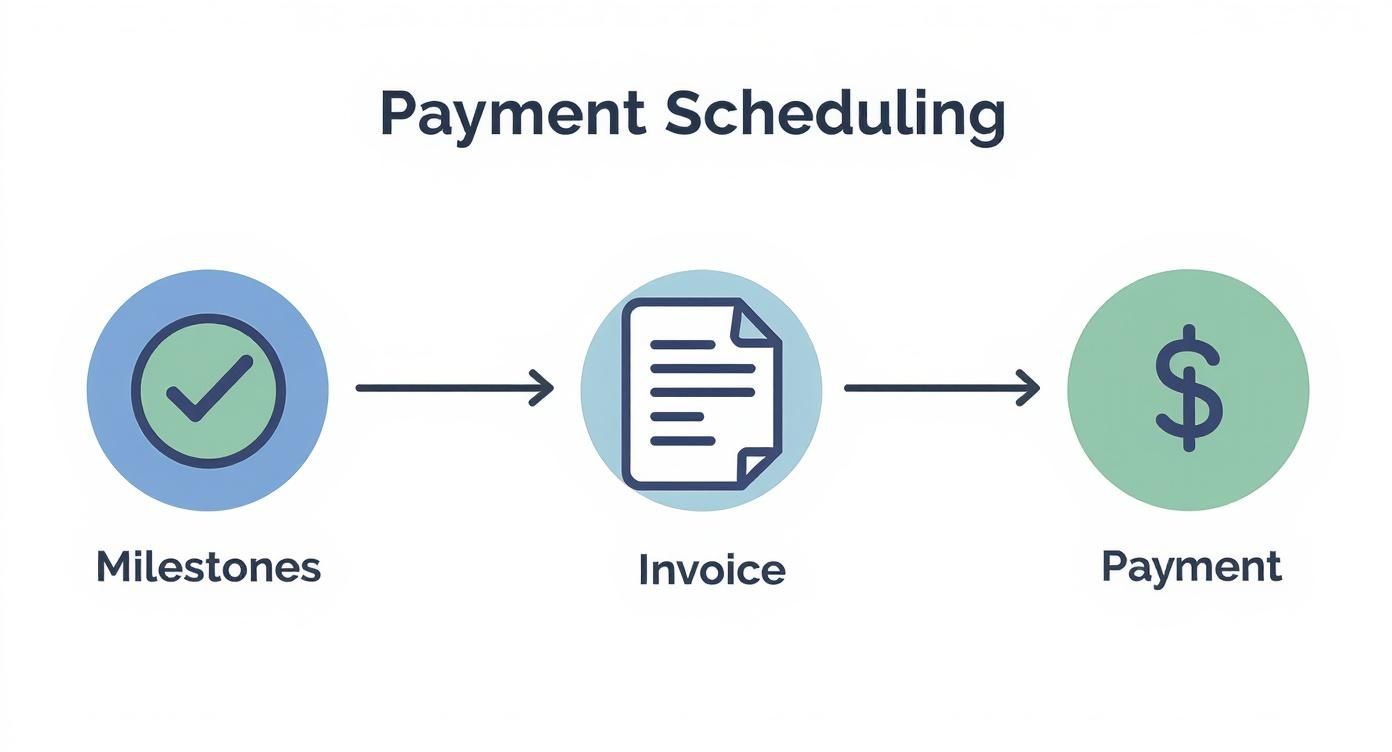
Think of it like this: just as you tie payments to clear milestones, you need to tie project changes to a clear, documented process. This is how you keep a firm grip on both the schedule and your wallet.
Put a Formal Change Order Process in Writing
Your contract's number one defense against scope creep is a mandatory Change Order process. This clause needs to be crystal clear: no changes to the original plan happen without a written, signed document. This isn't about creating bureaucratic hurdles; it's about forcing clear communication before anyone picks up a hammer.
A proper Change Order is more than just a quick note scribbled on a 2×4. It's a formal document that spells everything out:
- A detailed description of what's changing or being added.
- The precise cost of the change, breaking down labor and materials.
- The impact on the project schedule—how many days will this add to the timeline?
- Signatures from both you and the contractor, confirming everyone is on the same page.
This process means you know exactly what a change will cost in both time and money before the work ever starts. Say you decide halfway through the kitchen build to upgrade from standard granite countertops to that beautiful high-end quartz you saw. A Change Order would lock in the price difference and any installation delays, so there are zero surprises when the final bill arrives.
How to Handle the Inevitable Project Delays
Delays are another fact of life in construction, but it’s critical to understand that not all delays are the same. Your contract must define the difference to clarify who is responsible when the schedule slips.
A well-drafted contract distinguishes between "excusable" delays, which are beyond the contractor's control, and "inexcusable" delays, which are not. This distinction is crucial for determining if deadline extensions or financial penalties are appropriate.
Excusable Delays are the things nobody can control. Think of a freak blizzard that shuts down the site for a week, a city permitting office that’s backlogged for months, or a major supply chain disruption for a specific window type. In these cases, the contractor typically gets a time extension without being penalized.
Inexcusable Delays, on the other hand, stem from the contractor's own actions—or inaction. This could be anything from forgetting to order materials on time to poor scheduling that leaves the site empty for days. For these situations, your contract should outline specific remedies, like liquidated damages, where the contractor pays a set daily fee for every day the project is late.
Recent U.S. Census Bureau data shows just how volatile the market can be, with housing permits dropping to 1,312,000 units in August 2025, a 3.7% decline from the month before. These kinds of stats show why external pressures can easily lead to delays in permitting or even financing. A strong contract anticipates these bumps in the road. You can dig deeper into these numbers in the full new residential construction report.
Your Pre-Signing Final Review Checklist
You’ve made it through all the back-and-forth, and the final draft is sitting in front of you. Before you even think about signing, it's time for one last, careful pass. This isn't just paperwork; it’s a legally binding commitment. This final review is your last chance to catch anything that could cause major headaches down the road.
Think of it like a pilot's pre-flight check. You wouldn't skip that, and you shouldn't skip this. I always tell my clients to read the entire contract from beginning to end in one sitting. Don't stop to analyze every clause just yet—get a feel for the whole agreement. Does the story it tells match the conversations you’ve had? If something feels off, it probably is.
Verify Credentials and Protections
This is the part where you trust, but verify. Never, ever just take a builder's word for it when it comes to their license and insurance. A little bit of due diligence here is your first line of defense against problems that can cost homeowners millions.
License Check: Go directly to your state’s contractor licensing board website. It takes five minutes. Confirm their license is active and that there are no red flags or disciplinary actions against them. Hiring an unlicensed contractor is asking for a legal nightmare.
Insurance Verification: Ask for a Certificate of Insurance (COI). Don't just file it away—call the insurance agent listed on the certificate. Confirm the policy is active, the coverage amounts are sufficient for your project's scope, and, most importantly, that you can be named as an "additional insured." This is non-negotiable.
Taking these two simple steps protects you from fraud and ensures you aren't left holding the bag if an accident happens on your property.
Clarify Completion and Warranty Details
I’ve seen more disagreements arise from fuzzy definitions of "done" than almost any other issue. Two terms you need to know cold are "substantial completion" and "final completion."
Substantial completion typically means the home is safe and usable, even with a few minor "punch list" items left to fix (like a paint touch-up or a missing cabinet handle). This date is a huge milestone because it often triggers the final large payment and starts the clock on your warranty period.
Final completion is when every single item on that punch list has been signed off on. Your contract must define both of these milestones with absolute clarity to avoid any confusion about payments and responsibilities.
The warranty clause also needs a close look. Make sure it spells out exactly what’s covered, for how long, and the specific process you need to follow to make a claim. Vague promises aren't worth much when you discover a leak six months down the line.
Investing in a legal review before signing is not an expense—it's insurance. A construction lawyer can spot ambiguous language or unfair clauses in a residential construction contract template that an untrained eye would miss, potentially saving you tens of thousands of dollars and immense stress.
Think of it this way: spending a little upfront for a professional set of eyes can give you incredible peace of mind and ensure the agreement you're signing truly protects your investment.
Frequently Asked Construction Contract Questions
When you're knee-deep in planning a major build or renovation, you're bound to have questions. Even the most detailed residential construction contract template can’t cover every single what-if scenario. Let's walk through some of the most common questions homeowners have, so you can move forward with confidence.
These are the kind of practical, real-world concerns that often pop up right before you sign on the dotted line or when a project hits an unexpected snag. Getting a handle on these points now can save you a world of headaches later.
What Is the Difference Between a Fixed-Price and a Cost-Plus Contract?
This is a big one. With a fixed-price contract, you agree on one total price for the entire job. It's all-in. The biggest advantage here is budget predictability, which is a huge relief for many homeowners. On the flip side, the contractor absorbs all the risk if, say, lumber prices suddenly spike.
A cost-plus contract works differently. You pay for the actual costs of labor and materials, plus a pre-agreed fee or percentage that covers the contractor's overhead and profit. This approach gives you total transparency into where your money is going, but it offers less certainty on the final price tag.
So, which is right for you? It really boils down to your project's complexity and your personal comfort level with financial risk.
Can I Use a Generic Contract Template I Found Online?
Tread very carefully here. While a generic template you find online can be a decent starting point for understanding the basic structure, you should never, ever use one as-is. Think of it as a rough draft, not a finished product.
These documents are a one-size-fits-none solution. They almost always lack specific clauses required by your state or local laws and, by definition, can't account for the unique details of your project.
My best advice? Use a template as an educational tool. But before you sign anything, have it customized for your project and then thoroughly reviewed by a lawyer who specializes in construction law. That's the only way to ensure the agreement is legally sound and truly protects your interests.
What Should I Do If My Contractor Violates the Contract?
If you believe your contractor isn't holding up their end of the bargain, the first step is always to document everything. Immediately send a calm, professional email or letter that clearly outlines the problem. Make sure to reference the specific part of the contract you believe is being violated. This creates a time-stamped paper trail, which is crucial.
Often, a direct conversation based on your written record can clear things up. If that doesn't work, check the contract for a "dispute resolution" clause. It might require you to try mediation before heading to court.
For any serious or ongoing breach—like if the work stops completely or you discover major defects—don't wait. Your best move is to contact an attorney right away to understand your options and protect your investment.
Building your dream home should be an exciting journey, not a constant source of stress. At CJMC Build, we’re firm believers that clear communication and a rock-solid contract are the bedrock of any successful project. If you're planning a custom home in the Nashville area, we're here to help you get it right from the very beginning.
Ready to build with a team that puts transparency and quality first? Contact CJMC Build for a free consultation today!

