


When you envision your luxury custom home, you likely picture 12-foot ceilings, magnificent quartz countertops, or flawless site-finished hardwoods. But true luxury is also defined by what you don’t see—the intelligence embedded within the build itself.
At CJMC Build, we view reducing construction waste not as a compromise, but as a mark of superior craftsmanship and disciplined financial stewardship. As a premier luxury design-build firm serving Nashville, Franklin, and Brentwood, our approach ensures your investment is showcased in the fine details of your home, not diverted to a landfill.
Marrying Luxury Design with Sustainable Building
Discerning homeowners across Williamson County increasingly seek homes that are both architecturally stunning and responsibly built. For CJMC Build, a leading luxury home builder in Franklin, TN, this is not a trend we are chasing; it is an alignment with the values we have always upheld. We believe that masterful architectural design and smart, sustainable practices are intrinsically linked from the very first sketch.
This guide reveals how our integrated design-build process inherently reduces waste, enhances structural integrity, and delivers a home built with exacting precision. The most impactful work begins long before we break ground, during the preconstruction phase where critical decisions shape the outcome of the entire project.
A Higher Standard of Construction
The construction industry has a reputation for being wasteful, generating a staggering volume of debris annually. Globally, it accounts for nearly a third of all waste created. However, a positive shift is underway. Recent data reveals that approximately 93% of construction waste is now recovered or reused, and steel recycling rates have reached an impressive 98%. You can explore more insights on construction waste statistics to understand the broader context.
This movement toward more efficient building is something we have championed for years. Our entire methodology is founded on obsessive planning and meticulous on-site execution. We consider waste a symptom of inefficiency—a flaw that can be designed out of the process from the very beginning.
"Waste is not an inevitable byproduct of luxury construction; it is a failure of design and planning. True craftsmanship demands that we build with intention, ensuring every material serves its highest purpose."
This philosophy informs every decision we make, from laying out a floor plan to align with standard material dimensions to scheduling deliveries with precision to protect premium materials from unpredictable Tennessee weather. Because we are both the designer and the builder, we maintain complete control, allowing us to seamlessly weave waste-reduction strategies into every step. These practices are not an add-on to our promise of excellence—they are fundamental to it.
We invite you to see for yourself how we build homes of lasting beauty and enduring value. View our gallery of completed projects or schedule a design consultation to begin the conversation about your architectural vision.
Designing Waste Out Before Breaking Ground
To meaningfully reduce construction waste, one must begin long before the first shovel meets the dirt. The most significant gains are achieved not with a larger dumpster on-site, but at the drafting table. At CJMC Build, our proactive, integrated design-build process ensures your investment is channeled into beautiful materials and exquisite details, not landfill fees.
This is the phase where the vision for your new home in Nashville or Franklin confronts the practical realities of construction. We utilize advanced tools like Building Information Modeling (BIM) to create a precise digital twin of your home. This allows our architects and builders to virtually walk through every room, identify potential conflicts, refine layouts, and map out exact material needs before a single piece of lumber is ordered.
The Blueprint for a Leaner Build
It is remarkable how minor design adjustments can yield a major impact on waste.
For instance, modifying a room’s width by a few inches to correspond with standard lumber lengths or drywall sheet sizes can nearly eliminate offcuts. We apply the same principle to custom cabinetry, designing it to maximize the yield from a single slab of quartz or a premium sheet of walnut plywood. It is a meticulous process focused on minimizing costly remnants.
This level of detail permeates the entire build. We calculate the precise number of framing studs, the linear footage of trim, and the square footage of tile. This precision eliminates the outdated and expensive habit of over-ordering materials "just in case."
This chart illustrates how we integrate design and construction from day one to deliver a superior home with minimal waste.
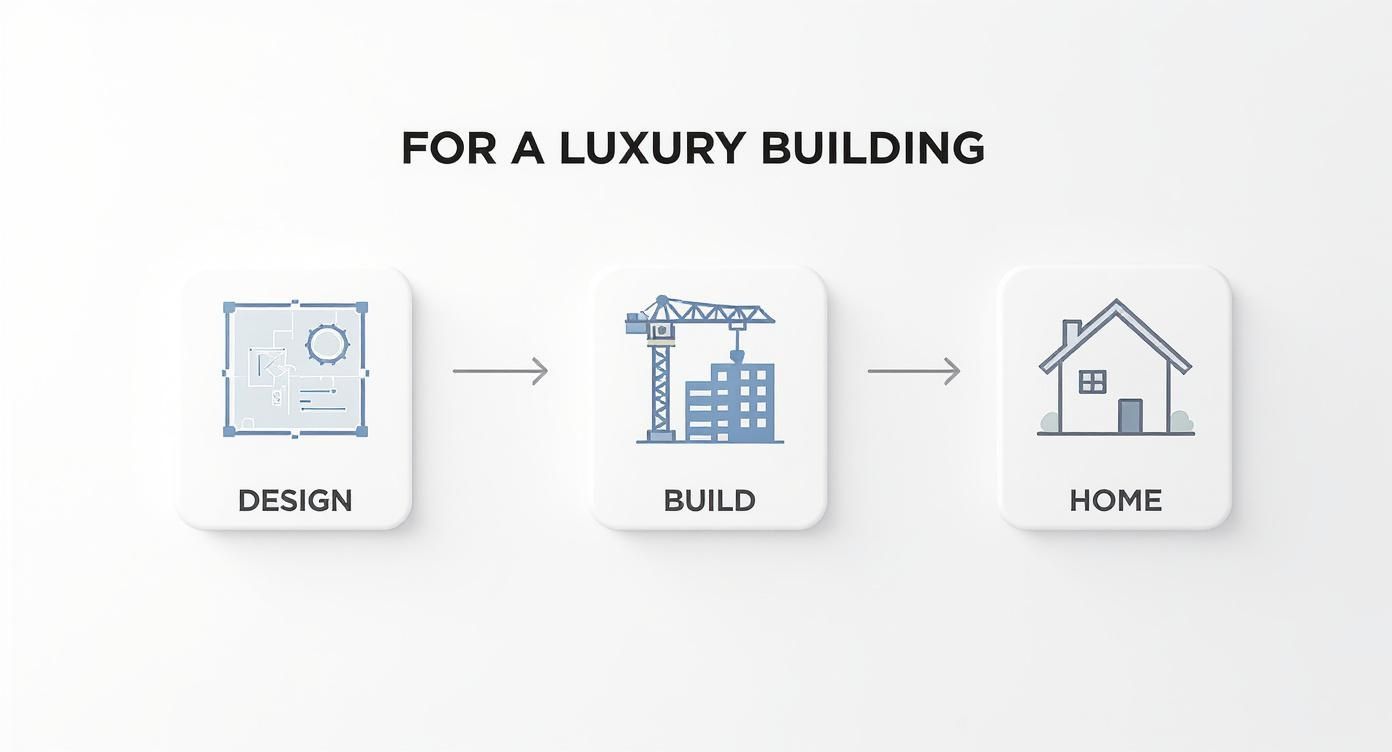
As you can see, our unified model creates a seamless flow from architectural concept to completion, with waste reduction engineered into every phase.
Integrating Value from the Very Start
This is a practical application of value engineering. It is not about cutting corners or selecting inferior materials; it is about building smarter—discovering the most efficient path to realize an architectural vision without compromising quality.
Having our builders in the room with our architects from day one creates a vital feedback loop. Challenges are resolved on paper, not on-site where they consume time, resources, and capital.
Table: Design Strategies for Waste Minimization
Here’s a comparison of how key preconstruction decisions can directly reduce on-site waste, contrasting a typical build with our integrated approach.
| Design Phase Consideration | Traditional Approach Outcome | CJMC Build Integrated Approach |
|---|---|---|
| Material Sizing | Dimensions are based purely on aesthetics, often leading to significant offcuts from standard-sized materials (drywall, lumber, etc.). | Room dimensions and layouts are optimized to align with standard material sizes, drastically reducing the amount of scrap. |
| Framing & Structure | Structural plans are created separately from material procurement, often resulting in over-ordering and complex, wasteful cuts on-site. | BIM models allow for precise framing takeoffs. Structural elements are designed for material efficiency from the start. |
| Cabinetry & Finishes | Custom elements are designed in a vacuum, leading to inefficient use of premium materials like stone slabs or hardwood plywood. | Cabinetry and built-ins are designed to maximize yield from raw materials, minimizing high-value waste. |
| Clash Detection | Plumbing, electrical, and HVAC conflicts are often discovered during installation, requiring rework, demolition, and wasted materials. | Virtual walkthroughs in BIM identify and resolve system clashes before construction begins, preventing costly and wasteful changes. |
On a recent project in Brentwood, our initial BIM analysis revealed that a slight adjustment to the roof pitch would allow us to use standard-length trusses. That single, informed change yielded surprising savings in both material and labor costs. This is the deliberate, thoughtful planning that defines a CJMC Build home.
This intense focus on preconstruction planning sets the stage for a clean, organized, and remarkably efficient job site. It is a testament to our core belief: a well-designed home is, by its very nature, a sustainably built one.
Smart Sourcing: Choosing Materials That Minimize Waste
Selecting premium materials is one of the most exciting parts of a custom home build, where the architectural vision truly begins to materialize. For us, however, sourcing those materials intelligently is where true craftsmanship resides. It is a core component of our commitment to building smarter and reducing construction waste.
For our clients in Nashville, Franklin, and Murfreesboro, the luxury of a home is not just found in the 12-foot ceilings or the perfect quartz countertops. It is in the quiet, thoughtful decisions made behind the scenes. Here, we balance timeless design with genuine sustainability, analyzing materials not just for their aesthetic but for their efficiency.
Designing to Fit the Material, Not the Other Way Around
A simple concept with a profound impact is designing rooms around standard material sizes. While it sounds fundamental, it is a game-changer for waste reduction. Before the architectural plans are finalized, we are already considering the dimensions of drywall sheets, framing lumber, and large-format tiles.
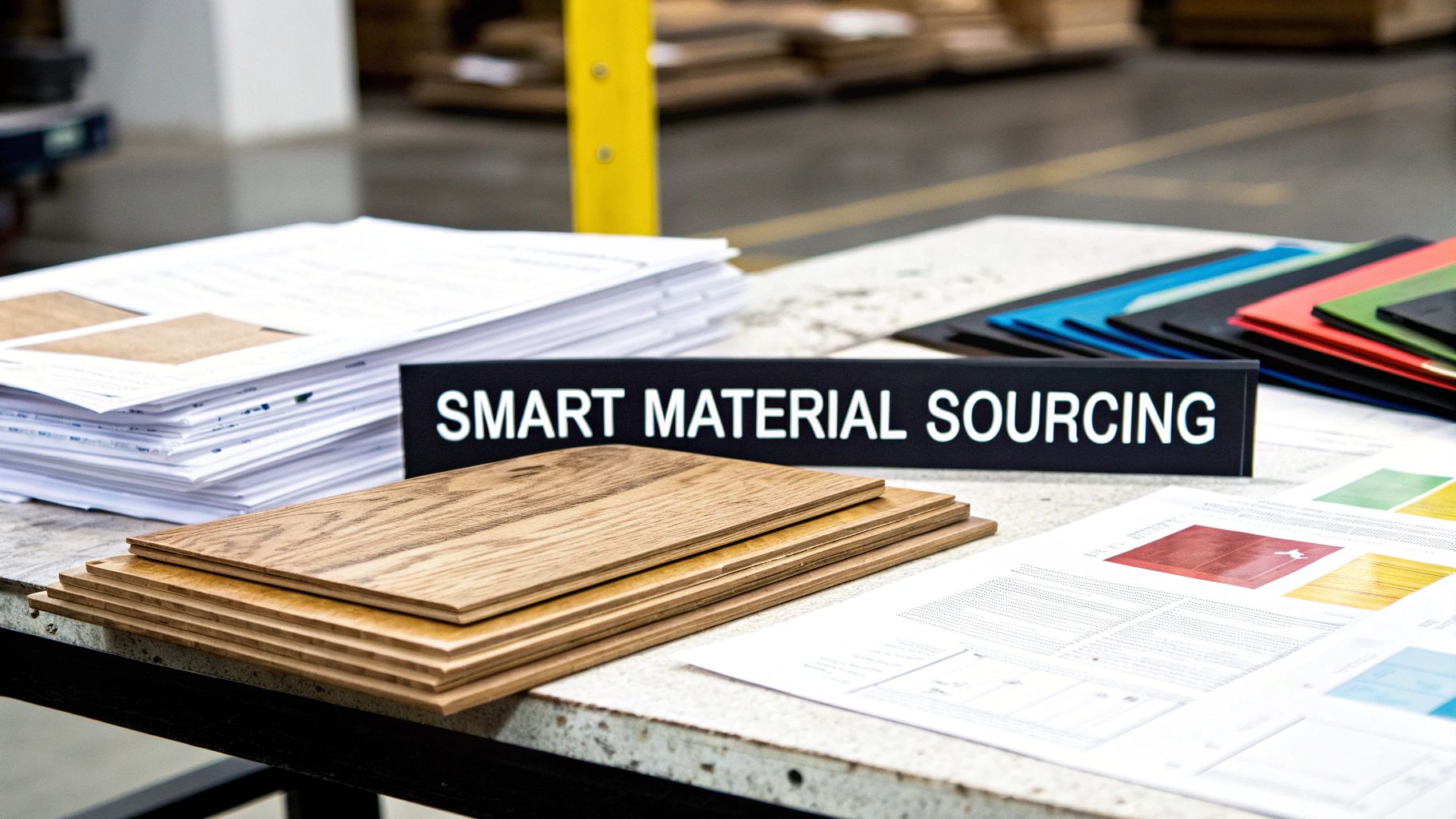
A minor adjustment to a room’s dimensions can mean the difference between using a full sheet of drywall versus cutting one down and discarding the remainder. This foresight prevents the need to order 10-15% in excess material simply to account for cut-offs. Your investment is directed into the quality of your home, not landfill fees. It is a perfect example of how our integrated architectural design and construction process delivers superior value.
Sourcing with Purpose: Local, Sustainable, and High-Performance
As a quintessential Middle Tennessee builder, we leverage our local network of suppliers and artisans whenever possible. Sourcing locally milled hardwoods for custom cabinetry in a Brentwood home or using stone from a nearby quarry does more than infuse authentic character—it significantly reduces the carbon footprint associated with long-haul transportation.
At CJMC Build, we believe the story of a home begins with its materials. Sourcing locally from the Nashville area connects a home to its landscape, creating an architectural narrative that is both authentic and responsible.
We continually seek innovative, sustainable products that meet our exacting standards for luxury and performance. This is not about compromise; it is about choosing smarter.
- Engineered Wood Products: Components like engineered I-joists and trusses are manufactured to project-specific dimensions in a controlled environment, generating virtually no on-site scrap.
- High-Performance Insulation: We often specify insulation made from recycled content, which diverts tons of material from landfills while creating a healthier, more energy-efficient home.
- Low-VOC Finishes: Every paint, stain, and sealant is selected for its low or zero volatile organic compound (VOC) content, a choice that greatly enhances your home's indoor air quality.
The Soul of Reclaimed Materials
Sometimes, the most luxurious materials are those with a history. We seek opportunities to integrate reclaimed materials into our new builds, adding a layer of soul and story that cannot be replicated. Imagine antique heart pine beams spanning a great room ceiling or a striking accent wall crafted from vintage brick.
This is where deconstruction—the careful disassembly of old structures to salvage materials—plays a role. By giving these storied elements a new life, we are not just diverting waste; we are building homes with unmatched character and distinction.
Every material we select reflects our values. You can see how these thoughtful choices come together in our gallery of custom homes to create spaces of true, enduring beauty.
Keeping a Tidy, Efficient Job Site Isn't Just for Show
There is a profound difference between a typical construction site and a CJMC Build site. The former is often a scene of controlled chaos. When you walk onto one of our projects in Nashville, Franklin, or Williamson County, you witness order, efficiency, and a deep respect for the craft. A clean, organized job site is a direct reflection of a builder’s discipline and a powerful tool for reducing construction waste.
This is not merely about aesthetics—it is about protecting our clients' investment. Premium materials are not left exposed to Tennessee's unpredictable weather, and the risk of damage on a cluttered property is virtually eliminated. This level of on-site management is non-negotiable for us; it is fundamental to how we deliver a home built to the highest standards of craftsmanship.
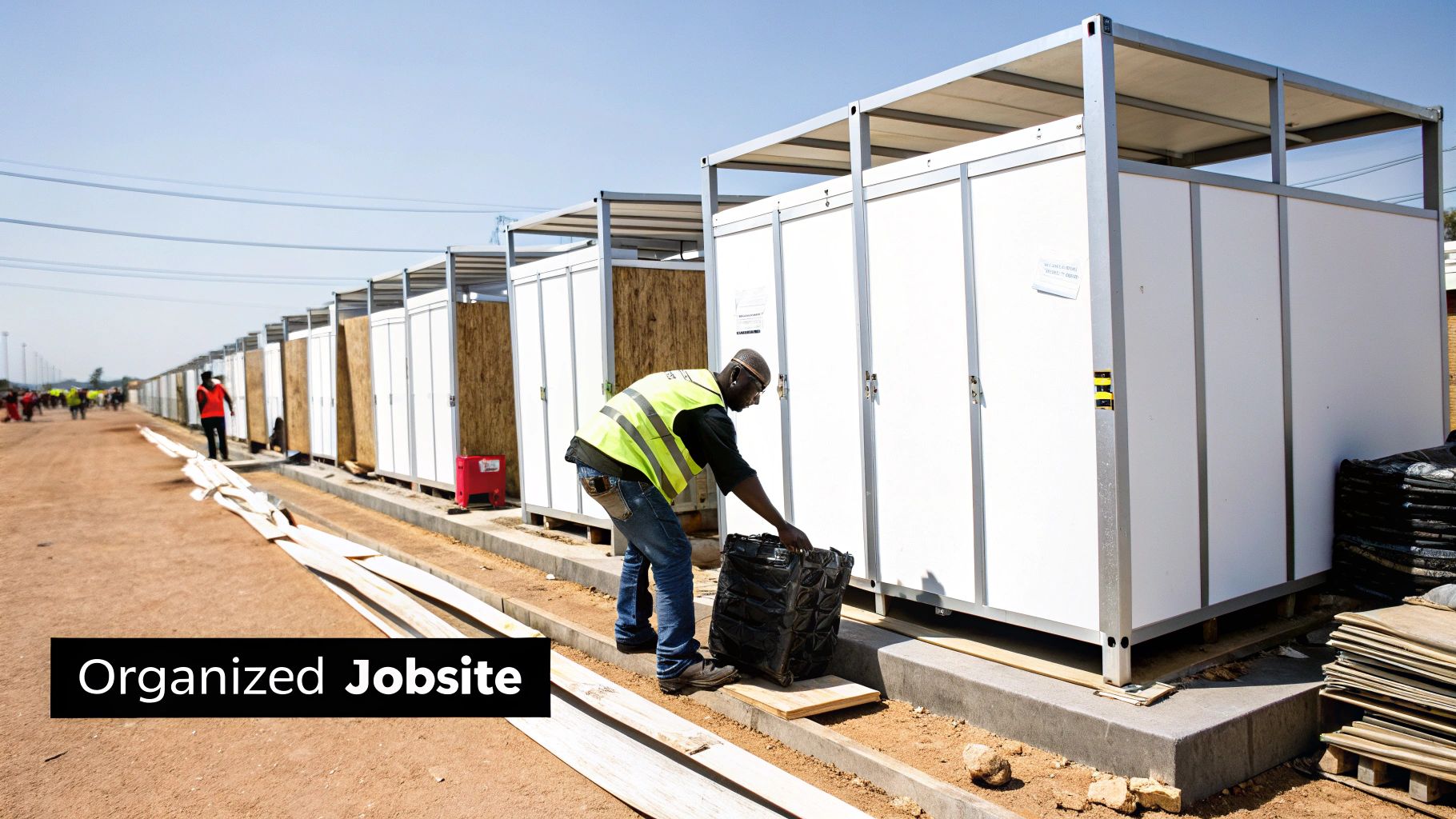
This methodical approach is more critical than ever. The volume of construction waste is staggering, projected to swell to nearly 2.2 billion tons globally by 2025. This reality places a significant responsibility on us as builders to work smarter and more sustainably on every project. You can read more about global construction waste projections for a broader perspective.
Precision Deliveries and Prefabrication
Two of our most effective strategies for waste reduction are prefabrication and precision-timed material deliveries.
By having key structural components like roof trusses and wall panels manufactured to our exact specifications in a controlled factory setting, we slash on-site scrap. This process yields higher-quality components and allows for faster, more precise assembly—a stark contrast to the waste generated by traditional stick-framing.
We pair this with a ‘just-in-time’ material delivery schedule. Rather than having materials sit on-site for weeks, we coordinate deliveries to align perfectly with the construction timeline. The site-finished hardwoods arrive just before installation, and custom cabinetry is delivered only when the space is prepped and ready. This protects every valuable component until the moment it is needed.
"A well-managed job site isn’t just about cleanliness; it’s a dynamic system where every material, every trade partner, and every minute is orchestrated for maximum efficiency and minimum waste."
This disciplined coordination is a cornerstone of our entire process. It ensures a smooth workflow, protects your investment, and upholds the standards of craftsmanship that define a CJMC Build home.
Smart Sorting and Creative Reuse On-Site
Even with meticulous planning, some scrap is unavoidable. This is where our on-site protocols are implemented. We establish designated sorting areas from day one to make recycling and reuse highly effective.
We maintain separate containers for specific materials:
- Clean Wood: Untreated lumber offcuts that can be recycled or repurposed.
- Metals: Steel, aluminum, and copper scrap all hold significant recycling value.
- Drywall: Gypsum scraps can be processed for agricultural use or used in new drywall production.
- Cardboard & Packaging: Kept separate to ensure it remains clean for recycling.
This meticulous sorting system is a fundamental element of our construction quality control checklist. It is a straightforward practice that prevents valuable resources from ending up in a mixed dumpster destined for a landfill. The impact is profound.
A Williamson County Story: From Scrap to Signature Feature
True craftsmanship often involves seeing potential where others see only waste. On a recent build in Williamson County, our framing crew was left with a collection of high-quality offcuts from the premium lumber used for the home's structure. Instead of discarding them, our lead carpenter envisioned something more.
He carefully collected the finest pieces and, in collaboration with our design team, transformed them into a stunning, custom-built herringbone accent for a niche in the main hallway. This creative act turned what would have been refuse into a unique, value-added feature that the homeowners treasure. It perfectly exemplifies our philosophy: every resource holds value, and a commitment to reducing waste can inspire unexpected moments of artistry.
Building Partnerships Beyond the Landfill
As a luxury home builder in Middle Tennessee, our responsibility extends beyond the property line into the communities we serve, from the rolling hills of Franklin to the vibrant streets of Nashville. For us, reducing construction waste is about more than operational efficiency—it is about being a good neighbor and protecting the landscapes we all cherish.
We fulfill that commitment by forging strong local partnerships. Over the years, we have cultivated a network of organizations that help us divert materials from landfills, ensuring our dedication to fine craftsmanship does not come at the expense of our environment.
Giving Materials a Second Life in Middle Tennessee
A thoughtfully built home considers the entire lifecycle of its materials. Even with our obsessive planning, some surplus is inevitable. Instead of discarding it, we ensure it finds a new purpose right here in our community.
This is where our local relationships are invaluable. We have a streamlined process for donating high-quality leftover materials, from extra boxes of premium tile and unused light fixtures to lumber offcuts.
These items go directly to exceptional non-profits like Habitat for Humanity of Greater Nashville, where they are used to build safe, affordable homes for local families. It is a powerful way to transform potential waste into a genuine community asset—a principle that resonates with homeowners who value building something both beautiful and meaningful.
Strategic Collaborations for a Circular Approach
Beyond donations, we collaborate with specialized reclamation centers and recycling facilities throughout Williamson and Davidson Counties. These experts handle materials that cannot be donated but still possess significant value.
- Architectural Salvage: If a project involves demolition, we carefully salvage unique elements like antique doors, windows, or fixtures, which are then sent to architectural salvage yards to add character to another project.
- Metal Recycling: All metal scrap—from rebar and steel fragments to copper wiring—is sorted and sent to be melted down and repurposed, conserving a tremendous amount of natural resources.
- Concrete & Masonry: We crush old concrete and brick into aggregate, which is ideal for creating new roadbeds or a stable base for driveways, transforming heavy debris into a foundational building block.
This is not merely a feel-good exercise; it is a smart, sustainable strategy inspired by global leaders. In parts of Europe, recycling rates for construction materials exceed 90% through the adoption of a circular economy model. The core idea is simple: keep resources in use for as long as possible. This philosophy is the bedrock of our waste-reduction plan. You can learn more about these global sustainability efforts and see how they are reshaping our industry.
Choosing your builder is about more than just their portfolio; it’s about aligning with their values. When you partner with a firm that is deeply invested in the local community, you are building a legacy that extends beyond your own four walls.
Selecting a builder who prioritizes these relationships is a critical decision. Our guide on how to choose a contractor can help you find a partner whose commitment to quality and integrity matches your own.
When you work with CJMC Build, you are choosing a team that understands the bigger picture. We are not just building extraordinary homes; we are committed to making a positive, lasting impact on the Middle Tennessee communities we are proud to call home.
What a Low-Waste Home Truly Gives You
Ultimately, a commitment to reducing construction waste is not just an environmental principle; it is a direct investment in the quality, efficiency, and enduring value of your home.
When a project is managed with such thoughtful intention, the result is a tighter, healthier, and more resilient structure for your family. It is the tangible proof of a thousand smart decisions made at every step of the journey.
These practices are not an addition to our promise of architectural excellence—they are woven into its very fabric. By meticulously planning for every board and screw or maintaining an impeccably clean site, we proactively eliminate the inefficiencies that can compromise a build. This is how we ensure your investment manifests in the fine craftsmanship and premium materials you expect in a CJMC Build home.
A Smarter Kind of Luxury
A low-waste home is, by its very nature, a better-built home. The evidence is in the structure itself:
- Uncompromising Quality: When materials are precisely calculated and properly stored, every component—from framing lumber to custom cabinets—is installed in pristine condition. No compromises.
- Real Cost Savings: Less waste translates to fewer material overages and lower disposal fees. These are funds that can be reallocated to the features that matter most to you.
- Generational Durability: A disciplined building process results in a tighter building envelope, superior insulation performance, and unwavering structural integrity. It is a home built to stand the test of time.
The true measure of a luxury home isn’t just how it looks, but how intelligently it was built. A low-waste approach is the signature of a builder who respects your investment and the integrity of the craft.
This philosophy is the foundation of our design-build process. As one of the premier luxury home builders in Franklin, TN, and across Middle Tennessee, we know that building responsibly is simply the right way to build. The result is a home that is not only beautiful but also provides enduring worth and genuine peace of mind.
We invite you to join us in this smarter, more thoughtful approach to creating a luxury home. Let us discuss your vision and explore how we can build something of lasting beauty together.
Ready to build a home of enduring quality and value? Contact the CJMC Build team today to schedule your initial design consultation and explore the possibilities.
Your Questions About Construction Waste, Answered
As a design-build firm in Nashville, we have found that the most successful projects arise from a true partnership with our clients. That partnership begins with open, honest conversation. Here, we address some of the most common questions about building sustainably and our methods for minimizing waste.
Does Reducing Waste Actually Add to the Cost?
This is a common misconception, and the answer is no. A smart waste reduction strategy almost always results in cost savings. By mapping out every material down to the last 2×4 during the architectural design phase, we prevent over-ordering, which eliminates significant unnecessary spending and avoids costly disposal fees.
While certain high-performance, sustainable materials may have a higher initial price, the savings generated through our integrated design-build process—from smarter procurement to lower dumpster costs—typically offset this. It is a matter of intelligent resource management, which is synonymous with responsible budgeting.
How Do I Know Materials Are Really Being Recycled?
We understand the desire for certainty. Transparency is paramount in the relationships we build with our homeowners. We partner exclusively with certified, reputable recycling facilities in Middle Tennessee and are always prepared to provide documentation showing the destination of all scrap material.
At CJMC Build, accountability isn't just a buzzword; it's a documented part of our process. We believe you can't manage what you don't measure, and we take pride in the systems we've built to track every resource that comes through our sites.
Our on-site sorting is meticulous. We utilize specific bins for wood, metal, drywall, and other materials, and our team is trained to ensure proper separation. We believe that if we make a promise to recycle, we must be able to prove it.
Can We Use Reclaimed Materials in a New Build?
Absolutely. We welcome this question. Incorporating reclaimed elements is one of the most effective ways to imbue a new home with a sense of soul and story. Whether it is antique heart pine beams from a historic barn, a set of vintage doors, or reclaimed brick for an accent wall, these pieces add character that cannot be replicated.
Our design team is passionate about sourcing exceptional reclaimed materials and artfully integrating them into a modern home's design. We ensure every piece not only looks incredible but also meets our strict standards for performance and quality craftsmanship. You can see examples of how we blend old and new in our gallery of completed projects.
Ready to build a home that’s as responsible as it is beautiful? The CJMC Build team is here to help you get started. Schedule your design consultation with us today.

