


Embarking on the journey to create a custom home is more than a construction project; it is the curation of your family’s legacy. In communities like Franklin, Brentwood, and across Williamson County, a luxury home is defined by its architectural integrity, the enduring quality of its materials, and the fine craftsmanship woven into every detail. From the grandeur of 12-foot ceilings to the timeless elegance of site-finished hardwoods and custom cabinetry, each element contributes to a home that is uniquely yours.
Achieving this level of excellence requires a partnership built on trust, transparency, and a shared vision. As a premier luxury design-build firm in Middle Tennessee, CJMC Build understands that the most important tool we use is communication. The conversation begins with insightful questions, the kind that uncover a builder's process, philosophy, and commitment to quality.
The answers you receive will form the bedrock of your project, ensuring the home you envision is the home we deliver. Our comprehensive guide provides the essential questions to ask a custom home builder, designed to empower you with the clarity and confidence needed to select the right partner for your dream home. By asking these questions, you ensure a seamless journey from initial concept to final walkthrough, culminating in a residence that truly reflects your aspirations.
1. Experience, Portfolio, and Local Expertise
Your decision to build a custom home, often an investment ranging from $700,000 to over $2,000,000 in areas like Williamson or Rutherford counties, hinges on partnering with a builder whose track record is unimpeachable. The first and most crucial of all questions to ask your custom home builder should probe deep into their experience, portfolio, and specialized local knowledge. This goes far beyond simply asking, “How long have you been in business?”
A truly qualified luxury home builder should be able to provide a curated portfolio that demonstrates mastery of the specific architectural language you envision, whether it's a modern farmhouse in Franklin or a timeless estate in Brentwood. This visual evidence is where you’ll see proof of their commitment to fine craftsmanship.
What to Look For in a Builder's Portfolio
When you review a builder’s past work, look for tangible evidence of their capabilities. Can they show you examples of:
- Complex Architectural Details: Look for seamless execution of features like soaring 12-foot ceilings, custom millwork, and intricate trim packages.
- Premium Material Integration: Do their projects showcase expertise with high-end materials like site-finished hardwoods, expansive quartz countertops, and custom cabinetry?
- Local Project Success: A builder with deep roots in Middle Tennessee understands the unique zoning, permitting, and land development challenges specific to our communities.
As a design-build firm, CJMC Build doesn't just construct houses; we craft bespoke residences. Our portfolio is a testament to our passion for creating enduring, beautiful spaces that reflect the unique aspirations of our clients.
2. Are you licensed, insured, and bonded?
While a builder's portfolio showcases their craft, their credentials prove their professionalism and your protection. This is a non-negotiable part of the vetting process and one of the most important questions to ask your custom home builder. Entrusting a multi-million-dollar project in areas like Franklin or Murfreesboro to an unverified entity is a risk no discerning homeowner should take. Proper licensing, comprehensive insurance, and adequate bonding are the foundational pillars of a trustworthy partnership.
A reputable luxury home builder will readily provide documentation for these credentials. This isn't just about meeting legal minimums; it’s a clear indicator of their financial stability, operational integrity, and commitment to safeguarding your significant investment. These protections shield you from potential liabilities, worksite accidents, and subcontractor disputes, ensuring your project proceeds without costly and stressful interruptions.
How to Verify a Builder's Credentials
Verifying a builder's qualifications is a straightforward process that provides essential peace of mind. Before signing any contract, insist on seeing proof of:
- State of Tennessee Contractor's License: A valid license demonstrates the builder has met the state's stringent requirements for experience, financial solvency, and examination. You should verify this directly with the Tennessee Board for Licensing Contractors.
- General Liability and Workers' Compensation Insurance: Ask for their Certificate of Insurance (COI). This document proves they can cover property damage or injuries that occur on your property, protecting you from personal liability.
- Surety Bond: This acts as a financial guarantee, ensuring that if the builder fails to complete the project or pay subcontractors, you are protected from financial loss.
At CJMC Build, we operate with complete transparency. We are a fully licensed, insured, and bonded design-build firm, and we welcome our clients to review our credentials as part of our commitment to building trust from day one of our custom home building process.
3. What is your typical timeline from design to completion?
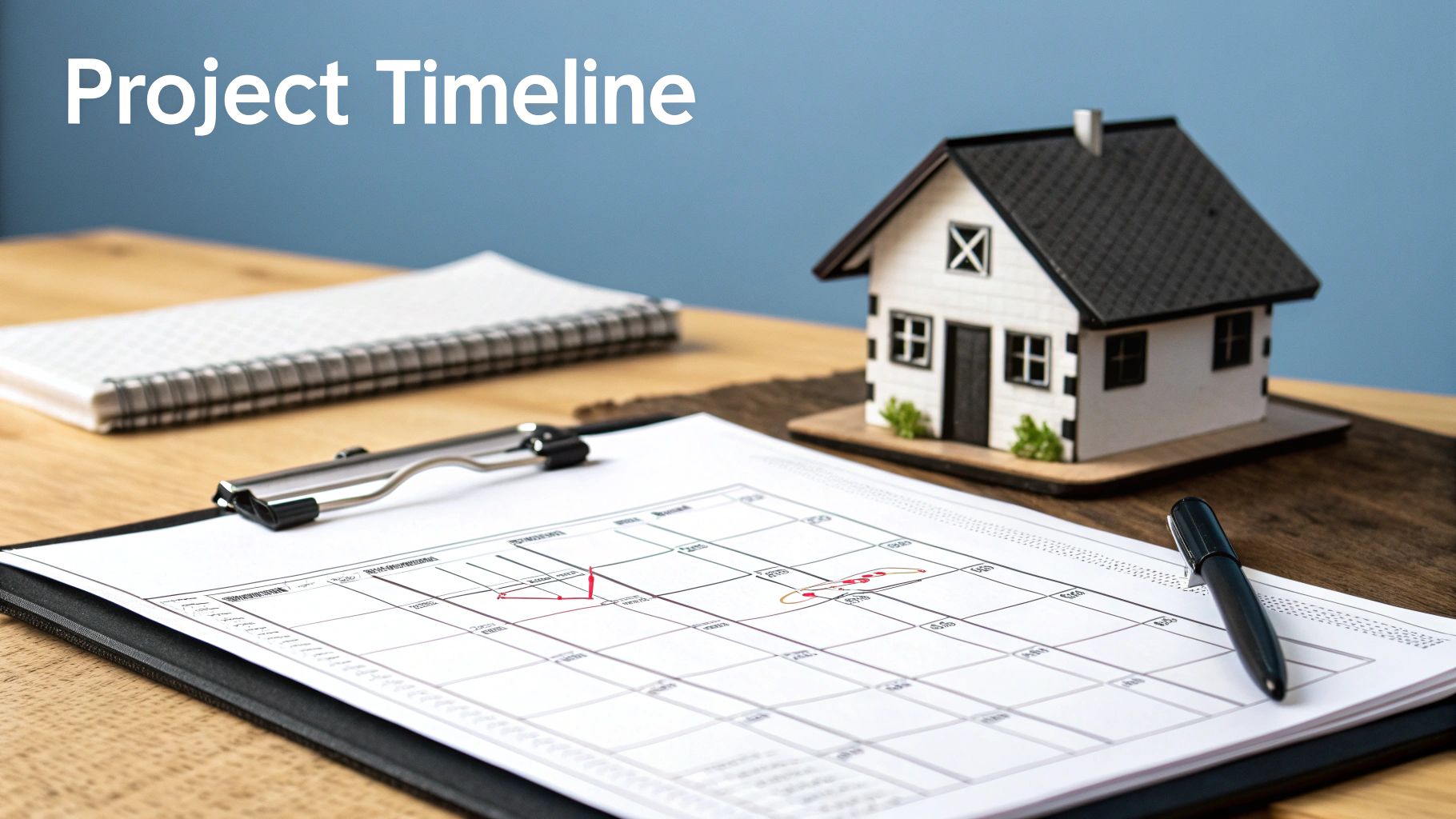
A precise understanding of the project timeline is fundamental when embarking on a custom home build, a process that represents a significant investment of both time and resources. One of the most practical questions to ask your custom home builder revolves around their typical schedule from the initial design consultation to the final handover. This isn't just about a finish date; it’s about understanding the builder's process management, communication, and ability to forecast and mitigate potential delays.
For a luxury residence in Williamson or Rutherford counties, the timeline is more than a simple calendar; it's a reflection of the builder's command over the entire design-build sequence. A transparent builder will provide a realistic schedule that accounts for every critical phase, from architectural drawings and permitting to material procurement and the intricate construction of your vision.
What to Look For in a Builder's Timeline
When discussing the project schedule, you need concrete details, not vague estimates. A seasoned builder should be able to outline a phased plan that sets clear expectations and builds confidence in their ability to deliver. Ask for specifics on:
- Distinct Phase Durations: Look for a clear breakdown, such as a 3-6 month design and permitting phase, followed by a 12-18 month construction window for a complex custom estate. A builder who can detail these stages demonstrates experience.
- Contingency Planning: How do they account for weather delays, supply chain issues, or change orders? A professional process includes built-in flexibility without derailing the entire project.
- Commitment in Writing: The agreed-upon timeline and key milestones should be a formal part of your construction contract, ensuring accountability.
At CJMC Build, we provide a meticulously planned schedule to ensure a smooth journey from concept to reality. A detailed overview of our process is crucial, and you can explore more about our typical new home construction timeline to understand how we manage each step with precision.
4. What is your contract structure and what does it include?
The architectural drawings may be the soul of your home, but the construction contract is its legal backbone. Asking detailed questions to ask your custom home builder about their contract is non-negotiable for a project of this magnitude. This document governs every aspect of the build, from initial site work in Williamson County to the final walkthrough of your Franklin estate, and must be crystal clear to prevent costly misunderstandings.
A transparent, comprehensive contract is the hallmark of a professional builder. It should meticulously outline the project scope, a detailed payment schedule, and clear procedures for handling changes. It is the definitive guide that protects both your investment and the builder's commitment, ensuring every promise is put in writing.
What to Look For in a Builder's Contract
When reviewing the contract, demand clarity and detail. The agreement should be exhaustive, leaving no room for ambiguity. Ensure it explicitly defines:
- Change Order Process: How are changes requested, priced, and approved? A formal, written process is essential to keep the budget and timeline on track.
- Payment Schedule: A typical structure involves 5-10 milestone-based payments. Understand exactly what work must be completed and inspected before each payment is due.
- Detailed Scope of Work: The contract must reference the full set of plans and specifications, listing everything from foundation type to the specific brand of quartz countertops and the finish on your custom cabinetry.
- Warranty Terms: Clarify what is covered and for how long. A quality builder typically offers a multi-tiered warranty, such as a one-year workmanship warranty and a longer structural warranty.
At CJMC Build, we believe in complete transparency. Our contracts are designed to be thorough and clear, providing a solid foundation for a successful partnership and a beautifully executed custom home.
5. How do you handle changes and change orders?
Even with the most meticulous planning, changes are a natural part of the custom home journey. Your ability to adapt your vision as the home takes shape is a key benefit of the design-build process, but how a builder manages these adjustments is critical. This is why one of the most important questions to ask your custom home builder revolves around their change order protocol, as a disorganized system can lead to significant budget overruns and project delays.
A professional builder will have a transparent, documented process for any deviation from the original plan. Whether it’s upgrading kitchen fixtures, shifting an interior wall, or selecting a different stone for the fireplace, the procedure should be clear. This system protects both you and the builder, ensuring all parties are aligned on scope, cost, and schedule impacts before any work is implemented.
What a Professional Change Order Process Includes
When discussing this topic, ask for specifics on how they document and approve modifications. A well-defined process should include:
- A Formal Written Request: All changes, no matter how minor, should be initiated in writing to create a clear paper trail.
- Detailed Cost Breakdown: The builder should provide a quote outlining all costs associated with the change, including materials, labor, and any applicable markup, which typically ranges from 15-25%.
- Timeline Adjustment: The document should clearly state any impact the change will have on the project completion date.
- Client Authorization: No work should ever proceed on a change without your signed approval of the cost and schedule implications.
At CJMC Build, our process is built on proactive communication. We ensure every change order is clearly documented and approved, giving you complete control and financial clarity from start to finish.
6. What Payment Schedule and Financing Arrangements Do You Offer?
Understanding the financial cadence of your custom home build is just as critical as approving the architectural plans. The payment schedule dictates the cash flow for the entire project, impacting everything from your construction loan draws to the timely procurement of materials. A key question to ask your custom home builder is about their specific payment structure and how they integrate with your financing arrangements. This conversation ensures financial transparency and prevents costly delays.
Most reputable builders in Williamson and Rutherford counties operate on a milestone-based draw schedule. This means payments are tied to the completion of specific construction phases, such as foundation, framing, or drywall. This method protects both you and the builder by ensuring that funds are disbursed only as tangible progress is made on your new home.
What to Look For in a Builder's Payment Structure
A transparent and fair payment schedule is a hallmark of a professional builder. When discussing financial terms, seek clarity on the following:
- Detailed Draw Schedule: The builder should provide a clear, itemized schedule linking payments to specific construction milestones (e.g., 10% at foundation pour, 15% at framing completion).
- Financing Coordination: Confirm they have experience working with lenders for construction-to-permanent loans and understand the required inspection and documentation processes for each draw.
- Holdback Clause: A standard agreement should include a final retainage or holdback amount (typically 5-10%) that is held until after the final walkthrough, ensuring any punch-list items are completed to your satisfaction.
At CJMC Build, we establish a clear and predictable payment schedule upfront, aligning it perfectly with your financing. We have extensive experience navigating the construction loan process, ensuring a seamless flow of funds that keeps your project on track. This dedication to financial clarity is integral to our role as a trusted luxury builder in Middle Tennessee.
7. What warranties do you provide and what do they cover?
Your investment in a custom home, a significant financial and emotional undertaking, deserves protection long after the final nail is driven. One of the most critical questions to ask your custom home builder revolves around their warranty program. A comprehensive warranty is not just a document; it is a builder’s pledge to stand behind their craftsmanship and materials, offering you peace of mind for years to come.
A reputable luxury builder’s warranty should be clear, detailed, and transparent, covering everything from the foundation to the finishes. This commitment ensures that the integrity of your new home, whether a sprawling estate in Murfreesboro or a modern farmhouse in Williamson County, is protected against unforeseen issues. It’s a testament to the builder's confidence in their work and their dedication to your long-term satisfaction.
What to Look For in a Builder's Warranty
When discussing warranties, you need to understand the specifics of coverage, duration, and the claim process. A strong warranty program will provide clear answers and documentation.
- Standard Coverage: Most high-end builders offer a one-year limited warranty covering workmanship and materials, ensuring elements like custom cabinetry and site-finished hardwoods perform as expected.
- Systems and Structural Guarantees: Look for extended coverage on major systems like plumbing and electrical (often two years) and a robust structural warranty, typically lasting ten years, which protects the foundational integrity of your home.
- Written Documentation: Always request a detailed, written copy of the warranty before signing any contract. It should explicitly state what is covered, what is excluded, and the process for submitting a claim.
At CJMC Build, we believe our relationship with clients extends far beyond handing over the keys. We provide a comprehensive warranty program that reflects our commitment to quality and enduring value. This assurance is a core part of our design-build process, giving you the confidence that your home is built to last.
8. How do you manage quality control and inspections?
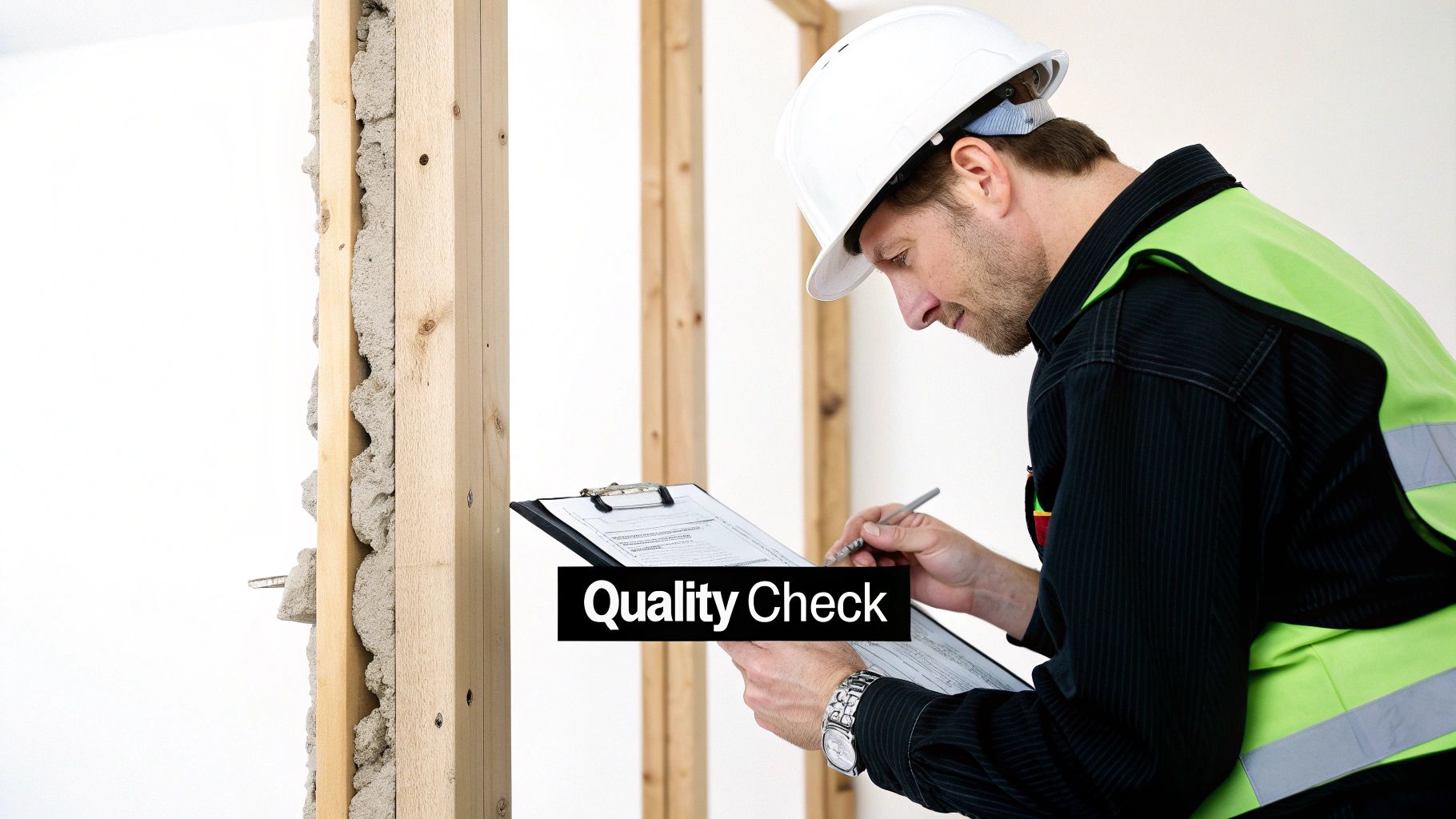
The structural integrity and long-term durability of your home are not accidental; they are the result of a rigorous, systematic approach to quality control. A premier builder doesn’t just meet code requirements; they exceed them. This is why one of the most critical questions to ask your custom home builder centers on their specific processes for inspections and quality assurance at every stage of construction.
A transparent and comprehensive quality management plan is the bedrock of a well-built luxury home in areas like Murfreesboro or Franklin. It ensures that the premium materials and sophisticated design elements you’ve selected are installed with precision, from the foundation pour to the final punch list. This commitment to excellence is what separates an average builder from a true craftsman.
What to Look For in a Builder's Quality Control Process
When discussing quality control, listen for a multi-layered strategy that includes internal checks, municipal oversight, and opportunities for third-party verification. A builder dedicated to craftsmanship should welcome scrutiny. Ask if their process includes:
- Pre-Drywall Inspections: This is a crucial checkpoint to verify the quality of all "behind-the-walls" work, including framing, plumbing, and electrical, before it's concealed.
- Scheduled Municipal Inspections: Confirmation that the builder proactively manages and passes all required city or county inspections at each construction milestone.
- Third-Party Verification: Does the builder encourage or facilitate independent inspections, such as energy audits or a final pre-closing inspection by an expert of your choice?
- A Detailed Punch-List Process: A clear, documented procedure for identifying and rectifying any minor imperfections before the final handover of your home.
At CJMC Build, our commitment to impeccable quality is non-negotiable. We implement a rigorous construction quality control checklist to ensure every detail, from the site-finished hardwoods to the custom millwork, meets our exacting standards. This proactive management guarantees the enduring value and beauty of your new residence.
9. Permitting, Communication, and References
Navigating the intricate web of building permits, local codes, and homeowner association (HOA) approvals is a critical function that separates amateur builders from seasoned professionals. One of the most important questions to ask your custom home builder is how they manage these administrative and logistical hurdles while maintaining transparent communication. A builder's proficiency here directly impacts your project’s timeline, budget, and legal standing.
A true luxury builder acts as your advocate, managing everything from initial septic and well permits in rural Williamson County to navigating complex architectural review boards in exclusive Brentwood communities. This proactive management, combined with a structured communication plan, ensures you are always informed and confident in the process.
What to Look For in a Builder's Process
When discussing these procedural elements, look for a builder who can clearly articulate their established systems. Can they provide you with:
- A Clear Permitting Roadmap: This includes timelines for securing building, electrical, and plumbing permits, as well as handling any necessary environmental reviews.
- Proactive Communication Protocols: Do they offer weekly email updates with photos, schedule bi-weekly on-site meetings, and provide direct contact information for your project manager?
- A Strong Reference List: A builder confident in their work will eagerly connect you with recent clients, especially those whose projects mirror the scope and style of your envisioned home.
At CJMC Build, our design-build process is built on a foundation of meticulous planning and open communication. We manage every permit and inspection, ensuring full code compliance while providing you with consistent, meaningful updates from foundation to finish. Our list of satisfied clients is a testament to the trust we build alongside every home.
9-Point Custom Home Builder Comparison
| Item | 🔄 Implementation complexity | ⚡ Resource requirements | ⭐ Expected outcomes | 💡 Ideal use cases | 📊 Key advantages |
|---|---|---|---|---|---|
| What is your experience and track record with custom home builds? | Moderate — research portfolio and references | Moderate — time for visits, reference checks, portfolio review | ⭐⭐⭐⭐ — better predictability and fit | Hiring for complex or style-specific custom homes | Demonstrates competence, reliability, and specialized expertise |
| Are you licensed, insured, and bonded? | Low — document verification process | Low — request certificates and license checks | ⭐⭐⭐⭐ — legal and financial protection | Every project; non‑negotiable requirement | Provides liability protection, recourse, and compliance assurance |
| What is your typical timeline from design to completion? | Moderate — depends on scope, permitting, weather | Moderate — coordination with designers, suppliers, inspectors | ⭐⭐⭐ — clearer scheduling and expectations | Planning moves, lender coordination, seasonal scheduling | Sets milestones, identifies delays early, improves accountability |
| What is your contract structure and what does it include? | High — legal review and negotiation required | High — attorney review, detailed specifications, documentation | ⭐⭐⭐⭐ — reduces disputes and cost surprises | High‑value builds or when fixed costs are needed | Establishes scope, payment terms, warranties, and dispute resolution |
| How do you handle changes and change orders? | Moderate — requires documented processes | Moderate — admin, pricing, and approval workflows | ⭐⭐⭐ — controlled cost and scope adjustments | Projects likely to evolve or with owner-driven changes | Ensures transparent pricing, documents approvals, limits scope creep |
| What payment schedule and financing arrangements do you offer? | Moderate — align with lender and builder milestones | Moderate — lender coordination, proof of funds, liens management | ⭐⭐⭐ — improved cashflow alignment and protection | Buyers using construction loans or phased payments | Links payments to progress, protects homeowner from overpayment |
| What warranties do you provide and what do they cover? | Low — obtain written warranty details | Low — collect warranty documents and transfer info | ⭐⭐⭐⭐ — long‑term defect protection | Long‑term owners and resale planning | Provides recourse for defects, may increase home value |
| How do you manage quality control and inspections? | High — multi‑stage and third‑party inspections | High — trained crews, inspectors, documentation systems | ⭐⭐⭐⭐ — higher build quality and code compliance | Energy‑efficient builds, complex systems, high standards | Catches defects early, ensures code compliance, documents quality |
| Permitting, code compliance, communication and references | High — multi‑jurisdiction coordination and ongoing communication | High — permit fees, staff time, records, reference calls | ⭐⭐⭐⭐ — legal compliance and informed ownership | Builds in regulated areas, HOA communities, complex sites | Prevents violations, coordinates utilities/inspections, builds trust |
Begin Your Design-Build Journey with Confidence
Building a custom home in Middle Tennessee is more than a construction project; it is the creation of a legacy, a personal sanctuary designed to reflect your unique vision and lifestyle. The comprehensive list of questions to ask a custom home builder provided in this guide serves as your foundational blueprint for success. By arming yourself with this knowledge, you move beyond simply hiring a contractor and into the realm of selecting a true design-build partner.
A successful partnership is built on transparency, shared vision, and unwavering trust. The right builder will not only welcome these detailed inquiries but will also provide clear, confident answers that demonstrate their expertise and commitment. From understanding their contract structure and change order process to verifying their insurance and warranty protections, each question is a critical step in protecting your investment and ensuring peace of mind. This due diligence is the cornerstone of a smooth, predictable, and ultimately rewarding experience.
Mastering these concepts allows you to confidently navigate the complexities of creating a high-end residence. It empowers you to evaluate potential builders based on what truly matters: their craftsmanship, their communication protocols, their financial stability, and their dedication to architectural integrity. This is how you ensure that the vision of a modern farmhouse with 12-foot ceilings in Williamson County or a sleek, contemporary estate in Brentwood is executed with precision, from the site-finished hardwoods underfoot to the custom cabinetry that defines your living spaces.
Ultimately, the goal is to find a firm that can translate your aspirations into a tangible, beautifully crafted reality. A builder who understands the nuances of luxury construction in the Nashville area is not just constructing a house; they are curating an environment where your family will create lasting memories. Choosing the right partner is the single most important decision you will make, and asking the right questions is how you make that decision with absolute confidence.
At CJMC Build, we believe an informed client is an empowered partner. We invite you to bring these questions and your unique vision to us. As a premier luxury design-build firm in Franklin, TN, we are committed to the transparency and collaborative excellence your project deserves. View our gallery of completed homes to see our commitment to craftsmanship, and when you are ready, schedule a consultation to begin your journey.

