


Building a custom home in Nashville isn’t just about construction; it's about bringing a deeply personal vision to life in one of the country's most vibrant cities. This guide is designed to be your roadmap, helping you navigate the process of finding luxury home builders in Nashville who don't just build houses, but create homes that truly reflect you.
Finding the right partner—one who gets your aesthetic, respects your budget, and communicates openly—is the most critical first step you'll take.
Starting Your Custom Home Journey in Nashville
The decision to build a custom home is a massive one. It's a major investment of your money, of course, but also of your time and emotional energy. The Nashville area, with its diverse landscapes from the rolling hills of Williamson County to the bustling city core, provides a stunning canvas for your dream home. But the entire project's success truly hinges on one thing: choosing the right construction partner.
A great builder does so much more than just put up walls. They are the ones who translate your abstract ideas into a beautiful, functional space. They manage the countless moving parts, from permits to subcontractors, and maintain a transparent line of communication throughout the entire journey. In essence, they become your advocate, ensuring quality and craftsmanship at every turn.
Understanding the Local Market
Nashville’s luxury real estate market is both diverse and incredibly competitive. Each neighborhood has its own character, influencing everything from architectural styles to lot availability and pricing.
For example, a neighborhood like Green Hills is seeing average sale prices climb by 22% year-over-year to around $1,776,803. With a 25% jump in home closings, it’s clear the demand for established luxury is strong. Over in West Nashville, you'll find a different dynamic with more inventory but equally fierce buyer interest. You can dig deeper into Nashville's September market trends at morrellpropertycollective.com.
Choosing a builder with deep local knowledge is non-negotiable. They understand the nuances of permitting in Davidson County, have established relationships with top-tier subcontractors, and can navigate the unique challenges of building on Tennessee terrain.
This hyper-local expertise is what makes the difference between a project that runs smoothly and one bogged down by frustrating, unforeseen delays. It’s about knowing which inspectors are meticulous about certain codes or which soil types require specific foundation work. For anyone just starting out, learning what makes a great custom home builder in Tennessee is the perfect foundational first step.
The path to building your dream home should be as thoughtfully crafted as the home itself. Let's make sure you have the knowledge to make a confident, informed decision.
Nail Down Your Vision and Build Your A-List

Before you can even think about interviewing builders, you need to know what you want to build. This goes way beyond just a floor plan. It's about translating your lifestyle, your personal taste, and how you actually live into a clear design brief. A solid vision is the bedrock of a successful custom home project.
Start with your "must-haves." Is a professional-grade kitchen with a massive island non-negotiable? Are you dreaming of an indoor-outdoor living area that opens up to a resort-style pool? Get specific. Think about the architectural style that speaks to you, whether it’s a timeless Brentwood estate or a sleek modern farmhouse in Franklin. Your builder needs these details to grasp the true scope and complexity of what you're imagining.
Turn Inspiration Into a Plan
Your project brief is the document that gets your vision out of your head and into the hands of a potential builder. It’s your detailed wish list, the one that kicks off those crucial first conversations.
To put together a brief that gets results, start gathering ideas from everywhere.
- Design Resources: Flip through architectural magazines and scroll through platforms like Houzz or Pinterest. Save images that capture the look and feel you're after. Don’t just look at the big picture—pay attention to the little things like window trim, material textures, and lighting fixtures.
- Explore Nashville's Finest: Take a drive through premier Nashville communities like Witherspoon in Brentwood or The Grove. See what stands out. These neighborhoods are living portfolios for the area's top luxury home builders in Nashville.
- Be Honest About Your Lifestyle: How do you really live day-to-day? Do you host big parties, or do you prefer quiet nights in? Do you work from home? Need a dedicated space for a passion project? Your home needs to function for your real life, not an imaginary one.
With this groundwork done, you'll be able to clearly communicate the essentials to a builder, from the approximate square footage and number of bedrooms to special features like a wine cellar, home theater, or gym.
How to Find the Best Candidates
Now that you have a clearer vision, it's time to find the people who can bring it to life. The goal here isn't to pick a winner just yet—it's to create a solid list of qualified builders to vet more seriously. Don’t just rely on a quick Google search. You need to be more strategic.
A trusted referral is worth its weight in gold. Nothing beats the firsthand account of someone who has already been through the custom build journey and can speak to a builder’s communication, craftsmanship, and integrity.
Reach out to your network. Ask architects, interior designers, and high-end real estate agents for their top recommendations. These professionals are in the trenches every day and know who delivers and who doesn't. Local design publications and industry awards are another great place to hunt for reputable firms with a proven track record right here in the Nashville market.
Aim for a shortlist of three to five builders whose past projects resonate with your style and feel like a good fit for the scale of your own home.
How to Vet Builder Portfolios and Credentials
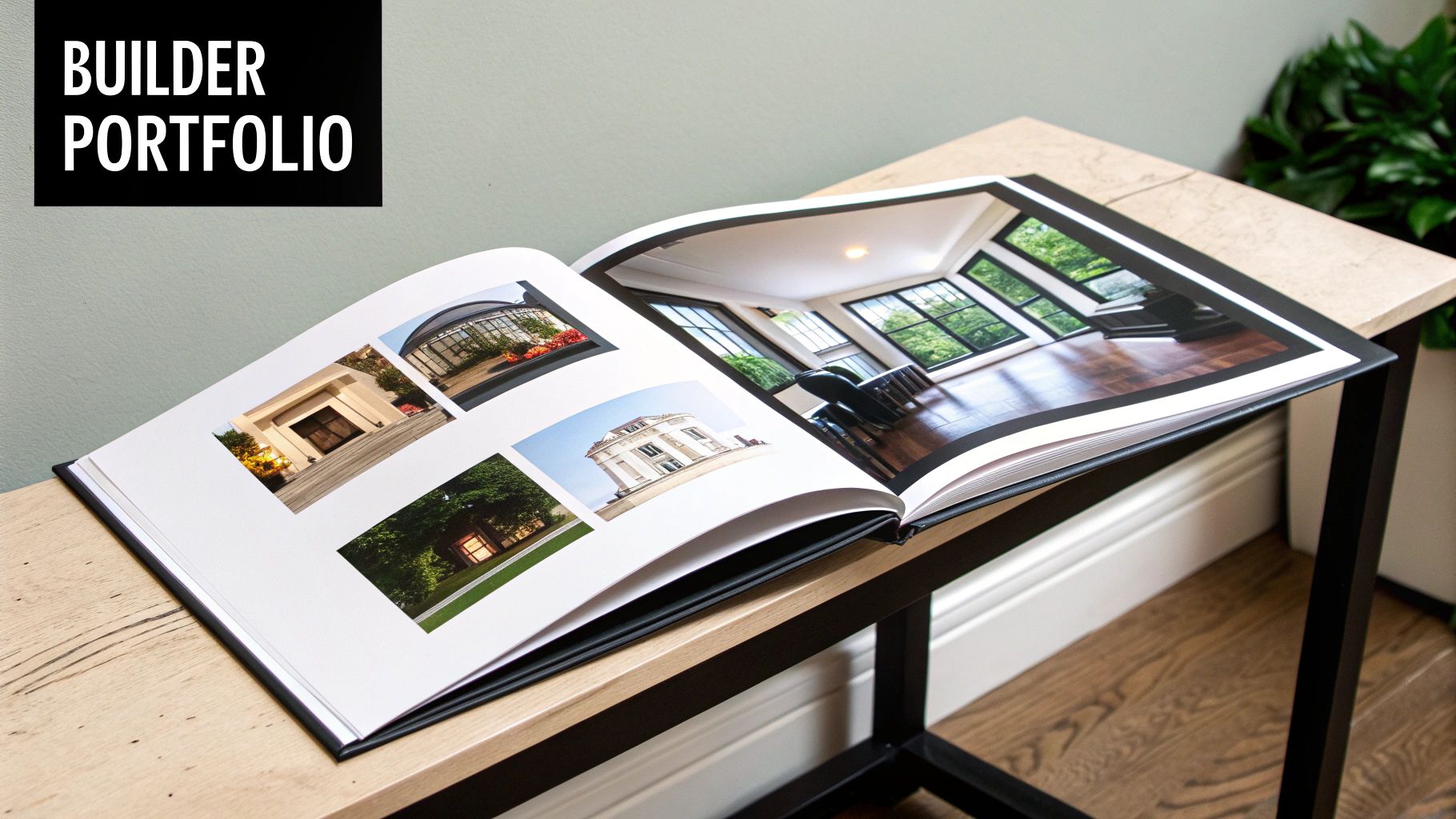
Alright, you've got your shortlist of potential builders. Now, the real work begins. Think of yourself as a detective, because a builder's portfolio is their resume, and you need to look beyond the slick, professionally staged photos.
Don't just get wowed by the curb appeal. I mean, really zoom in. Get granular. Look at the joints in the trim work, the complexity of the cabinetry, and how different materials meet. Do the details hold up under scrutiny? Consistency is key here. You want to see if their level of craftsmanship is the same from a grand staircase to a simple window casing. This is how you spot a true artisan.
Ultimately, you’re looking for an alignment between their finished work and the vision you have for your own home. If your dream is a sleek, modern oasis with walls of glass, a portfolio full of traditional French country estates probably means it's not the right fit, no matter how beautiful their work is.
Going Beyond the Glossy Photos
A portfolio review is less about aesthetics and more about a deep dive into a builder's actual capabilities. A top-tier luxury home builder in Nashville will showcase a range of styles and complexities, demonstrating they aren’t a one-trick pony and can adapt to unique challenges.
Here’s what I always look for to get the full picture:
- Architectural Complexity: Are their projects just simple boxes, or do they feature challenging rooflines, ambitious structural elements, and intricate custom millwork? The latter shows serious skill and problem-solving chops.
- Material Quality: Pay close attention to the materials. Are they consistently using high-end, durable stuff like natural stone, imported hardwoods, and premium fixtures? Or are they cutting corners where they think people won't notice?
- Project Scale: Have they successfully built homes of a similar size and scope to what you're planning? A builder who excels at 4,000-square-foot homes might be completely out of their depth on a 12,000-square-foot estate.
This isn't about being picky; it's about confirming they have the technical expertise to execute your specific vision, especially if it includes anything unconventional.
Verifying Credentials and Reputation
Once you feel good about a builder’s work, it’s time for some critical due diligence. This part isn’t glamorous, but it’s what protects your investment and ensures you’re partnering with a legitimate, trustworthy professional. Please, don’t skip these steps.
First things first: verify their license with the Tennessee Board for Licensing Contractors. This is non-negotiable. It confirms they’re legally allowed to do the work. You also need to ask for proof of both general liability and workers' compensation insurance.
Without adequate insurance, you could be on the hook for any accidents that happen on your property. A legitimate professional will have these certificates ready and won't flinch when you ask for them.
Finally, do some digging into their reputation. Search for online reviews, read client testimonials, and look for industry awards. While some large-scale builders have a long history, like Beazer Homes, which traces its roots back generations, a custom builder’s reputation is earned project by project. The candid experiences of their past clients are pure gold, offering honest insights into how they communicate, manage budgets, and ultimately deliver on their word. You can read more about the history of major builders in Tennessee to see how different companies operate. This thorough vetting is your absolute best defense against future problems.
Mastering the Builder Interview and Reference Checks
Once you’ve narrowed down your list of top-tier builders, it's time to move beyond their portfolios and get to know the people behind the projects. This is your chance to see if you genuinely connect with the team you could be working with for the next 12 to 24 months. Think of it less like an interview and more like a chemistry check.
You’re not just hiring a contractor; you’re choosing a partner for one of the biggest financial and emotional investments you’ll ever make. The conversation needs to go deep, covering everything from their daily processes and communication style to their financial stability. How they handle these questions speaks volumes about their transparency and professionalism.
The Interview: Asking the Right Questions
The real goal here is to understand what it’s actually like to work with this builder. You need to pull back the curtain on the day-to-day realities. Who will be your main point of contact? How do they handle the inevitable hiccups that come with any custom build?
A seasoned pro will welcome your detailed questions with confidence. If you get vague answers or a defensive vibe, consider that a major red flag.
You’ll want to dig into a few key areas:
- Communication Flow: How often can we expect to have scheduled meetings? Do you use project management software to keep me in the loop? Who is my go-to person on a daily basis?
- Managing the Money: How do you handle change orders? What’s your process for tracking every dollar and keeping me updated on the budget? Honestly, what percentage of your projects finish on budget?
- Their Trade Partners: Do you have a regular team of subcontractors, or do you bid out every job? Can you confirm they’re all licensed and insured? How long have you been working with your core group of tradespeople?
These questions are just the start. For a much more thorough checklist, check out this list of questions you should ask a home builder before you even think about signing a contract. It gets into the nitty-gritty of warranties, lien releases, and other critical details.
To help you organize your thoughts, here is a quick guide to some of the most important questions to ask during your sit-down.
Key Questions for Your Builder Interview
| Category | Question to Ask | What to Listen For |
|---|---|---|
| Team & Process | Who will be my primary point of contact and how often will I hear from them? | A clear line of communication. Is it the owner, a project manager? Vague answers are a warning sign. |
| Budget & Finances | How are change orders documented and approved? Can I see an example? | A structured, transparent process. You should have to sign off on every cost change—no surprises. |
| Timeline | What are the most common reasons for delays on your projects, and how do you mitigate them? | Honesty and proactive planning. They should mention weather or supply issues but have contingency plans. |
| Subcontractors | How do you select your subcontractors, and how long have you worked with your key partners? | Loyalty and long-term relationships. This indicates reliability and consistent quality. |
| Problem-Solving | Can you share an example of a major unexpected issue on a past project and how you handled it? | A solution-oriented mindset, not finger-pointing. Look for accountability and clear communication. |
Having these questions ready ensures you cover all your bases and compare builders on an even playing field.
The Real Story: Checking References
A builder can talk a great game, but their past clients will tell you what’s really going on. Getting that honest, unfiltered feedback is probably the single most important piece of your research.
Here’s a pro tip: Don’t just ask for a list of their happiest clients. Instead, ask for the contact info for the owners of the last three homes they completed. This gives you a far more realistic and current picture of their work.
When you get these homeowners on the phone, you’re looking for how the builder performs when the pressure is on.
The true measure of a great builder isn't that nothing ever goes wrong—it's how they respond when it does. Unexpected challenges are a guarantee in any custom build; a proactive, solution-oriented approach is what separates the pros from the amateurs.
Get specific with your questions. Go beyond a simple, "So, were you happy with them?" and dig into the details that truly matter.
- How did the builder handle unexpected problems or delays that popped up?
- Was the project manager easy to reach and quick to respond?
- Did the final cost match the initial proposal and all the approved change orders?
- When it came time for the final punch list, was it completed quickly and to your satisfaction?
This kind of firsthand insight is priceless. The stories from past clients are often the clearest preview of what your own experience will be. Listening carefully will help you find one of the best luxury home builders Nashville has to offer and make your final choice with complete confidence.
Analyzing Bids and Making a Confident Decision
Getting that first stack of proposals from builders is an exciting moment. It’s when your vision starts to feel real. The natural impulse is to flip right to the last page and find the lowest price, but that’s rarely the whole story. The best luxury home builders in Nashville provide detailed, transparent bids that let you see exactly what you're paying for.
Think of each proposal less like a price tag and more like a detailed blueprint for your budget. Your goal is to ensure every builder is pricing out the same quality of materials and the same scope of work. A bid that comes in dramatically lower than the rest isn't a steal—it's usually a warning sign. It often means vague allowances, cheaper materials, or missing items that will resurface later as expensive change orders.
Breaking Down the Bids
To get a true apples-to-apples comparison, you'll need to dig into the details. I always recommend clients create a simple spreadsheet to line up the bids side-by-side, breaking them down into the same major categories.
- Pre-Construction Fees: Look at the costs for design, engineering, and pulling permits. Are these clearly itemized, or is it just one big, unexplained number?
- Material Allowances: This is a big one. The allowances for flooring, countertops, appliances, and light fixtures can swing a bid by tens of thousands of dollars. Make sure each builder has a similar budget allocated for these finishes.
- Labor and Subcontractor Costs: A transparent builder will give you a clear breakdown for the major trades—framing, plumbing, electrical, HVAC. This clarity shows they have solid, established relationships with their subs.
- Builder’s Fee: How are they getting paid? It could be a fixed fee or a "cost-plus" percentage. Either way, it should be clearly stated and easy to understand.
This decision tree gives a good visual of how all the pieces—interviewing, checking portfolios, and calling references—fit together before you even get to this stage.
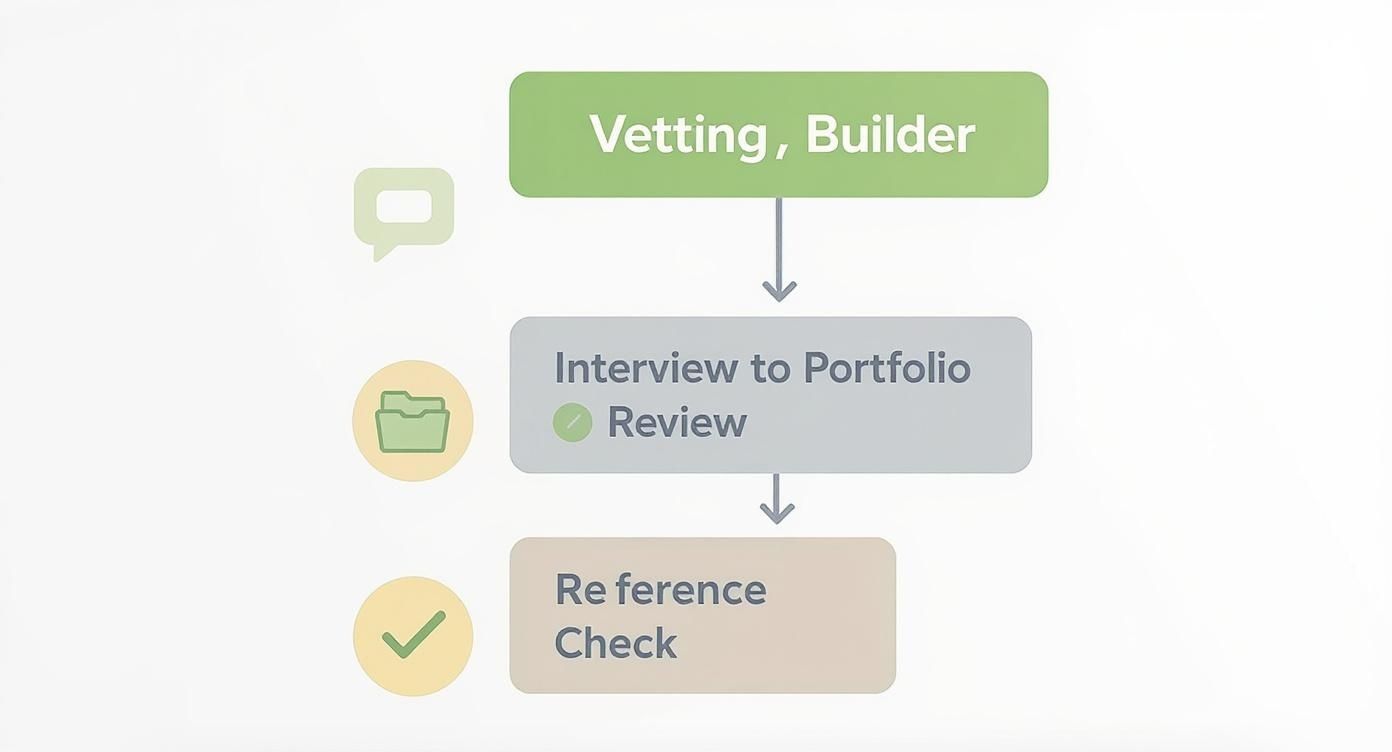
Following this kind of systematic process is what sets you up to analyze the numbers with confidence, knowing you've already vetted the people behind them.
Looking Beyond the Numbers
A great builder-client relationship is built on more than just cost. This is where you have to weigh everything you've learned so far—the craftsmanship you saw in their portfolio, the rave reviews from their past clients, and the personal connection you felt during your conversations.
The right builder isn't just the one with the best price; it's the one who gives you the most confidence. Trust your gut. A strong sense of trust and clear communication is just as valuable as a competitive bid.
Fortunately, the current Nashville real estate market gives you the breathing room to be this thorough. With a recent Market Action Index of 32, we're in a much more balanced environment. This isn't the frenzied market of a couple of years ago where homes were going under contract in 15–20 days. Today’s calmer pace means you can do your due diligence without feeling like you have to rush into a decision.
Finally, pore over the contract. Pay close attention to the payment schedule, the specifics of the warranty, and how any potential disputes would be handled. It's also smart to get ahead of the final steps. Our new home construction inspection checklist is a great resource for understanding what to look for during that all-important final walk-through.
Your final choice is a blend of all these factors—weighing the cost, the quality of their work, and their character to find the partner who will bring your vision to life.
Answering Your Lingering Questions
You've done the research, narrowed down your list, and are close to making a final decision. But a few questions might still be swirling around. Let's tackle some of the most common things people ask when they're at this exact stage of choosing a luxury builder in Nashville.
How Long Does This Actually Take?
It’s the million-dollar question, isn't it? The truth is, building a high-end custom home isn't a race. For a luxury home in the Nashville area, you should realistically budget for a timeline of 12 to 24 months from the very first design meeting to the day you get the keys.
That entire process really breaks down into two big chunks. First, you have the design and permitting phase. This is where your vision gets put on paper, engineered, and approved by the city, which usually takes anywhere from four to eight months. Once you have permits in hand and the foundation is poured, the actual construction begins, which can take another eight to fifteen months. Things like a rainy spring, supply chain hiccups for a specific tile you love, or even just how quickly you make design selections can all nudge that timeline.
A great builder will be upfront about their schedule from day one. Make sure you press them on this. Ask where delays usually happen and how they've handled them in the past. Transparency here is a huge green flag.
Fixed-Price vs. Cost-Plus Contracts: What's the Difference?
Understanding how your builder structures their contracts is crucial—it's the foundation of your financial partnership. You'll almost always run into two main types: fixed-price and cost-plus.
A fixed-price contract is exactly what it sounds like: you agree on a total cost for the entire project before a single nail is hammered. The big advantage here is predictability. You know the final number, which can be a huge relief. The downside? It's less flexible. If you decide you want to add a wine cellar halfway through, it can complicate things.
The other common approach is a cost-plus contract. With this model, you pay for the actual costs of materials and labor, plus a pre-determined fee for the builder (this could be a percentage of the costs or a flat fee). This offers incredible transparency—you see every invoice—and makes changes much easier to accommodate. The trade-off is that your final budget isn't locked in from the start. Many of the best luxury home builders in Nashville are comfortable with either model, so the right choice really comes down to your personality and how much budget uncertainty you're comfortable with.
What’s My Role Once Construction Starts?
So, how involved do you need to be? While you don’t have to show up at the job site every morning with a hard hat, staying engaged is absolutely essential. Your home is a massive investment of both time and money, and your input is what makes it yours.
A well-organized builder will set up a regular cadence for meetings, usually weekly or bi-weekly, to walk you through progress and get your decisions on upcoming items. You'll definitely want to be present for the big moments—like the framing walk-through to feel the flow of the rooms, or the electrical walk-through to decide exactly where you want your outlets and light switches.
- Find Your Rhythm: Agree on a communication schedule with your project manager right from the get-go.
- Be Ready to Decide: The single biggest thing you can do to prevent delays is to make timely decisions on things like faucets, flooring, and lighting.
- Trust, But Verify: You hired a professional team for their expertise, so let them do their job. But stay informed and involved enough to ensure your vision is being executed perfectly.
Setting these expectations early on creates a smooth process where your input is valued and your presence isn't required 24/7.
Ready to bring your vision to life with a team that values transparency and craftsmanship? CJMC Build specializes in creating luxury custom homes across the Nashville area, ensuring a collaborative and seamless experience from concept to completion. Visit us to learn more and schedule your consultation.

