


Building a new home in Middle Tennessee presents a unique opportunity: a blank canvas to create a space that perfectly reflects your lifestyle and personality. The interior design choices you make are foundational, transforming a structure of wood and drywall into a place you are proud to call home. While the possibilities can feel overwhelming, understanding current trends and timeless styles provides the necessary inspiration and a clear path forward.
This guide explores ten distinct interior designs for new homes, offering actionable insights for homeowners in Nashville, Franklin, and the surrounding areas. We move beyond generic advice to provide specific, practical details you can implement immediately. From the expansive feel of open floor plans and the clean lines of minimalism to the cozy charm of a modern farmhouse, we will delve into the core elements that define each aesthetic.
Our goal is to equip you with the knowledge needed to make confident decisions and collaborate effectively with your builder. By understanding the nuances of styles like Biophilic Design or Luxury Minimalism, you can articulate your vision clearly and ensure the final result is a true reflection of your dream. This curated collection will help you navigate the design process and craft a truly personalized living environment.
1. The Unified Hub: Embracing Open Floor Plans
Open floor plans stand as a cornerstone of modern interior designs for new homes, particularly in the custom builds seen across Middle Tennessee. This architectural approach removes interior walls, merging the kitchen, living room, and dining area into a single, expansive "unified hub." The result is a bright, airy environment that enhances family interaction and is perfect for entertaining.
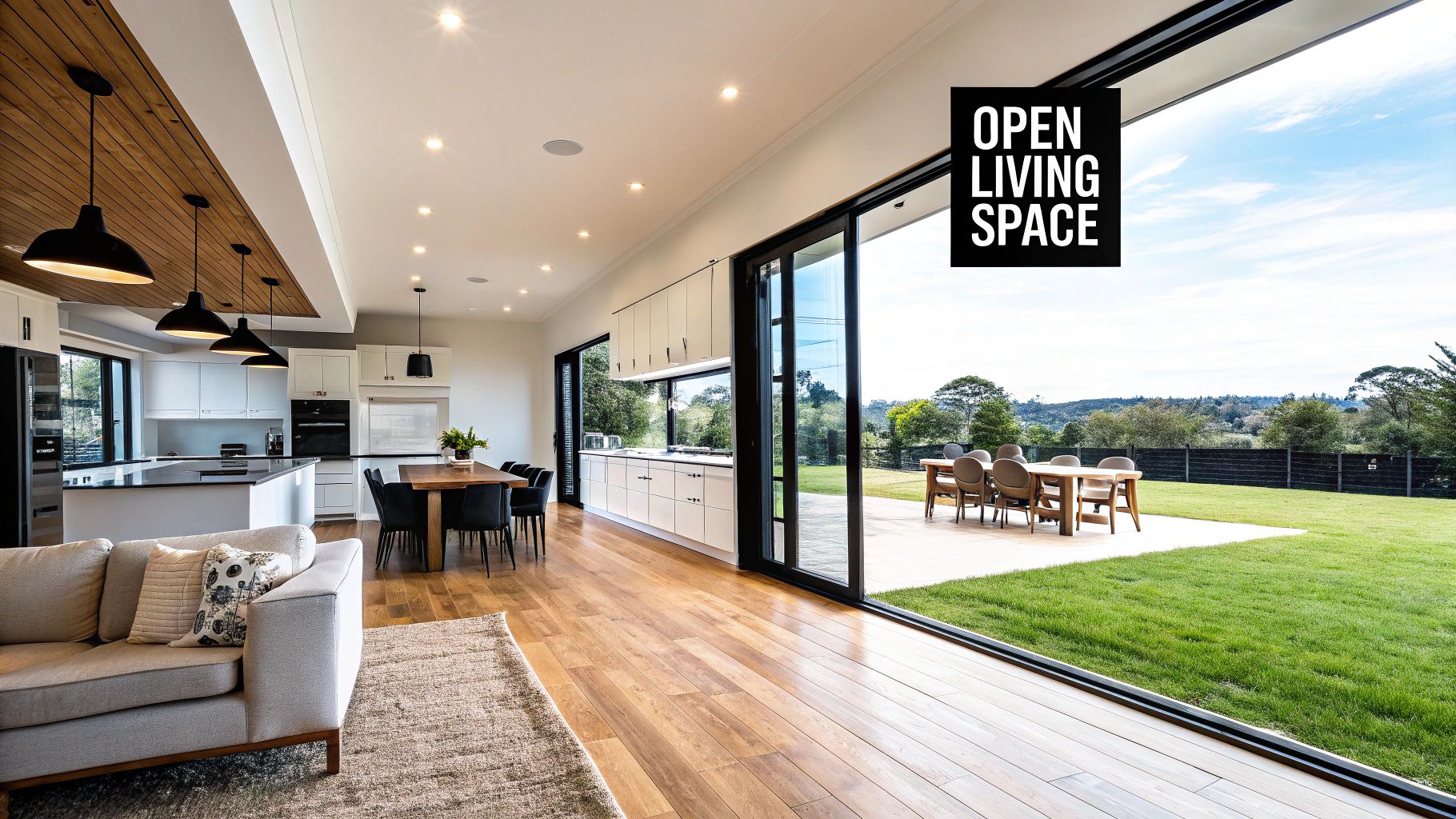
This design maximizes natural light and creates an effortless flow between zones, making even moderately sized homes feel grand and spacious. From contemporary new builds in Williamson County to modern farmhouse styles, the open concept serves as a versatile foundation for a connected lifestyle. Understanding how these spaces are laid out is key; you can learn more about visualizing these layouts on architectural blueprints to better grasp the flow.
How to Implement This Design
To successfully execute an open floor plan, focus on creating distinct zones without physical barriers.
- Define with Furnishings: Use large area rugs to anchor seating arrangements in the living area or define the dining space. A well-placed sectional sofa can also create a soft visual boundary.
- Create Cohesion: Maintain a consistent color palette and material selection throughout the entire space. Repeating an accent color or a wood tone across the kitchen, dining, and living areas ties everything together.
- Prioritize Functionality: In the kitchen, a powerful, high-quality range hood is non-negotiable to prevent cooking odors from permeating the living spaces. Similarly, a large island can serve as a subtle divider while adding valuable counter space and seating.
2. Minimalist Design
Minimalism is one of the most impactful interior designs for new homes, focusing on simplicity, functionality, and intentionality. This approach strips interiors down to their essential elements, emphasizing clean lines, uncluttered surfaces, and a deliberate use of space. The core principle is that every object should serve a purpose, resulting in a serene, organized, and calming environment.
This "less is more" philosophy is particularly effective in new custom homes in Middle Tennessee, where it can enhance architectural features without distraction. By prioritizing quality over quantity, minimalist design creates a sense of luxury and sophistication. Influenced by Scandinavian and Japanese aesthetics, this style promotes mental clarity and sustainability by discouraging excess consumption and visual noise.
How to Implement This Design
To achieve a minimalist aesthetic, the focus is on thoughtful curation and the elimination of clutter.
- Declutter with Purpose: Begin by systematically decluttering each room, keeping only items that are functional, beautiful, or hold significant personal value. The goal is to create "breathing room" in your home.
- Invest in Multifunctional Furniture: Select pieces that offer both style and utility, such as a coffee table with hidden storage or a platform bed with built-in drawers. This maximizes functionality while minimizing the number of items needed.
- Embrace a Neutral Palette: Use a restrained color scheme based on neutral tones like white, beige, gray, and black. Introduce subtle warmth and texture with natural materials like wood, linen, and stone to prevent the space from feeling cold.
3. Industrial Style
Industrial style brings an urban, edgy sophistication to new homes, drawing inspiration from the raw, functional aesthetic of warehouses, factories, and lofts. This design celebrates utilitarian elements by showcasing materials in their natural state, such as exposed brick, structural steel beams, unfinished concrete floors, and reclaimed wood. The result is a space that feels both artistic and grounded, blending rugged character with modern comfort.
This approach is increasingly popular in Middle Tennessee’s custom builds, where it offers a compelling contrast to more traditional designs. By intentionally leaving elements like ductwork or piping exposed, industrial style transforms functional components into decorative features. It’s one of the more daring interior designs for new homes, offering a unique blend of history and modernity that feels both authentic and highly curated.
How to Implement This Design
Successfully achieving an industrial look requires a thoughtful balance between raw textures and refined comfort.
- Embrace Raw Materials: Make exposed brick a feature wall in the living room or use polished concrete for the kitchen floors. Incorporate metal elements through lighting fixtures, stair railings, and window frames.
- Balance with Softness: Contrast the hard surfaces with soft furnishings. A plush, deep-seated sofa, oversized area rugs, and luxurious textiles like velvet or faux fur can prevent the space from feeling cold or sterile.
- Incorporate Warmth: Use warm-toned lighting, such as Edison bulbs in pendant fixtures, to add a cozy glow that offsets the coolness of metal and concrete. Introducing natural wood elements through shelving or furniture also adds essential warmth and organic texture.
4. Scandinavian Design: Simplicity Meets Comfort
Scandinavian design, rooted in the principles of Nordic living, offers a masterclass in functional simplicity and natural beauty. This approach is one of the most enduring interior designs for new homes because it masterfully blends minimalism with a deep sense of comfort, often referred to as "hygge." It prioritizes light, uncluttered spaces, and natural materials to create an atmosphere that is both serene and inviting.
Characterized by pale wood tones, muted color palettes, and an emphasis on craftsmanship, Scandinavian design makes spaces feel bright, airy, and connected to nature. This aesthetic is perfectly suited for new builds in Middle Tennessee, where homeowners often seek a clean, modern look without sacrificing warmth. By focusing on essential, well-made pieces, this style creates a timeless and tranquil home environment.
How to Implement This Design
To bring Scandinavian design into your new home, focus on creating a balance between clean lines and cozy, natural elements.
- Embrace Natural Materials: Make light-colored woods like birch, ash, and pine the foundation of your design. Use them for flooring, cabinetry, and key furniture pieces. Complement these with natural textiles such as wool, linen, and leather.
- Layer with Soft Textures: Introduce comfort and warmth through layers. Think chunky knit blankets draped over a sofa, soft wool rugs underfoot, and linen cushions. This textural contrast prevents the minimalist space from feeling cold.
- Prioritize Light and Function: Maximize natural light by keeping window treatments minimal. For artificial lighting, choose simple, sculptural fixtures that provide a warm, ambient glow. Every piece of furniture should have a clear purpose, with a focus on multi-functional and high-quality items.
5. Smart Home Integration
Smart home integration is no longer a futuristic concept but a fundamental element of modern interior designs for new homes. This approach weaves connected technology seamlessly into the home's fabric, offering automated control over lighting, climate, security, and entertainment. From voice-activated commands via Amazon Alexa to fully integrated ecosystems like Google Nest or Apple HomeKit, smart homes deliver unparalleled convenience, energy efficiency, and a heightened sense of security.
In new custom builds across Middle Tennessee, planning for this technology during the construction phase is crucial. It allows for the clean installation of wiring and infrastructure, ensuring robust and reliable performance without compromising aesthetics. A well-designed smart home enhances daily life by learning your routines and anticipating your needs, creating an environment that is both intelligent and intuitively comfortable.
How to Implement This Design
To successfully integrate smart home technology, thoughtful planning and a focus on compatibility are key.
- Choose a Central Ecosystem: Select a primary platform like Amazon Alexa, Google Home, or Apple HomeKit early on. This ensures all your devices can communicate with each other, creating a cohesive and user-friendly experience.
- Plan During Construction: For new homes, work with your builder to pre-wire for smart speakers, security cameras, automated blinds, and network access points. This is far more efficient and aesthetically pleasing than retrofitting later.
- Prioritize a Strong Network: A powerful mesh WiFi system is the backbone of any smart home. Ensure it provides comprehensive, high-speed coverage throughout the entire property to prevent connectivity issues with your devices.
6. Biophilic Design: Connecting with Nature Indoors
Biophilic design is a powerful approach that weaves the natural world into the very fabric of interior designs for new homes. This philosophy is centered on humanity's innate connection to nature, incorporating elements like natural light, living plants, and organic materials to create a healthier, more serene environment. The result is a home that not only looks beautiful but also enhances well-being, reduces stress, and improves air quality.
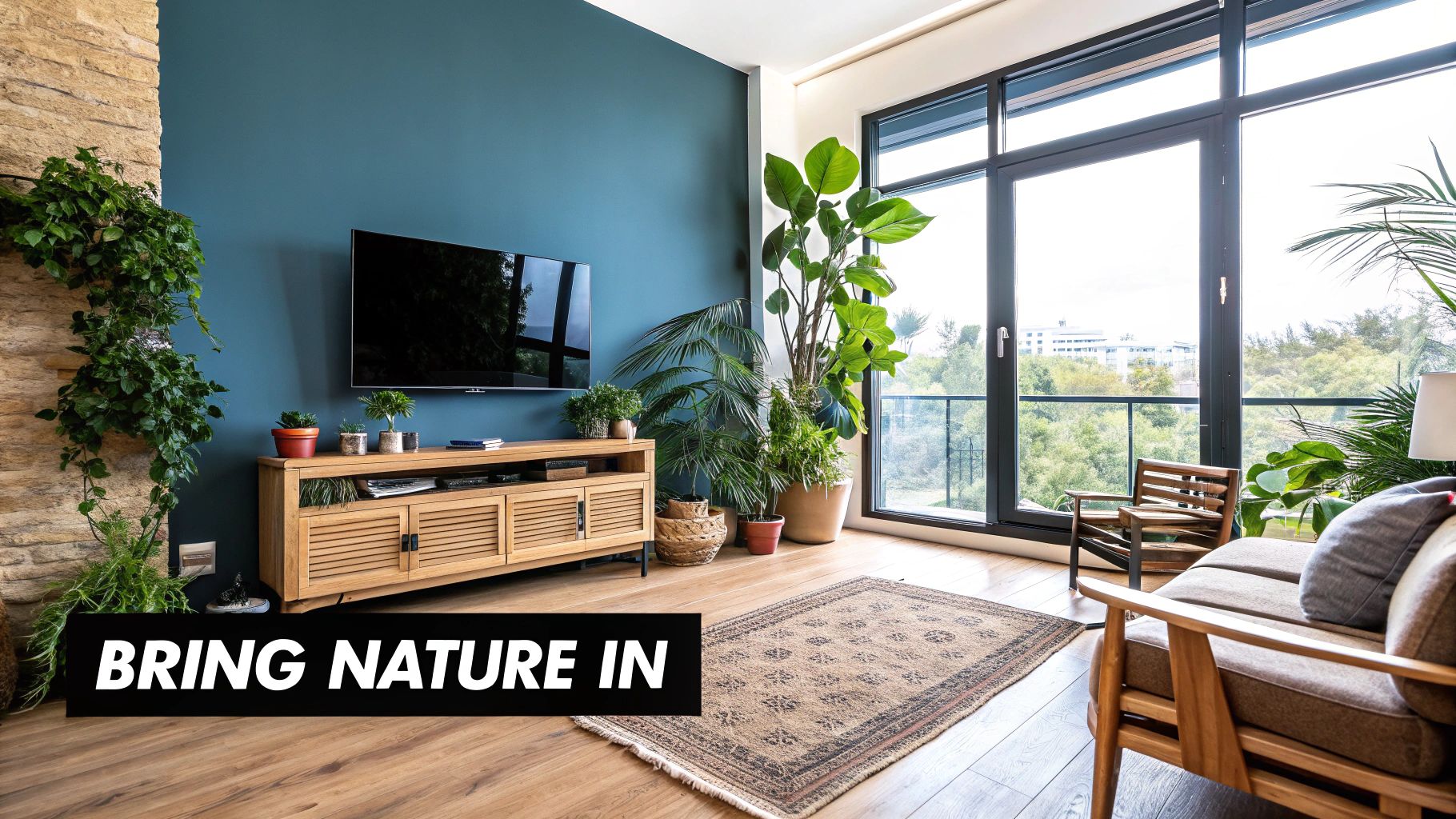
This design trend is particularly fitting for custom homes in Middle Tennessee, where the lush, rolling landscapes can be framed and celebrated. By dissolving the barriers between inside and out, biophilic design creates spaces that feel restorative and deeply connected to their surroundings. From a strategic window placement capturing a view of the Williamson County hills to a stone accent wall, this concept grounds a modern home in its natural setting.
How to Implement This Design
Integrating biophilic elements can range from simple additions to major architectural features.
- Maximize Natural Light and Views: Install large, strategically placed windows, French doors, or even skylights. Position seating areas to face these windows, turning the outdoor scenery into a dynamic piece of art.
- Introduce Living Elements: Incorporate a living green wall as a stunning focal point or group various low-maintenance houseplants in clusters. This brings life, color, and natural air purification into your space.
- Use Natural Materials: Choose materials like reclaimed wood, natural stone, bamboo, and cork for flooring, countertops, and accent features. These textures create a tangible connection to the natural world.
7. Maximalist Design
As a bold counter-movement to the long-reigning simplicity of minimalism, maximalist design celebrates abundance, personality, and curated excess. This approach layers bold colors, intricate patterns, and a rich variety of textures to create interior designs for new homes that are deeply personal and visually dynamic. It's about surrounding yourself with objects, art, and furnishings you love, crafting a space that tells a unique story.
Maximalism is more than just clutter; it is a thoughtful and intentional composition of diverse elements. In a new custom build in Middle Tennessee, this could translate to a living room with jewel-toned velvet sofas, gallery walls filled with eclectic art, and patterned wallpaper that makes a statement. This style thrives on personal expression, making it a perfect fit for homeowners who want their space to feel vibrant, collected, and one-of-a-kind.
How to Implement This Design
Successfully achieving a maximalist look is about creating organized opulence rather than chaos.
- Anchor with a Palette: Start with a core color scheme of three to five dominant colors to provide a cohesive foundation. Use these colors across walls, large furniture pieces, and textiles to tie the room together.
- Layer Textures and Patterns: Mix and match different textures like velvet, silk, wool, and leather alongside contrasting patterns. Combine florals with geometrics or animal prints, ensuring they share a common color to maintain harmony.
- Curate and Group Collections: Display your treasured items with intention. Group similar objects together on a bookshelf or create a gallery wall to turn personal collections into a powerful focal point. This creates visual impact and prevents the space from feeling random.
8. Contemporary Farmhouse
The contemporary farmhouse style has become a defining look for new homes across Middle Tennessee, blending the rustic comfort of traditional farmhouse aesthetics with the clean lines and functionality of modern design. This hybrid approach creates interiors that are warm, inviting, and practical. It moves beyond shiplap to incorporate sleek finishes, uncluttered spaces, and a sophisticated yet approachable atmosphere.
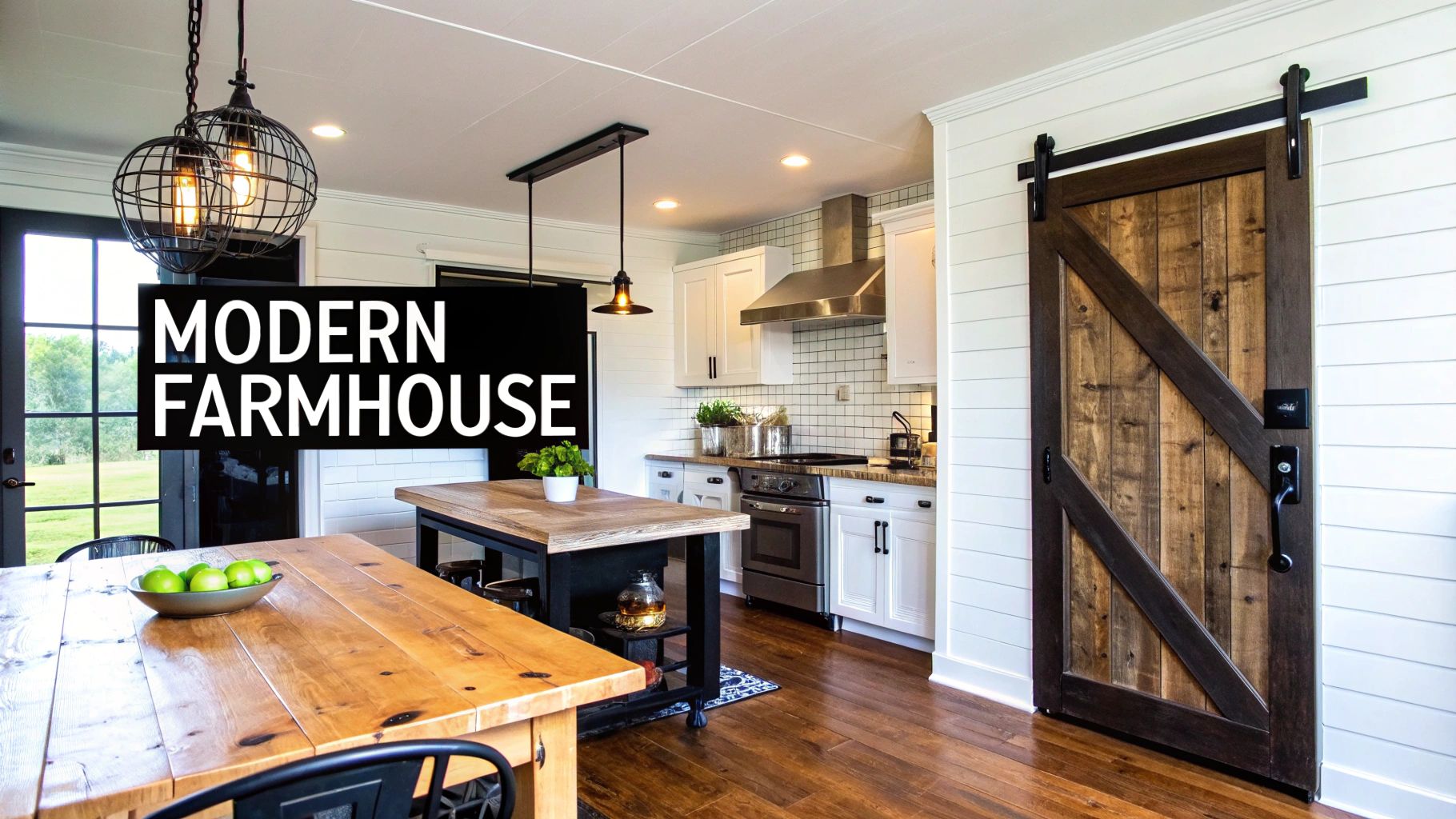
This style excels in creating a lived-in feel from day one, making it one of the most popular interior designs for new homes. It balances nostalgia with modern convenience, perfect for families who want a home that feels both timeless and current. For those looking to dive deeper, you can explore a wide range of modern farmhouse design ideas to gather inspiration for your own custom build.
How to Implement This Design
Achieving a successful contemporary farmhouse look is about balance and thoughtful curation rather than an overabundance of rustic decor.
- Start with a Neutral Foundation: Use a color palette of warm whites, soft grays, and creams for walls and large furniture pieces. This creates a bright, airy backdrop that allows rustic and modern elements to shine.
- Layer Natural Textures: Introduce warmth and character by mixing materials. Combine smooth, modern surfaces with natural wood tones, woven textiles, aged metals like matte black or brushed brass, and natural stone.
- Blend Old and New: The key to this style is the mix. Pair a sleek, modern waterfall-edge kitchen island with vintage-inspired pendant lighting or a reclaimed wood dining table with contemporary chairs.
9. Luxury Minimalism
Luxury minimalism is an interior design philosophy that marries the simplicity of minimalism with the opulence of high-end materials and craftsmanship. This sophisticated approach champions the "less but better" mantra, focusing on carefully curated, high-quality pieces rather than an abundance of decor. The result is a serene, uncluttered, and profoundly elegant space where every single element is intentional and of the highest caliber.
This style elevates interior designs for new homes by creating an atmosphere of quiet confidence and refined comfort. Instead of cold, stark spaces, luxury minimalism feels warm and inviting, thanks to its emphasis on texture, natural materials, and impeccable detailing. It’s a testament to the idea that true luxury lies not in excess, but in the perfection of simplicity and the quality of the things you choose to live with. Achieving this look often involves collaboration with top-tier builders, and you can find out more about luxury home builders in Nashville who specialize in this level of detail.
How to Implement This Design
To bring luxury minimalism into your new home, focus on quality, craftsmanship, and thoughtful curation.
- Invest in Statement Pieces: Select one or two iconic pieces of furniture from renowned designers like Cassina or B&B Italia to anchor a room. The focus should be on sculptural forms and timeless appeal.
- Prioritize Premium Materials: Use natural, high-end materials such as marble, travertine, solid hardwoods, and fine linens. The textural richness of these materials adds depth and warmth without creating visual clutter.
- Focus on Flawless Execution: Every detail matters, from perfectly aligned architectural elements to seamless custom cabinetry. Impeccable craftsmanship is the foundation of this entire aesthetic.
10. Transitional Design
Transitional design provides a masterful bridge between traditional warmth and contemporary simplicity, creating balanced and enduring interiors. This popular approach to interior designs for new homes blends classic elements with modern clean lines, resulting in spaces that feel both comfortable and current without chasing fleeting trends. It’s a popular choice for new custom homes in Middle Tennessee, offering a sophisticated yet welcoming atmosphere.
This style excels at creating a sense of serene luxury by combining plush furnishings with minimal accessories and a neutral color palette. The goal is to establish a calm, organized space that is timeless and versatile, easily adapting to personal tastes over time. Its widespread appeal, seen in everything from upscale model homes to furniture collections at retailers like Pottery Barn, makes it a reliable choice for long-term satisfaction.
How to Implement This Design
To achieve a successful transitional look, focus on balance and thoughtful curation of elements from different eras.
- Start with a Neutral Foundation: Use a soft, neutral color palette for walls, such as grays, beiges, or warm whites. This creates a clean canvas that allows both traditional and contemporary pieces to stand out.
- Mix Furnishing Styles: Pair a classic piece, like a Chesterfield sofa, with modern, streamlined tables and chairs. The key is to balance curved, traditional silhouettes with the straight lines of contemporary design.
- Layer Textures and Materials: Introduce depth by mixing natural materials like wood and stone with tactile fabrics such as linen, leather, and chenille. This adds warmth and visual interest to the neutral color scheme.
- Keep Accessories Curated: Avoid clutter by choosing a few impactful accessories rather than many small ones. Simple, elegant pieces work best to maintain the design’s sophisticated and uncluttered feel.
10 New-Home Interior Design Styles Comparison
| Style | 🔄 Implementation Complexity | ⚡ Resources & Cost / Efficiency | ⭐ Expected Outcomes | 📊 Ideal Use Cases | 💡 Key Advantages / Tips |
|---|---|---|---|---|---|
| Open Floor Plans | Moderate — may require structural changes or rework of HVAC | ⚡ Low–Moderate build cost; possible higher HVAC/noise mitigation costs | ⭐⭐⭐⭐ — spacious, social, bright | Family homes, entertaining spaces, modern lofts | Use area rugs/zoning; install quality range hood |
| Minimalist Design | Low–Moderate — more editing than construction | ⚡ Low ongoing cost; upfront investment in multifunctional pieces | ⭐⭐⭐⭐ — calm, low-clutter, easy to maintain | Small apartments, work-focused homes, those seeking low maintenance | Declutter first; invest in multifunctional storage |
| Industrial Style | Moderate — material sourcing and exposed finishes | ⚡ Moderate cost; can be cost-effective with reclaimed materials | ⭐⭐⭐ — dramatic, authentic but can feel cold | Loft conversions, restaurants, urban renovations | Balance raw materials with soft furnishings and warm lighting |
| Scandinavian Design | Low — focuses on finishes, light, and furniture selection | ⚡ Moderate cost (quality wood/textiles); efficient use of light | ⭐⭐⭐⭐ — warm, functional, timeless | Small-to-medium homes, cold climates, hygge-focused spaces | Layer textiles; prioritize natural light and quality wood |
| Smart Home Integration | High — wiring, ecosystem planning, ongoing updates | ⚡ High initial cost; efficiencies over time (energy savings) | ⭐⭐⭐⭐⭐ — convenience, security, energy optimization | Tech-forward homes, high-end builds, remote management needs | Choose compatible ecosystem; use mesh Wi‑Fi and plan wiring early |
| Biophilic Design | Moderate — depends on structural light/ventilation changes | ⚡ Moderate cost; ongoing maintenance (plants, water features) | ⭐⭐⭐⭐ — improved wellbeing, air quality, productivity | Wellness spaces, offices, homes with good light and views | Maximize windows; select low‑maintenance plants and placement |
| Maximalist Design | Moderate — heavy curation and layered styling | ⚡ Variable cost (can be budget-friendly or high-end) | ⭐⭐⭐ — highly expressive but can feel busy | Creative homes, artist studios, eclectic retail/hospitality | Start with a limited palette; create focal points and balance zones |
| Contemporary Farmhouse | Moderate — mix of rustic details and modern updates | ⚡ Moderate cost; uses reclaimed materials to save costs | ⭐⭐⭐⭐ — warm, approachable, strong resale appeal | Suburban/rural homes, renovations, family-oriented spaces | Keep neutral base; mix antiques with modern fixtures |
| Luxury Minimalism | High — premium materials, bespoke pieces, expert curation | ⚡ Very high cost; low clutter but high procurement expense | ⭐⭐⭐⭐⭐ — refined, timeless, high resale/collector value | High-end residences, penthouses, designer showrooms | Invest in iconic pieces, focus on lighting and material quality |
| Transitional Design | Moderate — careful balance of traditional + modern elements | ⚡ Moderate cost; flexible sourcing across styles | ⭐⭐⭐⭐ — versatile, broadly appealing, easy to update | Model homes, resale-focused renovations, mixed-age households | Start neutral; mix one traditional statement with modern pieces |
Bringing Your Vision to Life with an Expert Builder
Embarking on the journey of building a new custom home is an exercise in imagination, patience, and personal expression. We've explored a diverse collection of interior designs for new homes, from the clean, intentional lines of Minimalist and Scandinavian styles to the bold, personality-driven layers of Maximalism. We delved into the rustic charm of the Contemporary Farmhouse, the nature-infused tranquility of Biophilic design, and the seamless convenience of Smart Home Integration. Each of these distinct approaches offers a unique blueprint for creating a space that not only looks stunning but also functions perfectly for your family's daily life in Middle Tennessee.
The most critical takeaway is that your home should be a direct reflection of you. It’s about more than just following trends; it’s about curating an environment that supports your lifestyle, comforts your soul, and facilitates cherished memories. Whether you are drawn to the raw, urban edge of Industrial style or the sophisticated simplicity of Luxury Minimalism, the details are what transform a house into a sanctuary. The right layout, materials, and finishes are the building blocks of a home that feels both authentic and timeless.
Turning Inspiration into a Tangible Reality
The path from a vision board to a finished living room can be complex, filled with countless decisions that impact the final outcome. This is where the value of a skilled, experienced custom home builder becomes indispensable. A true partner in the building process doesn't just construct walls; they help you navigate the nuances of design, ensuring that your chosen aesthetic is executed with precision and quality craftsmanship.
Here are the actionable next steps to bring your dream home to life:
- Refine Your Vision: Revisit the styles discussed in this article. Create a portfolio of images, textures, and color palettes that truly resonate with you. Don't be afraid to blend elements- a Transitional design with Biophilic touches, for example.
- Prioritize Functionality: Consider your family’s daily routines. How do you use your current space? What works and what doesn't? Let these practical needs guide your layout choices and design priorities.
- Consult the Experts: An expert builder can provide invaluable feedback on your ideas, offering insights on material durability, cost-effectiveness, and how to best adapt a design concept to the unique landscape and climate of Middle Tennessee.
Ultimately, mastering these interior design concepts empowers you to make informed, confident decisions. It allows you to communicate your vision clearly and collaborate effectively with your construction team. The result is a home that is not just built for you, but is a cohesive, beautiful extension of who you are.
Ready to transform these ideas for interior designs for new homes into your own custom-built sanctuary in Middle Tennessee? Partner with a builder who understands your vision and is committed to exceptional quality. Contact the team at CJMC Build to schedule a consultation and start your journey toward a home that is uniquely, beautifully yours.

