


Building your dream home is probably the biggest investment you'll ever make, so picking the right builder is easily the most important decision in the entire process. This isn't just about hiring a contractor; you're looking for a genuine partner for your journey here in Middle Tennessee. A great local builder is the key to making sure everything runs smoothly from start to finish.
Starting Your Search for the Right Home Builder
It's easy to get swept up in the excitement of designing your custom home, but the real success of the project comes down to the builder you choose. This decision is about so much more than just who gives you the lowest bid. You need a professional who truly gets your vision, can work within your budget, and has a rock-solid reputation for quality.
In a market like Middle Tennessee, a builder's local experience is non-negotiable. They bring far more to the project than just construction skills; they have a deep understanding of what it takes to build successfully in this region.
Why Local Expertise Matters
A builder who has spent years working in Davidson, Williamson, or Rutherford counties offers a home-field advantage that an out-of-town company just can't replicate. Their local knowledge makes a real difference in a few key ways:
- Navigating Local Rules: They've been through the wringer with county-specific zoning laws, permitting, and building codes, which helps you avoid frustrating and expensive delays.
- Strong Local Network: Established relationships with the best local suppliers and subcontractors mean you get better pricing and more reliable timelines. No one wants their project stalled for weeks waiting on a crew.
- Climate and Style Smarts: They know what building materials and foundation types hold up best in the Middle Tennessee climate and can guide you on a design that truly fits the local landscape.
Searching for "custom home builders near me" is really about finding a long-term partner. This person will be your guide, project manager, and chief problem-solver for the next 12-18 months. The entire relationship has to be built on a foundation of trust and solid communication.
The industry is also moving away from cookie-cutter designs. More and more, homeowners want homes that feel authentic to the area, often using local materials that reflect the region’s character. This shift makes it even more crucial to find a builder who can create a home that feels like it truly belongs here. You can learn more about these emerging custom home trends on birminghamremodelers.com.
Think of this initial search as your homework phase—doing it right sets the stage for a confident and successful build.
How to Find and Research Potential Builders
So, where do you even start looking for the right team to build your dream home? While typing "custom home builders near me" into Google is one way to begin, the absolute best builders I've worked with are rarely found that way. You've got to dig a little deeper.
The first phase is all about casting a wide net to create a "long list." Think of it as brainstorming. At this point, you're not committing to anyone; you're just gathering names of every builder who seems like they could be a potential fit. This approach helps ensure you don’t accidentally overlook a hidden gem who might be perfect for your project in Middle Tennessee.
Building Your Initial List
Your mission is to find builders who have a solid, proven track record right here in the communities you're considering, whether that's Franklin, Nashville, or out in Arrington.
Here are the best places to start your search:
- Local Home Builders Associations: This is my number one recommendation. Organizations like the Home Builders Association of Middle Tennessee are a goldmine. Their member directories are full of vetted, established local pros.
- Your Architect or Designer: If you already have an architect on board, ask them who they love working with. They’re in the trenches every day and know exactly which builders are organized, communicate well, and deliver exceptional quality.
- Niche Real Estate Agents: Find an agent who specializes in new construction or land deals. They have a curated list of builders they trust and have seen their work—and the client feedback—up close.
- Visual Discovery Platforms: Websites like Houzz or even Instagram are incredible for this. You can search for projects in your specific zip code and see who is building the kind of home you're envisioning.
This whole process is about gathering a big list first, then methodically whittling it down.
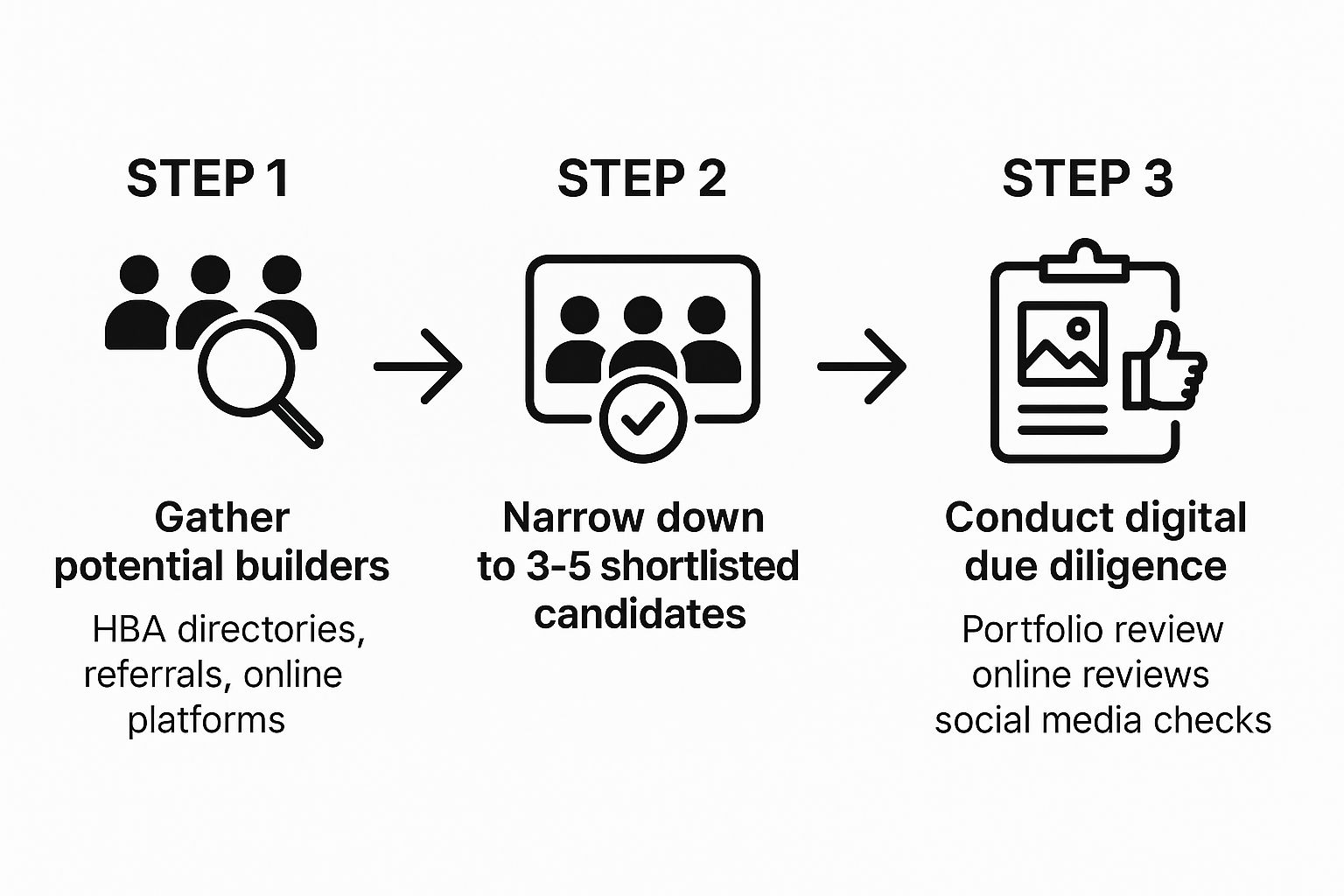
The key is to be deliberate. Don't rush this stage. A thoughtful, multi-step approach now will save you countless headaches later.
Conducting Digital Due Diligence
Okay, you have your long list. Now it's time to put on your detective hat. The goal here is to shrink that list down to 3-5 serious contenders you'll actually want to interview.
A builder's online presence is their digital handshake, and it speaks volumes about their professionalism and the quality of their work. Start with their company website. Is their portfolio easy to browse? Is it filled with high-resolution, professional photos of completed homes?
A great portfolio does more than show off pretty houses. It tells a story about the builder’s craftsmanship and attention to detail. If you see they specialize in the exact modern farmhouse style you love, that's a huge green flag.
Next, dive into their reviews on Google, Houzz, and even Facebook. Don't just glance at the star rating—read the actual comments. What are people saying? Even more importantly, how does the builder respond to feedback, both positive and negative? Their replies will tell you everything you need to know about their communication style and how they handle challenges.
Finally, check out their social media. Are they active? Do they post behind-the-scenes photos of current projects? Seeing work-in-progress gives you a raw, real-time look at their process and quality. After this deep dive, you should have a solid shortlist of builders you're genuinely excited to talk to.
How to Interview Your Top Candidates
You’ve done the research and narrowed down your list. Now it’s time to move past the pretty portfolios and have some real conversations. This is where you get a gut feeling for who you'll be partnering with for the next year or more.
Think of this as more than just an interview. It's your chance to see if your personalities click and if their communication style matches your expectations. You're not just hiring someone to swing a hammer; you’re entrusting them with one of the biggest projects of your life.
Digging Into Their Process
The first thing you want to understand is how they actually run a project from day to day. A seasoned builder will have a well-oiled machine and should be able to explain their systems clearly and confidently. If you get vague, hand-wavy answers, that’s a major red flag for disorganization down the line.
Here are a few questions I always recommend starting with:
- How do you keep everything organized? Ask what project management software they use. Pros often use platforms like CoConstruct or BuilderTREND to give clients a live look at schedules, budgets, and daily logs.
- Who is my go-to person? Find out if you'll be talking directly to the owner, a dedicated project manager, or someone else. You also need to know how often you should expect updates—daily, weekly?
- What happens when we want to make a change? Ask them to walk you through their change order process. A solid builder will have a formal, documented system. This isn't just bureaucracy; it protects both of you from budget blow-ups and miscommunication.
A great builder will be interviewing you right back. They’re gauging whether you'll be a good partner for them. It's a two-way street, and that's a good sign they care about the project's success.
Understanding Financial Transparency
Talking about money is rarely fun, but with a custom home build, it’s absolutely critical. Any builder who gets cagey about their fee structure or how they estimate costs is not someone you want managing your investment. Period.
You need to know exactly how they get paid and what their bids will look like.
Get right to the point and ask about their pricing model:
- Fixed-Price: This is where the builder gives you a single, set price for the entire project. It’s great for budget certainty, but it can be rigid if you decide to make changes along the way.
- Cost-Plus: Here, you pay the actual costs for labor and materials, plus a builder’s fee (either a percentage or a flat rate). It's incredibly transparent, but the final price tag isn't locked in from the start.
Whichever model they use, ask to see a sample estimate or budget. You're looking for detail. Is it a one-page summary, or is it a comprehensive, multi-page document that breaks down every line item and allowance? The more detail, the fewer surprises you'll have later on.
With 184,000 custom homes started in the last year, any experienced builder is used to having these frank financial discussions. If you want to dive deeper, you can explore the data on the growth in custom home building on eyeonhousing.org.
Vetting Their Work and Talking to Past Clients
A builder's online portfolio is their highlight reel—it’s designed to impress. But the real story of how they operate day-to-day comes out when you start digging a little deeper. This is probably the most important part of the whole process, where you protect your investment and make sure you're partnering with a true professional.
Before we even get to a builder's past projects, let’s cover the absolute must-haves: licensing and insurance. You can quickly verify any Tennessee contractor's license using the state's official online portal. Think of this as more than just a piece of paper; it’s proof that they’ve met the state’s baseline for skill and financial responsibility.
Just as critical is their insurance. Any builder worth their salt will have no problem showing you proof of general liability and workers' compensation coverage. If they balk at this or give you the runaround, that’s a massive red flag. Don't walk away—run.
Going Beyond the Hand-Picked Reference List
Every builder keeps a short list of their happiest clients to pass along to potential customers. It’s smart business on their part. And while you should definitely talk to those people, those conversations will only give you one side of the story.
To get a truly unfiltered perspective, you need to be a bit more strategic with your requests. A great builder who is confident in their process won't have any issue with this. In fact, they'll respect you for being so thorough.
Try asking to speak with a specific mix of their past clients:
- Their most recently completed project: This gives you the freshest take on their current team, the quality of their subcontractors, and how smoothly their process runs right now.
- A client from about a year ago: This is your chance to see how the home has settled. You can ask if any warranty issues came up and, more importantly, how the builder handled them.
- A client whose project was similar to yours: If you’re planning a 4,500-square-foot modern farmhouse in Franklin, talking to someone who just built one with them is pure gold.
This approach paints a much more complete picture of their consistency and quality than just talking to their three biggest fans.
Pro Tip: When you're on the phone with a reference, pay close attention to what they don't say. A long pause or a hesitant answer when you ask about the budget or communication schedule can tell you just as much as a direct complaint.
Building a custom home is a significant undertaking, demanding a high level of detail, quality materials, and a builder who can turn a unique vision into reality. This segment of the market is all about luxury and personalization, as detailed in this overview of the custom residential construction market from ServiceTitan. Asking the right questions is how you ensure the builder you choose can actually deliver on that promise.
To get the most out of these crucial conversations, it helps to go in with a plan. A structured set of questions ensures you cover all the bases and can compare builders more effectively.
Here is a guide to help you frame those reference calls:
Reference Check Question Guide
| Question Category | Specific Questions to Ask | What You're Listening For |
|---|---|---|
| Budget & Financials | Did the final cost align with the initial estimate? Were change orders explained clearly and priced fairly? | Honesty about overages, transparency in billing, fairness. |
| Communication | How responsive was the project manager? Were you kept in the loop on progress and potential delays? | Consistent updates, proactiveness, ease of contact. |
| Quality of Work | Are you happy with the finished product? Did they cut any corners? How was the quality of the subcontractors? | Pride in the final result, attention to detail, consistency. |
| Timeline & Schedule | Did they finish the project on time? If not, were the reasons for the delay legitimate and communicated well? | Realistic scheduling, good project management, accountability. |
| Post-Completion | Have any issues come up since you moved in? How did the builder handle warranty claims or punch list items? | Responsiveness after final payment, commitment to their work. |
These questions aren't about trying to catch a builder in a "gotcha" moment. They are about understanding their process, character, and commitment from the perspective of someone who has been through it all.
Seeing the Quality for Yourself
After you’ve done your research and talked to past clients, it’s time to see the work with your own two eyes. Nothing beats an in-person visit. Ask to see two things: a recently finished home and a project that’s currently under construction.
Walking through a completed home lets you feel the craftsmanship. You can see the crispness of the paint lines, check the quality of the trim work, and feel the sturdiness of the doors and hardware. Photos online can be deceiving; reality can't.
A visit to an active job site is equally revealing. Is it clean and organized, or chaotic and messy? A tidy, safe site is a tell-tale sign of a professional who respects their work and their client’s property. It shows they run a tight ship, and that discipline almost always translates into a better building experience for you.
Analyzing Bids and Making Your Final Choice
You’ve done the legwork—interviewed your top candidates, walked their job sites, and called their references. Now, the bids are on your kitchen table, and it’s time to make a decision. This is the moment where it's so easy to fall into a classic trap: letting the bottom-line price be the only thing that matters.
When you're looking for the best custom home builders, please remember the goal isn't just to find the cheapest quote. It’s to find the best value and, just as importantly, a trustworthy partner for your Middle Tennessee build.
Honestly, a bid that comes in way below the others is probably the biggest red flag you can get. It's often a sign that a builder has cut corners on materials, seriously underestimated costs, or plugged in unrealistically low allowances that will explode your budget with change orders down the road. Your job now is to dig in and compare these proposals on a true apples-to-apples basis.
What to Look for in a Builder's Bid
A professional, transparent builder will hand you a detailed, multi-page proposal, not a one-page summary. If you see vague line items or big lump-sum costs, be wary. That can signal a builder who either lacks attention to detail or, worse, is trying to hide where your money is actually going.
A solid builder's bid is a comprehensive document that breaks everything down. Here’s what you should expect to see in a great proposal:
- Detailed Line Items: You want to see clear, separate costs for every single phase, from site excavation and foundation work to framing, roofing, and plumbing.
- Specific Material Allowances: The bid shouldn't just say "flooring." It needs to specify a realistic allowance, like $8 per square foot for hardwood, so you know the quality level that's included in the price.
- Subcontractor Bids: It's a great sign when builders include the actual bids from their key subcontractors—think of their go-to electrician or HVAC team. This shows total transparency.
- A Clear Fee Structure: The builder’s management fee or profit should be its own line item, clearly stated and not hidden within other costs.
This level of detail is what empowers you. It lets you see exactly what you’re paying for and makes it possible to compare the bids accurately. After all, if one builder's cabinet allowance is $20,000 and another's is $40,000, you’re not even comparing the same project anymore.
Making the Final Call
With detailed bids in front of you, the final decision really comes down to three things: the proposal, the person, and the process. The bid tells you about their pricing and how thorough they are. But your interviews and reference checks told you about their character, communication skills, and reliability.
Take a moment and think back. Which builder made you feel the most comfortable and confident? Who answered all your questions directly and patiently, without making you feel rushed? Who has proven systems in place to keep a complex project on track and on budget?
The contract you sign isn't just a document; it's the blueprint for a partnership that will last for the next year or more. This decision is about much more than the final price—it's about trusting someone to bring your vision to life with integrity and true professionalism.
In the end, choosing a builder is about more than the numbers on a page. It's about picking a guide you can rely on to navigate the hundreds of decisions involved in building a custom home. Weigh the details of the proposal against your gut feeling and the builder's proven track record. That’s how you make a choice you’ll feel great about for years to come.
Got Questions? We’ve Got Answers.
When you decide to build a custom home, a million questions probably start swirling around in your head. That's completely normal. Getting straight answers is the first step toward feeling confident and avoiding those common pitfalls that can make the process stressful and expensive.
Let's tackle some of the most common questions we hear from people just like you.
Custom Builder vs. Production Builder: What's the Real Difference?
So, what separates a custom builder from a production builder? The easiest way to think about it is this: a production builder is like a restaurant with a set menu. They operate in specific neighborhoods, offering a handful of pre-designed floor plans and a limited palette of finishes. You can pick from their list of options, but the fundamental design is already locked in.
A custom home builder, on the other hand, is your personal five-star chef. They partner with you and an architect to create a home that is truly one-of-a-kind, built from scratch on your land. From the way the foundation is poured to the specific drawer pulls in the kitchen, every single detail is chosen to match your vision.
Should I Buy Land Before Finding a Builder?
It seems like the logical first step, right? Find the perfect piece of property, then find someone to build on it. But from my experience, I can tell you that's exactly the wrong way to go about it.
I always recommend finding your builder before you ever sign on the dotted line for a piece of land. A great local builder is one of the best consultants you can have when you're evaluating property.
Think of it this way: a seasoned builder in Middle Tennessee can walk a potential lot with you and immediately spot expensive problems you’d never see. They'll notice things like poor soil quality, a steep grade that will require a fortune in engineering, or hidden issues with utility access. That walkthrough alone can save you from a massive financial headache.
This is one of the most valuable pre-construction services a builder can offer. It ensures the land you’ve fallen in love with is actually a practical, affordable place to build your home.
How Do Custom Builders Get Paid?
Understanding the money side of things is absolutely critical. So, how does the builder get paid? You'll typically run into one of two main structures:
- Fixed Price: Just like it sounds. The builder gives you a single, all-in price for the project as it's defined in the contract. This is great for budget certainty, but it can be a bit rigid if you decide you want to make changes along the way.
- Cost-Plus: With this model, you pay for the actual, documented costs of all labor and materials, plus a builder’s fee that you agree on upfront. This fee might be a percentage of the total cost or a flat amount. You get total transparency, but the final price isn't set in stone.
Whichever model you choose, make sure the payment structure is spelled out crystal clear in your contract. And always, always have a real estate attorney look it over before you sign anything.
What's a Realistic Timeline for a Custom Build?
Alright, the big one: how long is this really going to take? The truth is, it varies a lot. The timeline depends on the size and complexity of your home, how backed up the local permitting office is, and even the weather.
Once you’ve finalized the design and architectural plans, the actual construction phase for a custom home in our area usually takes somewhere between 10 and 18 months. For exceptionally large or intricate homes, it can take even longer.
A true professional will give you a detailed and realistic project schedule as part of their proposal, so you'll have a clear roadmap from day one.
Ready to stop searching and start building? The team at CJMC Build brings decades of experience to create stunning custom homes in Middle Tennessee. Contact us today for a free consultation and let's discuss how to bring your vision to life.

