


The real question boils down to this: building a new home in Middle Tennessee often costs more on paper at the start, but that financial gap between building and buying an existing place is getting smaller. What you end up paying really hinges on what you value more: move-in speed and an established location, or total customization and modern efficiency. It's not just a simple matter of price anymore.
The Middle Tennessee Housing Choice: Buying vs. Building
Trying to decide between buying an existing home and building a custom one here in Middle Tennessee has turned into a tricky financial puzzle. The old wisdom that buying is always the cheaper route is getting a serious reality check. With wild swings in material costs, tight labor markets, and a fiercely competitive resale market, an "affordable" existing home can quickly become a money pit after closing.
To make a smart decision, you have to look past the initial sticker price. A whole range of variables will shape your total investment over the years, and understanding them is crucial.
- Upfront vs. Hidden Costs: An existing home has a clear sale price, but it could be hiding thousands in necessary repairs or renovations that pop up later. Building a new home requires a bigger budget from day one, but you get brand-new systems and the peace of mind of a home warranty.
- Market Dynamics: In hot spots like Franklin or Nashville, intense bidding wars for existing homes can inflate prices to a point where the predictable cost of a new build actually starts to look more appealing.
- Personalization and Equity: Building gives you the keys to the kingdom—complete control over the layout, the finishes, every little detail. While it’s a larger investment, a project handled by a trusted custom home builder in Tennessee is a direct investment in your lifestyle and can build significant long-term value.
Key Differences: Buying vs. Building a Home
To get a clearer picture, it helps to see the core trade-offs side-by-side. This table breaks down the essential factors when you're weighing an existing home against new construction in today's market.
| Factor | Buying an Existing Home | Building a New Home |
|---|---|---|
| Timeline | Much faster move-in, typically 30-60 days from offer to close. | A much longer process, expect 9-18+ months from design to move-in. |
| Customization | You're limited to renovations and cosmetic changes after you buy. | You have full control over the layout, materials, and all finishes. |
| Initial Cost | The purchase price is often lower, but budget for updates. | The upfront investment is almost always higher. |
| Maintenance | Higher potential for immediate repairs and replacing aging systems. | Lower initial maintenance; everything is new and under warranty. |
Ultimately, both paths lead to homeownership, but they are very different journeys. The right choice depends entirely on your financial situation, your timeline, and how much control you want over the final product.
Analyzing the True Cost of Buying an Existing Home
When you’re looking at existing homes, it’s easy to get fixated on the listing price. But that number is really just the tip of the iceberg. The true financial picture only comes into focus when you start layering on all the other expenses that pop up before, during, and long after you’ve got the keys in hand.
First things first, you'll face a handful of immediate, upfront costs that go well beyond your down payment. These are the predictable but still painful expenses required to get the deal done.
- Closing Costs: In Tennessee, you can expect to pay anywhere from 2% to 5% of the home’s purchase price. This bucket of fees covers everything from the appraisal and loan origination to title insurance and attorney charges.
- Inspection Fees: A good home inspection is absolutely essential. It’s your best defense against buying a money pit and will run you several hundred dollars, but it can save you thousands by uncovering hidden problems.
These initial hits to your wallet are just the beginning, though. The real budget-busters often lie in wait, tied directly to the home's age.
Uncovering the Hidden Expenses
The biggest financial gamble with an older home is its aging systems. While an inspection might point out that the HVAC unit is 15 years old or the roof is nearing the end of its life, the bill for replacing them lands squarely in your lap. These aren’t small fixes; they’re major capital investments that can become urgent within your first few years of living there.
An older home might look like a great deal on paper, but you have to plan for the big-ticket replacements. Things like HVAC, plumbing, and electrical work can easily tack on $15,000 to $30,000+ to your real cost of ownership in the first five years alone.
This is where the buy-versus-build comparison gets interesting. With new construction, these looming expenses are completely off the table for a long time.
Market Prices vs. Construction Costs
Another thing to remember is that the price of an existing home is driven by market forces that often have little to do with the actual cost of building it. High demand, low inventory—these factors can inflate prices well beyond the value of the lumber and labor.
History shows this pretty clearly. Between 1975 and 1980, for instance, U.S. house prices shot up at an annual rate of 13.26%, while building costs only rose by 6.84%. It's a classic example of how a hot market, like we see in Middle Tennessee, can make you pay a premium for a structure that already exists. You can dig deeper into the historical trends of housing prices and construction costs for a broader view.
Ultimately, buying an existing home gets you into an established neighborhood fast. But to do it right, you need a budget that realistically accounts for closing costs, move-in expenses, and a healthy "what-if" fund for the repairs and replacements that are bound to come with an older property. Without that foresight, the true cost can sneak up on you and quickly blow past what you thought you were signing up for.
Deconstructing the Cost of Building a Custom Home
Taking on a custom home build puts you in the driver's seat, but it also means you’re managing a far more complex budget. Unlike the straightforward price tag on an existing house, the cost of building a home is a puzzle made of many different pieces, and each one plays a big part in the final number.
The whole process starts way before the first hammer swings. Your first big-ticket item is the land itself, which can vary wildly in price depending on where you are in Middle Tennessee. Once you’ve secured a lot, you have to prep the site. This is where you can run into expensive surprises, like needing to clear a lot of rock or fix grading issues that can tack on thousands to your budget unexpectedly.
From Blueprint to Foundation
After you have your land, the pre-construction phase kicks in with several crucial, non-negotiable expenses. Think of these as the foundational investments that make sure your project is legal, well-designed, and ready to break ground.
- Architectural and Design Fees: Plan on setting aside 5% to 15% of your total construction budget for professional plans and blueprints.
- Permits and Impact Fees: Local governments in Davidson, Williamson, and Rutherford counties have a range of required permits for building, electrical, and plumbing. All in, these can easily cost several thousand dollars.
- Utility Connections: Running water, sewer, electricity, and gas lines to a raw piece of land is a major expense. It's a cost that many people forget to include in their early budget estimates.
These "soft costs" are just as critical as the lumber and concrete. You absolutely have to factor them in from day one to get an accurate financial picture.
Building a custom home is like having an extra job that requires constant oversight. Meticulous planning and a solid construction quality control checklist are essential to prevent budget overruns and ensure your vision is executed correctly.
This isn't just a local phenomenon. Looking at the global picture, you can see how these costs add up. In Australia, for instance, the average cost to build a house was around $395,000 in late 2023, and that didn't even include the land. Once you add in land prices in their major cities, the total can shoot past $700,000. It really shows how much of the equation is the land itself, a trend that holds true right here in Middle Tennessee. You can learn more about how construction costs and land prices interact in global markets.
Hard Costs: The Price of Materials and Labor
With permits in hand, you're ready to dive into the "hard costs"—the tangible expenses for all the labor and materials. This is where the lion's share of your budget will be spent, and it's helpful to see it broken down by phase.
| Construction Phase | Typical Percentage of Total Budget | Key Cost Drivers |
|---|---|---|
| Foundation | 10% – 15% | Concrete prices, complexity of excavation |
| Framing | 15% – 20% | Lumber costs, availability of skilled labor |
| Exterior Finishes | 15% – 20% | Siding, roofing materials, windows and doors |
| Major Systems | 10% – 15% | HVAC, plumbing, and electrical |
| Interior Finishes | 25% – 35% | Flooring, cabinetry, countertops, paint, fixtures |
This kind of detailed breakdown is essential when you’re weighing the cost of buying vs building a home. While the numbers might seem high at first glance, remember that you’re getting brand-new systems and finishes. That means you won't have the immediate repair and replacement costs that often come with an older home. Creating a detailed construction quality control checklist with your builder is a great way to manage these expenses and make sure everything is up to standard at every step.
When you're comparing the cost of buying versus building a home, the spreadsheets only tell half the story. The numbers on a page don't account for your most valuable resource: your time. Each path demands a huge investment of it, just in very different ways. The true cost isn’t just in dollars, but in months of your life and hours of your personal energy.
Opting to build a custom home means signing up for a long-term project. It’s a hands-on process that requires your direct involvement well beyond just writing checks. You’re not just a customer; you're a core member of the project team.
The Demands of New Construction
Building from scratch is an incredibly rewarding journey, but it’s also incredibly time-intensive. From the early design meetings and agonizing over material selections to weekly site visits and making quick decisions on the fly, the process demands your constant attention. This isn't something you can just set and forget.
Building a home is like taking on a part-time job that can easily last for more than a year. It requires hundreds of hours of your personal time for research, meetings, and making critical decisions that will shape your budget and your future.
The timeline alone is a massive consideration. The entire journey, from drafting the first architectural plans to finally getting the keys, often stretches from 12 to 18 months, and sometimes longer depending on permits, weather delays, and supply chain headaches. To get a real sense of what's involved, it's crucial to understand a typical new home construction timeline to set realistic expectations.
The Realities of Buying an Existing Home
At first glance, buying an existing home seems way faster. A typical 30-to-60-day closing period feels like a sprint compared to the marathon of building. But this path comes with its own set of time-sinks, especially in a competitive market like we have here in Middle Tennessee.
The house hunt itself can be a draining cycle of endless open houses, late-night Zillow scrolling, and losing out on multiple offers. Then, once you finally land a home, the real work often begins. Older properties almost always demand immediate "sweat equity"—that’s your own time and labor spent on painting, fixing leaky faucets, and making updates just to get the place comfortable. You save money, but you sacrifice your weekends and evenings.
Ultimately, the choice boils down to a fundamental trade-off.
- Building: You trade speed and convenience for total customization and a brand-new, maintenance-free home. Your time is invested upfront in the creation process.
- Buying: You trade modern systems and a perfect layout for a faster move-in and an established location. Your time is invested in the search and the renovations that come after.
There's no one-size-fits-all answer here. The right choice really depends on your lifestyle, your level of patience, and what you value more: a move-in-ready solution now, or a perfectly tailored space built just for you later.
How Middle Tennessee Market Trends Shape Your Decision
The buy-versus-build equation isn't static; it's a moving target heavily influenced by the local Middle Tennessee real estate market. Things like housing inventory, demand in specific areas, and even what builders are offering can completely change the financial picture from one year to the next. Getting a handle on these trends is crucial for making a smart choice.
In booming areas like Nashville, Franklin, and Murfreesboro, we often see very low inventory for existing homes. This almost always sparks bidding wars, which can drive sale prices way over the initial asking price. When competition gets that fierce, the price gap between buying a resale home and building a new one can shrink, sometimes making new construction a surprisingly competitive route.
The Shifting Premium for New Construction
It used to be a given that a brand-new home came with a hefty price premium. That's not always the case anymore. In 2025, we're seeing this gap shrink nationwide. The median listing price for a new home was around $450,000, while existing homes averaged about $418,000—that's a difference of only 7.7%.
This is a huge change from the 15–20% premium that was common just a few years ago. Why the shift? There's a rising supply of new homes, and builders are rolling out incentives to attract buyers who are facing higher mortgage rates. You can find a deeper dive into the narrowing new construction price premium on fortune.com.
This shrinking premium opens up a unique window of opportunity. When the cost difference is that small, the perks of a new build—total customization, better energy efficiency, and no immediate repair bills—start looking a lot more attractive from a purely financial perspective.
Land Availability and Local Costs
If you're leaning toward building, the biggest local factor you'll face is the availability and cost of a good piece of land. In the most sought-after parts of Williamson and Davidson counties, buildable lots are both rare and expensive, and this cost can eat up a massive chunk of your total project budget.
Before we get into a detailed cost breakdown, this infographic neatly lays out the non-monetary costs—your time and effort—which are just as important as the financial side of things.
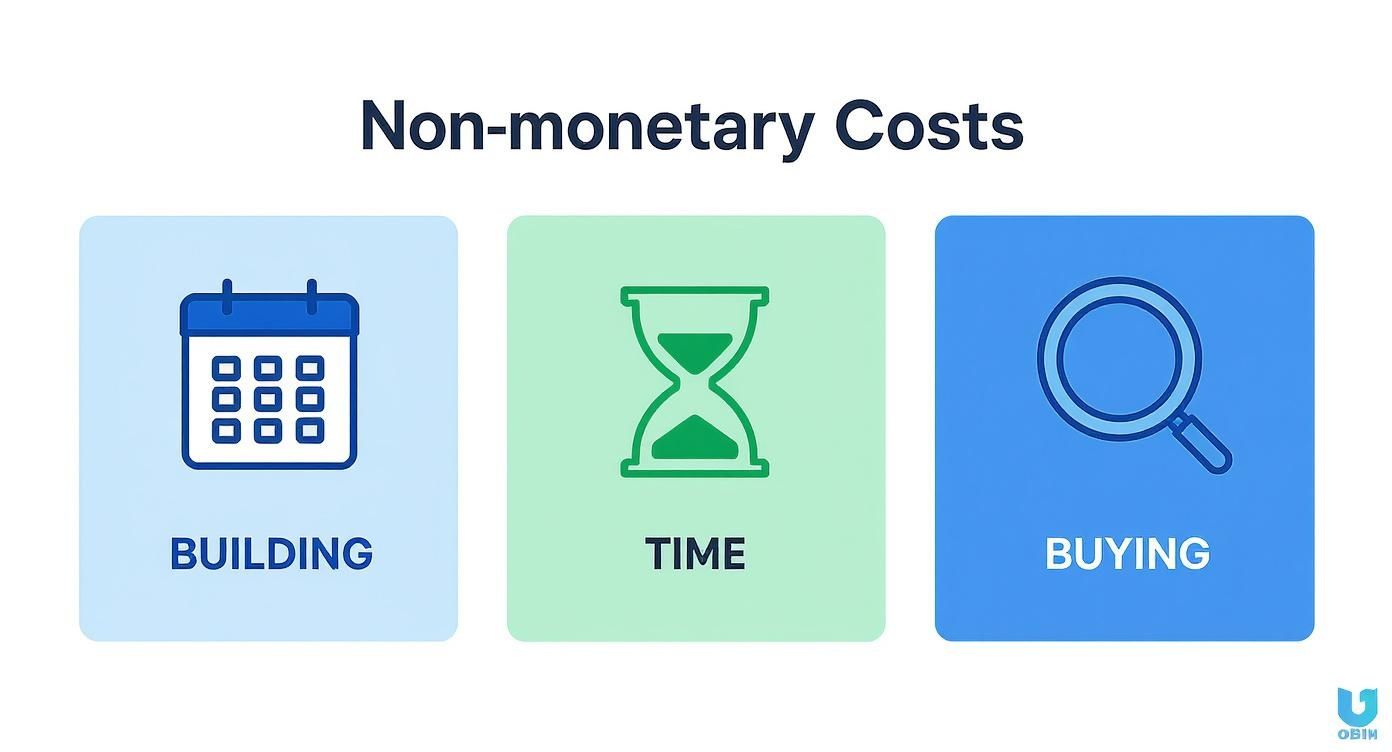
As you can see, building requires a significant, long-term commitment. Buying is more of a sprint—intense, but over much faster.
Here's a look at how the numbers might shake out for a typical 2,500-square-foot home in our area, keeping in mind these are estimates that can vary widely based on location, materials, and finishes.
Middle Tennessee Market Cost Breakdown
| Expense Category | Buying Existing (Estimate) | Building New (Estimate) |
|---|---|---|
| Purchase Price / Build Cost | $625,000 (Median Home Price) | $550,000 ($220/sq ft) |
| Land Acquisition | $0 (Included in Price) | $150,000 (Lot Cost) |
| Closing Costs / Fees | $18,750 (3% of Purchase Price) | $28,000 (4% of Total Loan) |
| Initial Repairs / Updates | $25,000 | $0 |
| Landscaping / Site Work | $5,000 (Minor Updates) | $20,000 (New Installation) |
| Appliances & Finishes | $0 (Included) or $10,000 (Upgrades) | $30,000 (Builder Allowance) |
| Total Estimated Cost | $683,750 | $778,000 |
Ultimately, the right choice in the current Middle Tennessee market comes down to a careful analysis of both existing home prices and the cost of land. A super-hot resale market might make building seem more attractive, but that's only true if you can find an affordable lot to build on.
So, Which Path is Right for You?
When you’re weighing the cost of buying vs. building a home, there’s no single right answer. It’s not about finding a magic formula; it’s about figuring out what makes the most sense for your family, your finances, and your timeline. The best choice really hinges on what you value most.
Let's ditch the generic pro/con list and look at this through the lens of real-world situations here in Middle Tennessee. Each option has clear advantages depending on your goals.
When Buying an Existing Home is the Smart Move
If getting settled quickly in a specific location is at the top of your list, buying an existing home is almost always the winner. This is likely your best bet if:
- You're on a tight timeline. Maybe you’ve got a job relocation or your family is outgrowing your current space right now. A typical 30-60 day closing process is a world away from a 12-18 month custom build.
- You've fallen in love with an established neighborhood. Want those beautiful, mature trees in Franklin, walkable streets in 12 South, or a specific school district in Brentwood where empty lots are non-existent? Buying is your ticket in.
- Your budget is set in stone. With an existing home, the purchase price is a known figure. While you absolutely need a buffer for repairs and updates, it’s much easier to manage your finances without the risk of unexpected construction overruns blowing up your budget.
Choosing to buy an existing home is a trade-off. You're prioritizing convenience, location, and predictability over a blank slate. You accept the home’s layout and quirks in exchange for a much faster move.
When Building a Custom Home is Worth the Wait
On the other hand, building from the ground up is the clear choice for those who are playing the long game and crave personalization. You should seriously consider building if:
- This is your "forever home." If you can picture yourself in this house for decades to come, the upfront investment of time and money to get every single detail just right will pay you back in satisfaction for years.
- You have unique design or accessibility needs. Custom building lets you design a home that fits your family’s specific lifestyle from the very beginning, whether that’s a main-floor owner's suite, a specific kitchen layout for a passionate cook, or accessibility features.
- You already own the perfect piece of land. If you’ve inherited property or already have a lot you love, you've taken one of the biggest and most volatile costs out of the equation. This can make the financials of a new build much more attractive.
Ultimately, your decision comes down to what you can afford, how long you can wait, and what kind of life you want to build for your family.
Frequently Asked Questions
When you're weighing the decision to buy an existing home or build a new one, you're bound to have questions. Here are some straightforward answers to the questions we hear most often about the Middle Tennessee market.
Is It Cheaper to Buy or Build in Tennessee Right Now?
On the surface, buying an existing home usually comes with a lower initial price tag. But that's not the whole story, especially in today's market. The financial gap between buying and building is definitely getting smaller.
Resale prices are climbing, and at the same time, many builders are offering incentives that can make a new build more attractive. While building a custom home almost always requires a bigger budget upfront, you're getting a home with zero immediate repair needs, modern energy efficiency, and everything designed exactly how you want it. The "cheaper" choice really comes down to your priorities: a lower entry cost now, or a better long-term value with total control over the final product.
What Are the Biggest Hidden Costs When Building?
Unexpected costs are a part of any big project, but in custom home building, they tend to pop up in a few common areas. You'll want to have a contingency fund ready for potential overages, especially for these things:
- Site Preparation Surprises: Excavating in Middle Tennessee can be unpredictable. You might hit a massive limestone deposit that requires expensive and time-consuming rock-blasting to remove.
- Material Price Increases: The cost of materials like lumber or concrete can fluctuate unexpectedly during your build, which can directly impact your budget.
- Temporary Housing: Don't forget, the building process takes a while. The cost of renting an apartment or house while your home is under construction can add up to a significant expense over many months.
How Long Does It Realistically Take to Build?
Building a custom home is a marathon, not a sprint. It’s best to go in with realistic expectations for the timeline, which involves several distinct phases that all take time.
From the day you buy your land to the day you move in, you should plan for the entire process to take 12 to 18 months. And that's if everything goes smoothly.
Just getting started—finding and buying the land, working with an architect on designs, and getting all the necessary permits—can easily take 3 to 6 months on its own. After that, the actual construction phase typically adds another 9 to 18 months, depending on the size and complexity of your home, weather delays, and the availability of skilled trades.
Ready to explore building your dream home in Middle Tennessee? The team at CJMC Build brings decades of expertise to every project, ensuring a transparent and collaborative process from start to finish. Contact us for a free consultation today.

